Why Clothing Carries Cultural Weight
Clothing has always communicated more than personal style. Across cultures, what you wear — and what you leave uncovered — signals your awareness of, and respect for, the people around you. For travelers, understanding this is not about fashion; it's about genuine connection and basic courtesy.
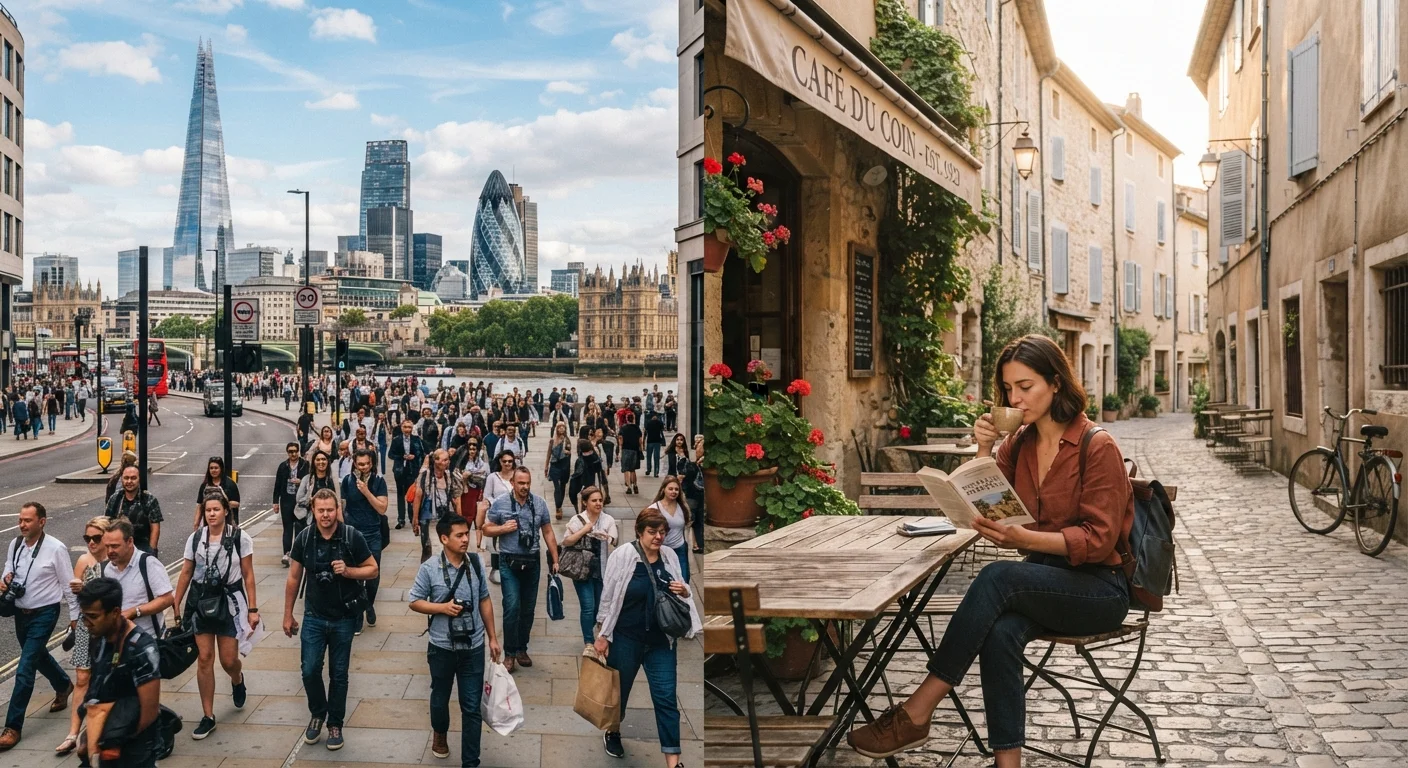
The same outfit that feels perfectly appropriate on a European beach promenade may be considered disrespectful in a Middle Eastern market, inappropriate at a Southeast Asian temple, or simply out of place in a conservative rural community anywhere in the world. Context is everything. So is doing a little homework before you arrive.
Dress Codes Can Change Within One Country
Capital cities and tourist resort zones within the same country often operate under very different norms than rural towns or religious communities nearby. What's accepted on a beach in Bali may not be appropriate ten minutes inland in a village. Always research the specific area — not just the country — you plan to visit.
See our guide to public behaviour abroad for a broader look at how cultural cues — beyond clothing — shape the travel experience.
How Dress Codes Differ Around the World
It helps to think in broad regional patterns, while remembering that every country — and every individual community — has its own nuances.
The Middle East and North Africa
Countries like Jordan, Morocco, and the United Arab Emirates are popular tourist destinations with varying levels of formality. In many urban areas, modest dress — covered shoulders, knees, and often hair for women — is expected in public spaces. Resorts and tourist zones may be more relaxed, but religious sites and residential neighborhoods require conservative clothing. Dubai's cultural norms offer a well-documented example of how a single city can hold multiple dress-code contexts side by side.
South and Southeast Asia
Countries like India, Thailand, Indonesia, and Japan each have distinct expectations. Temples and shrines — whether Hindu, Buddhist, Shinto, or Sikh — commonly require covered shoulders and knees, and sometimes shoes removed at the entrance. Our guide to sacred site etiquette walks through what respectful conduct looks like at these spaces.
Europe
Much of Western Europe is relatively relaxed about everyday clothing, but religious sites — Catholic cathedrals, Orthodox churches, synagogues — typically expect shoulders and knees to be covered. Southern and Eastern European countries often hold more conservative norms in smaller towns and rural areas than in major cities.
The One-Item Packing Hack That Solves Everything
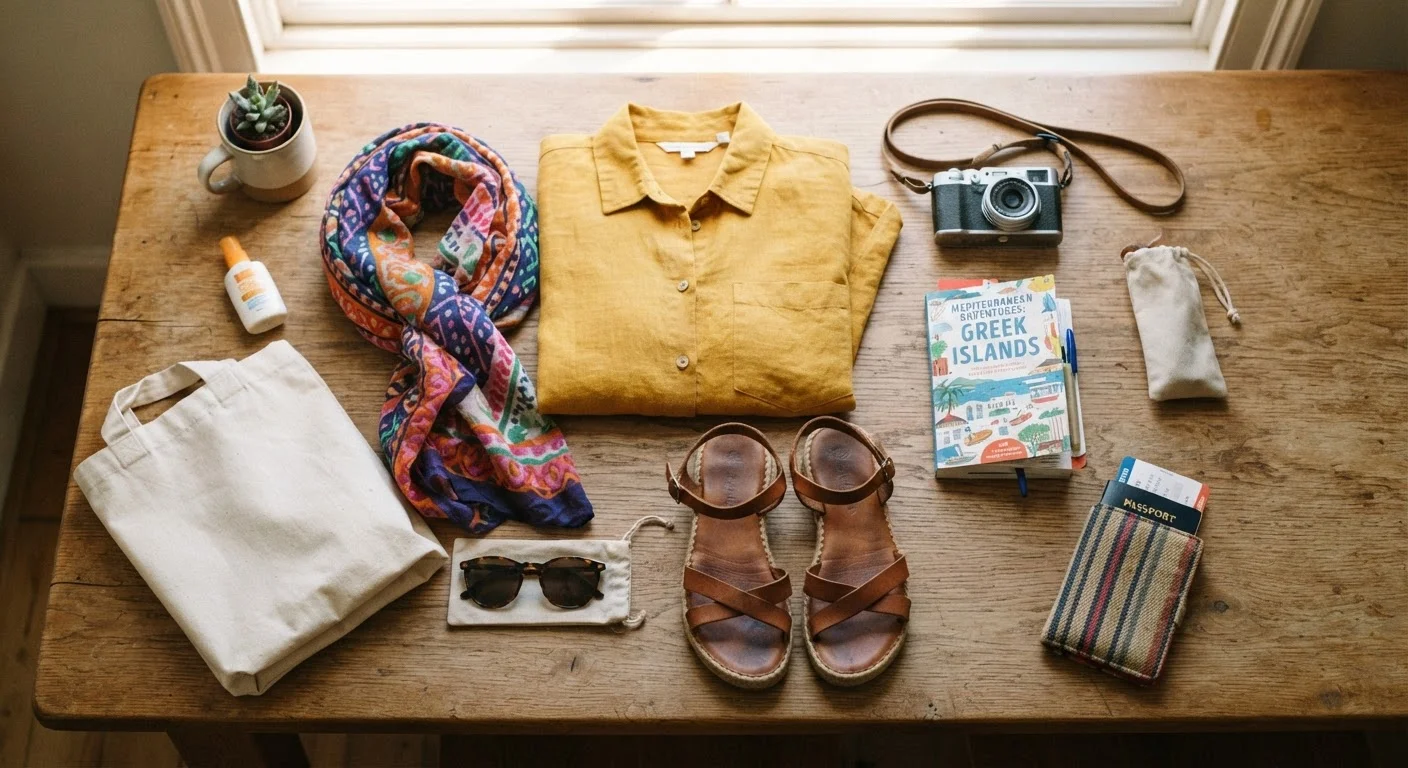
A large, lightweight scarf — often called a pashmina or travel wrap — is the single most versatile modesty tool you can carry. It can cover your shoulders in a cathedral, your hair at a mosque, your knees at a temple, or double as a beach cover-up. Pack one in a neutral color and it works almost anywhere.
Reading the Room: Practical Strategies
The most useful skill for any traveler isn't memorizing a list of rules — it's learning to read situational cues on arrival.
180+
Countries with distinct cultural dress norms
The United Nations recognizes over 190 member states, each with regional and religious communities that carry their own expectations around appropriate dress.
~1 in 3
Travelers who report being turned away from a site
Informal surveys by travel publications suggest a significant share of visitors are denied entry to religious or cultural sites each year due to inappropriate clothing.
- Observe before you enter. Look at how local residents are dressed in the same space. If you see covered arms and long skirts, that's your signal.
- Carry a scarf or sarong. A lightweight wrap tucked in your bag solves a huge range of last-minute modesty situations — from impromptu mosque visits to conservative restaurant settings.
- Ask when in doubt. A polite question — "Is my clothing appropriate here?" — is almost universally appreciated, even if the answer requires some gesture-based communication.
- Respect posted signs. Many religious and cultural sites display clear dress guidelines at the entrance. These are instructions, not suggestions.
Dress codes also extend to social invitations. If you're ever welcomed into a local home, it's worth knowing that dining etiquette in someone's home often comes with its own set of clothing and shoe-removal expectations. Speaking of which, shoe removal customs have deep cultural and religious meaning in many parts of the world — well worth understanding before you travel.
Common Misconceptions Worth Clearing Up
A few widespread assumptions tend to lead travelers astray when it comes to dress codes.
"Touristy areas mean anything goes." Not exactly. Many heavily visited destinations sit inside or adjacent to communities where local norms still apply strongly. A busy bazaar or historic medina is not the same as a beach resort strip.
"I've seen photos of locals in casual clothes, so it must be fine." Social media often shows a narrow, urban slice of a country's reality. Rural areas, older generations, and religious communities within the same country may hold very different standards.
"Only women need to think about modesty." Men face expectations too — sleeveless shirts, shorts above the knee, and visible tattoos can all be considered disrespectful in certain settings. Some temples require men to cover their torsos entirely.
For a deeper dive into which cultural "rules" are accurate versus oversimplified, see our piece on common cultural etiquette myths.