
Why Home Dining Invitations Are a Big Deal
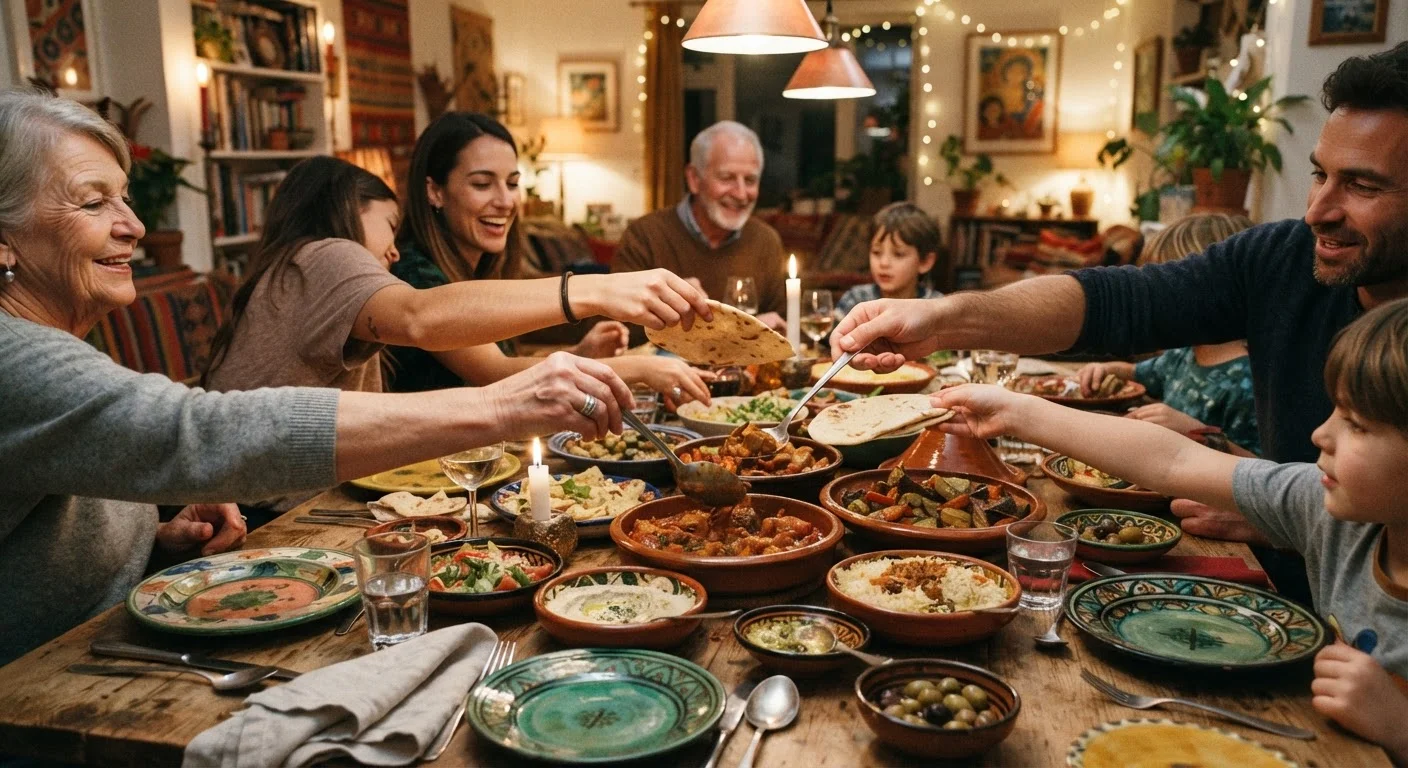
Receiving an invitation to eat in someone's home is one of the warmest gestures a traveler can experience. Unlike a restaurant meal, a home dinner is deeply personal — the host has planned, cooked, and opened their private space to you. That generosity deserves a thoughtful response.
The challenge is that what counts as respectful behavior at the table varies enormously from country to country. Something as simple as finishing your plate or arriving on time can signal the exact opposite of what you intend. Understanding a few foundational principles — and doing a little homework before you arrive — goes a long way. Check out our cultural preparation checklist to research specific norms before your trip.
Timing, Gifts, and the First Impression
Before you even sit down, two decisions shape the evening: when you show up and what you bring.
Timing: In Germany and Scandinavia, arriving precisely on time — or even a minute early — is a mark of respect. In Mexico, Morocco, or much of the Middle East, the stated start time is approximate; appearing exactly when invited can catch the host mid-preparation. A gap of 15–30 minutes is often expected. Neither approach is wrong — it is simply different, and guessing incorrectly can cause genuine awkwardness.
Gifts: In Japan, China, and South Korea, bringing a small, wrapped gift is common, but the item and presentation matter. Clocks and white flowers carry funeral associations in several East Asian cultures, for instance. In France or Italy, a bottle of wine or flowers is warmly received — though avoid chrysanthemums, traditionally linked to mourning in both countries. Our guide to gift-giving customs covers regional specifics in much more detail.
When in Doubt, Ask Your Host
It is perfectly acceptable — and often flattering — to ask your host in advance whether there are any customs you should know before arriving. Most hosts appreciate the effort and will share helpful guidance. Framing it as genuine curiosity rather than anxiety makes the question easy for everyone.
At the Table: Eating, Serving, and Pacing
Once seated, several unwritten rules come into play.
Who eats first: In many Asian and Middle Eastern households, guests are served first and may be urged to begin before the host sits. In some European and Latin American traditions, waiting for the host or the eldest person to start is the norm. When in doubt, watch and follow — your hosts will usually signal clearly.
Eating with your hands: In Ethiopia, India, and across much of West Africa, sharing food from a communal dish and eating with the right hand is the expected and honored custom. Asking for cutlery can read as reluctant or even rude. Embrace it graciously.
Finishing your plate: In China and parts of Southeast Asia, leaving a little food signals you have been well-fed; a completely empty plate may suggest the host didn't provide enough. In many Western contexts, the opposite holds — a clean plate is a compliment. Neither is universally correct. See our piece on common cultural missteps for more examples of well-intentioned behavior that lands differently than expected.
71%
Travelers who find cultural customs challenging
According to research cited by cultural training organizations, the majority of international travelers report feeling uncertain about local etiquette norms at social meals.
100+
Distinct hand-eating traditions worldwide
Anthropologists have documented eating-with-hands customs as the default dining method across more than 100 distinct cultural groups, spanning Africa, South Asia, and the Middle East.
Declining Food, Dietary Needs, and Graceful Exits
Refusing a dish — especially one prepared with care — is a delicate moment. In many cultures, a host will offer food two or three times before accepting a gentle decline. Saying no on the first offer can seem impolite, even if the host repeats the offer out of courtesy rather than pressure.
If you have dietary restrictions, communicating them in advance (not at the table) is far kinder. A brief, warm note ahead of time — "I don't eat pork, but please don't go to any trouble" — gives the host the chance to plan without embarrassment.
Leaving the table too quickly after eating can imply you found the company wanting. In many cultures, lingering over tea, coffee, or dessert is part of the hospitality ritual and deeply appreciated. Equally, overstaying past obvious cues is inconsiderate. Let the host set the tempo.
Customs Vary Within Countries Too
Dining etiquette is rarely uniform across an entire country. Regional differences, urban versus rural settings, religious practice, and generational gaps all shape what happens at the table. Treat any cultural guideline as a useful starting point rather than an absolute rule — and stay flexible. Observing and following your host's lead in the moment will always serve you well.
And don't forget: a follow-up message the next day thanking your host is a small gesture that is rarely forgotten. If you're navigating broader cultural customs on the same trip, our guide to tipping etiquette and common etiquette myths are worth reading alongside this one.