
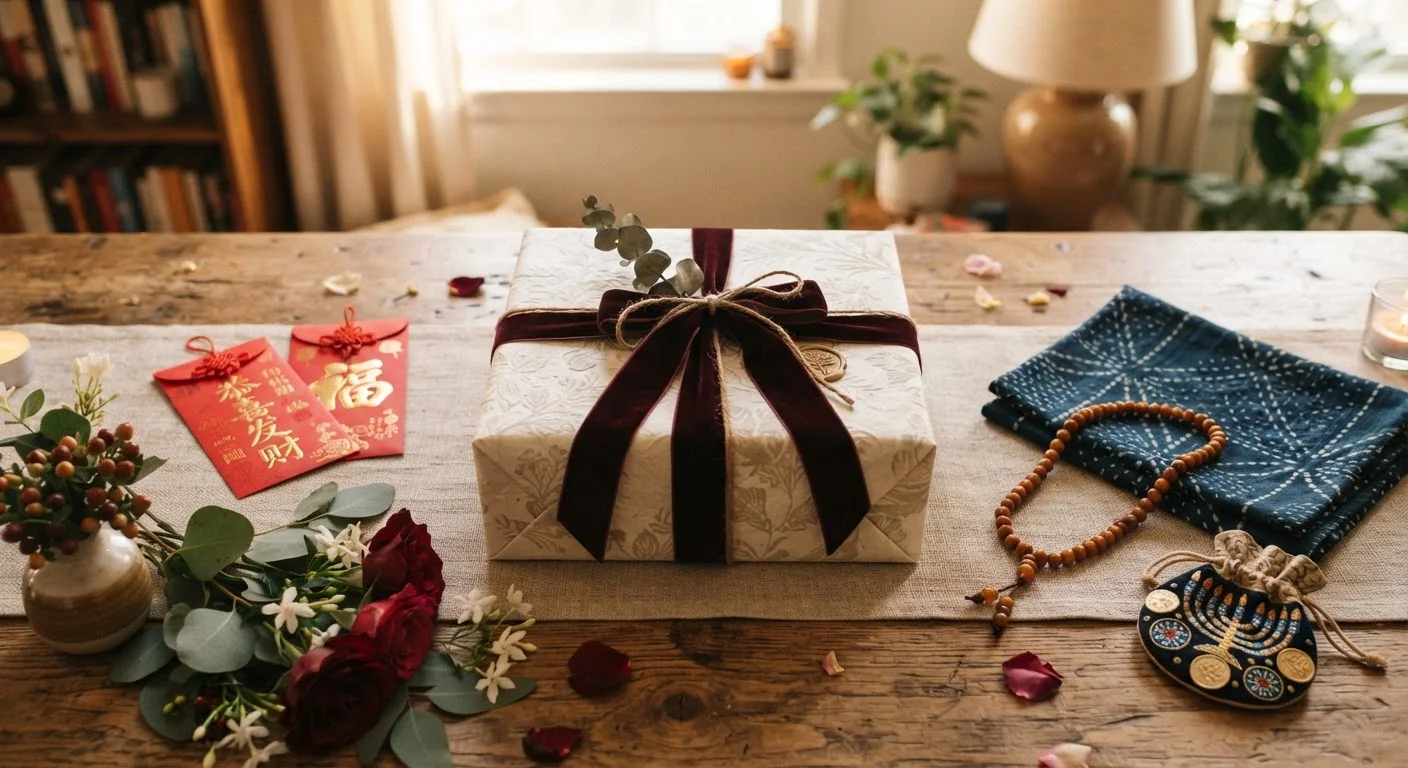
Why Gift-Giving Etiquette Is Worth Learning
Arriving at someone's home with a gift feels universally thoughtful — but what's inside the bag, how it's wrapped, and even the number of items can send unintended messages depending on where you are in the world. A bouquet of white lilies might express sympathy in one country and celebration in another. A bottle of wine could be warmly welcomed in France and quietly awkward in a dry household in the Middle East.
Gift-giving customs are shaped by history, religion, superstition, and social values that vary enormously from place to place. Getting them right is one of the most meaningful ways to show a host that you've done your homework — and that you genuinely respect their culture. Think of it as part of a broader cultural fluency, the same kind covered in our guide to cultural preparation before you land.
Below are six essential customs to know before you pack that gift.
Avoid Clocks and Sharp Objects in East Asian Cultures
In China, gifting a clock is considered deeply inauspicious — the Mandarin phrase for "giving a clock" sounds identical to the phrase associated with attending a funeral. Similarly, knives and scissors suggest the severing of a relationship. These aren't obscure superstitions; they're widely held beliefs that your host will absolutely notice.
In Japan and South Korea, gift-giving is taken seriously as a social ritual. Sharp objects can also carry negative connotations in these countries. Safe alternatives include quality teas, local food specialties, or beautifully packaged sweets — presentation often matters as much as the gift itself.
In China, gifting a clock is associated with funerals — a mistake no amount of good intentions can easily undo.
Mind the Numbers — They Carry Symbolic Weight
The number of items in a gift can signal very different things across cultures. In many East Asian countries, the number four is considered unlucky because it sounds like the word for "death" in Mandarin, Cantonese, Japanese, and Korean. Avoid giving four of anything in these regions.
Conversely, even numbers are typically preferred in China for celebratory gifts, while odd numbers are associated with funerals. In Russia and Eastern Europe, flowers should always be given in odd numbers — even numbers are reserved for mourning. A quick check before you shop could save a genuinely uncomfortable moment.
Four is widely considered unlucky across East Asia — never give four of anything as a gift.
Color and Wrapping Matter More Than You Think
White is the color of mourning in many Asian cultures, including China, Japan, and parts of South Asia — so white wrapping paper or white flowers can feel somber rather than celebratory. Black carries similar associations in several countries. In China, red and gold are traditionally festive and auspicious colors, making them ideal for wrapping.
In Brazil and parts of Latin America, purple has historically been associated with mourning, so it's worth avoiding for gift wrap. Yellow flowers, meanwhile, can suggest jealousy or infidelity in some European countries. When in doubt, neutral wrapping with a thoughtful card goes a long way.
White wrapping paper can signal mourning in many Asian cultures — opt for red, gold, or neutral tones instead.
Use Two Hands When Presenting a Gift in East Asia
In Japan, South Korea, and China, presenting and receiving items — gifts, business cards, even dishes of food — with both hands is a gesture of respect. Handing something over with one hand, especially your left hand, can come across as casual or even dismissive. The two-handed gesture signals that you're offering something with full attention and sincerity.
This custom extends beyond gifts: receiving something with one hand while your other hand is in your pocket is considered rude in many of these settings. Watch how your host handles exchanges and mirror that behavior. It's a small gesture that carries genuine weight. For more on respectful gestures, see our guide on greetings around the world.
Offering a gift with both hands in East Asia signals sincerity and deep respect — never present with just one.
Expect Gifts to Be Set Aside Unopened in Many Cultures
In much of East Asia, the Middle East, and parts of South Asia, opening a gift immediately in front of the giver can be considered impolite — it might suggest that the recipient is overly focused on material value. Your host may set your gift aside to open privately later. Don't interpret this as indifference; it's often a sign of good manners.
This is nearly the opposite of Western European and North American custom, where tearing open a gift right away and exclaiming over it is expected and encouraged. If you're visiting a culture where gifts are opened later, resist the urge to prompt your host or ask if they've liked it. Trust the gesture and let the social rhythm unfold naturally.
Not opening your gift immediately isn't rudeness — in many cultures, it's considered the polite thing to do.
Be Mindful of Alcohol, Food, and Religious Sensitivities
Alcohol is off the table — literally — in many Muslim-majority countries and in households where faith guides dietary practice. Even if a host doesn't personally observe restrictions, bringing wine or spirits can put them in an uncomfortable position. Similarly, pork-based food products should be avoided when visiting observant Jewish or Muslim households.
When in doubt, food gifts that are clearly packaged and labeled are safer than homemade items, which may raise questions about ingredients. Sweets, high-quality teas, or locally made artisan products travel well and tend to be universally appreciated. Being thoughtful about dietary and religious context is also part of respectful behavior at someone's dining table.
Bringing alcohol to a Muslim-majority household — even as a generous gesture — can cause real discomfort.
Carrying the Spirit of the Gift Forward
The most important thing to remember is that gift-giving, wherever you are, is ultimately about warmth and connection. A misstep is forgivable when it's made with obvious goodwill — but doing a little research beforehand shows a level of care that most hosts will genuinely appreciate.
When in Doubt, Ask a Local
Hotel concierges, local guides, and even brief online research from sources like national tourism boards can give you gift-giving guidance specific to your destination. A quick question — "Is it appropriate to bring a gift if I'm invited to someone's home?" — will almost always be appreciated rather than seen as intrusive. Getting it right is worth the five minutes it takes to ask.
These customs also connect naturally to other etiquette considerations. How you behave at the dinner table, for example, carries its own set of rules — explored in our guide to dining as a guest in someone's home. And if you want a fuller picture of reading cultural cues in real time, our piece on public behaviour abroad is a great companion read.