Why Public Behaviour Varies So Dramatically
Step off a plane in Tokyo and you'll notice the hush on the subway. Arrive in Naples and the animated conversations filling a café might surprise you. Neither city is being rude — they're simply living by different, deeply ingrained social codes. Public behaviour norms are shaped by centuries of cultural history, religion, population density, and social philosophy, and they vary far more than most first-time international travelers expect.
The good news: you don't need a PhD in anthropology to navigate them. You just need a willingness to observe, a few key facts, and the humility to recognize that your own habits aren't the universal default. This guide gives you a practical, country-spanning reference for three of the most common flashpoints: hand gestures, noise levels, and personal space.
For a broader look at how culture shapes traveler conduct, see our guide to greetings around the world.
| Thumbs-up meaning varies | Positive in US/UK; offensive in parts of Iran, West Africa, and Greece |
| Quietest public transit cultures | Japan, Finland, South Korea, Netherlands |
| Queuing culture example | UK is widely cited as having the strongest queuing norms in the world |
| PDA legal restrictions | Public kissing is restricted by law or heavily frowned upon in several Gulf and Southeast Asian countries (Verify current local laws before travel) |
| Beckoning gesture | Single-finger beckoning is offensive in Japan, Philippines, and much of Southeast Asia |
| OK sign meaning in Japan | Can mean "money" rather than "okay" — context matters |
Hand Gestures: Friendly at Home, Offensive Abroad
Gestures are one of the most treacherous areas of cross-cultural communication, because they feel instinctive and invisible — you barely notice you're making them.
- Thumbs-up: Widely positive in North America and much of Western Europe, but in parts of Iran, Greece, and West Africa it carries an obscene meaning equivalent to a raised middle finger in the US.
- OK sign (index finger and thumb forming a circle): Harmless in the US; offensive in Brazil, Turkey, and parts of Southern Europe, where it has a crude connotation. In Japan, it can mean "money."
- Beckoning with one finger: Standard in the US for calling someone over, but considered deeply rude or even threatening in the Philippines, Japan, and much of Southeast Asia. Use a downward-facing open hand instead.
- Pointing: Pointing at people with a single finger is impolite across much of Asia and the Middle East. Use your whole hand or chin-gesture instead.
- V for victory / peace sign: In Australia, the UK, and Ireland, the two-fingered V sign with the palm facing inward is highly offensive. Face your palm outward when making this gesture.
High-contact culture
A society in which closer physical proximity and frequent touch during everyday social interaction are the norm and signal warmth or trust.
Low-contact culture
A society in which people maintain greater physical distance and less casual touch in public and professional settings, preferring personal space as a default.
Emblematic gesture
A hand or body movement with a specific, widely understood meaning within a given culture — one that can easily be misread when crossing cultural borders.
Proxemics
The study of how people use physical space in social interactions. The term was coined by anthropologist Edward T. Hall and is used to describe culturally learned distance norms.
Social norm
An unwritten but widely understood rule about expected behaviour in a given cultural or social context. Violating social norms can cause offence even when no written law is broken.
Noise and Volume: Reading the Room Across Cultures
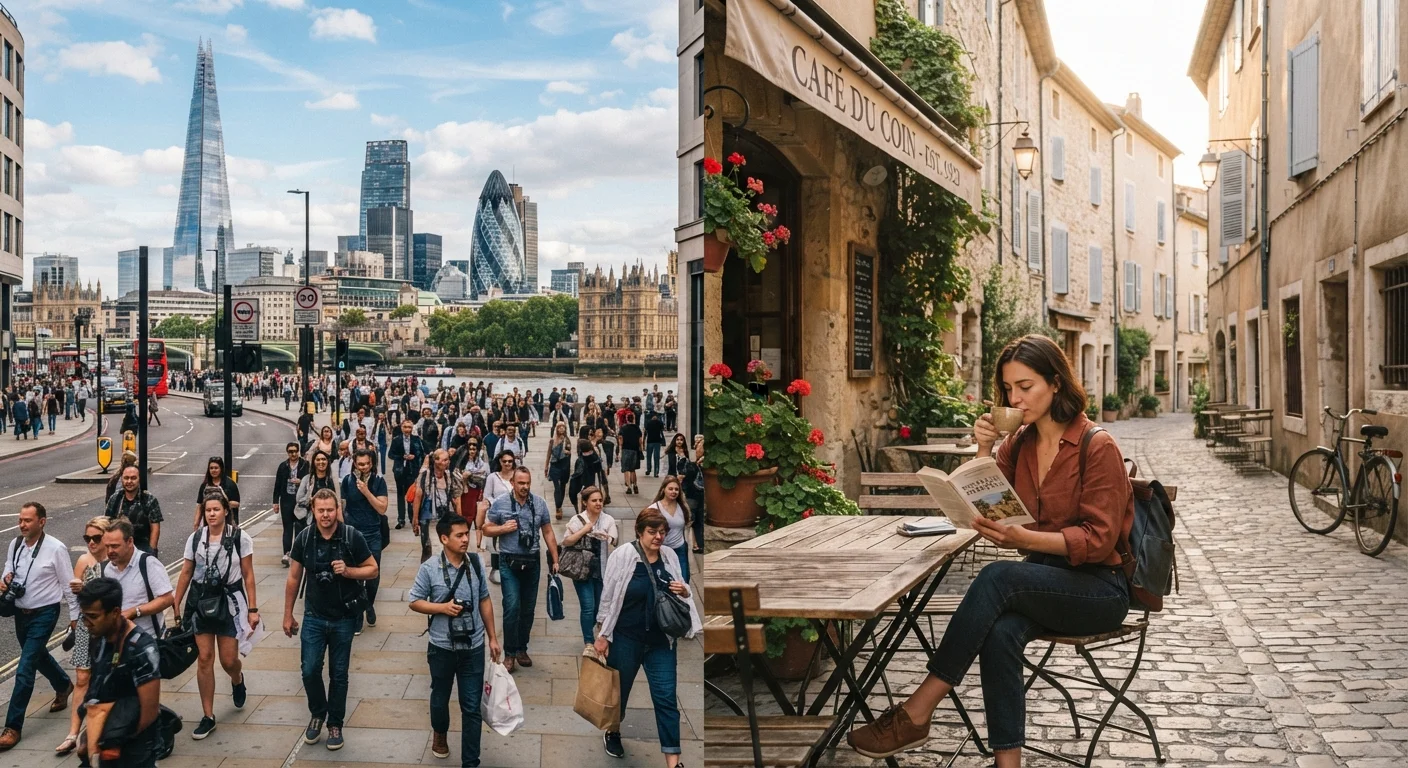
What counts as an "indoor voice" shifts dramatically by culture. In Scandinavian countries, Finland, and Japan, quiet public spaces — trains, restaurants, waiting rooms — are a mark of mutual respect, and speaking loudly on a phone is genuinely frowned upon. In contrast, many Latin American, Middle Eastern, and Southern European cultures treat lively, audible conversation as warmth and sociability rather than intrusion.
Key patterns to know:
- Public transit: In Japan, South Korea, and the Netherlands, talking on your phone or having loud conversations on trains is considered inconsiderate. Silence is the norm.
- Restaurants: In France, a boisterous group of diners may draw disapproving looks. In Mexico or Lebanon, the same energy fits right in.
- Children: In Germany, children are expected to be relatively quiet in public spaces like libraries and certain parks. In Mediterranean countries, children are warmly welcomed and noise around them is accepted.
- Laughter and emotion: In some East Asian cultures, expressing strong emotion loudly in public — including boisterous laughter — can be seen as lacking self-control. This doesn't mean people are cold; it's simply a different code for public versus private expression.
Noise Norms Can Vary Within a Country
Even within a single nation, urban versus rural settings, generational differences, and regional cultures can shift what's considered acceptable volume. A lively conversation that fits perfectly in a Buenos Aires market may draw looks in a small Argentine village. Use your surroundings as your guide — if those around you are quiet, match that energy.
Personal Space: How Close Is Too Close?
Research in cultural anthropology has long identified that different cultures maintain different "comfort zones" — the physical distance people expect between themselves and others in public interactions.
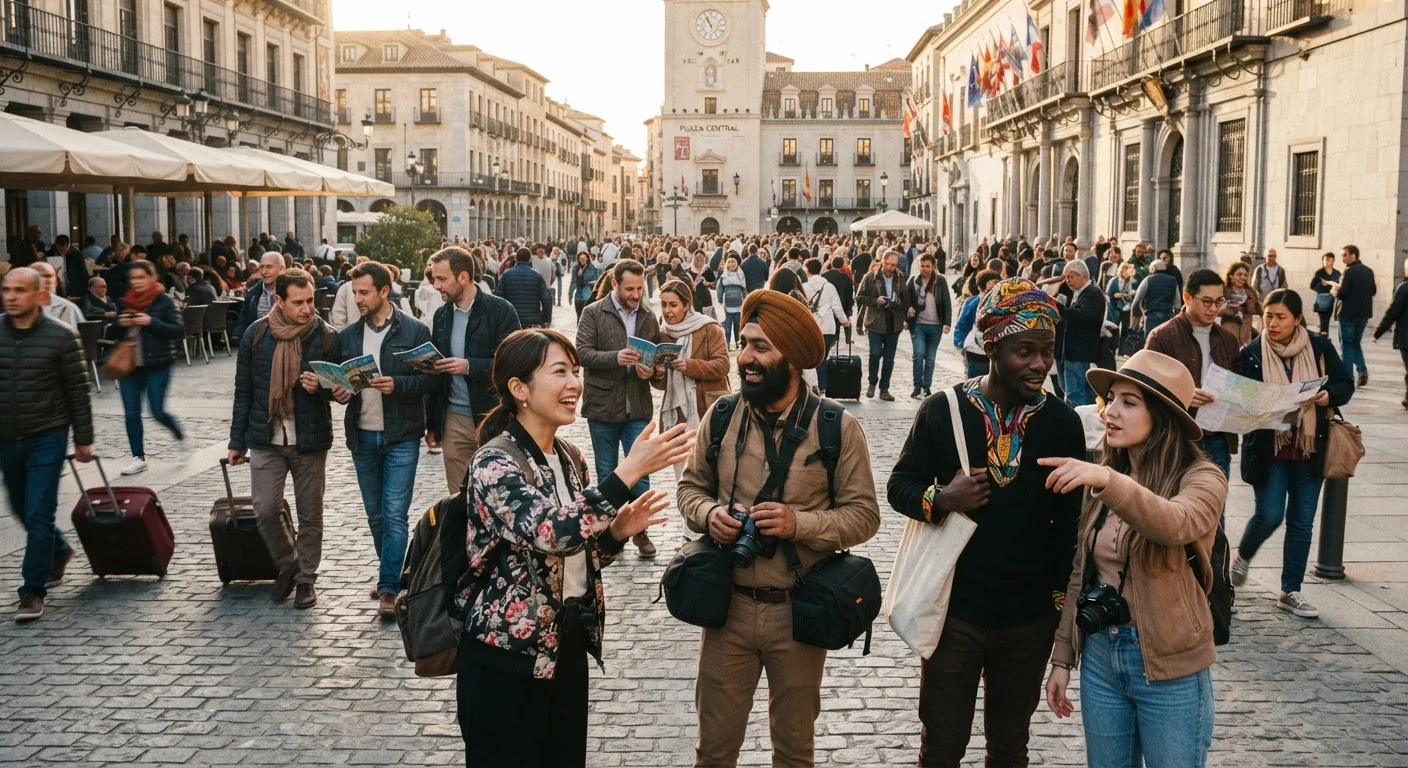
- High-contact cultures (much of Latin America, the Middle East, Southern Europe, and sub-Saharan Africa) tend to stand closer during conversation, make more frequent physical contact, and may touch an arm or shoulder naturally while speaking. Stepping back can read as coldness or distrust.
- Low-contact cultures (Northern Europe, Japan, the US, Canada, and Australia) typically expect more physical distance — roughly an arm's length — in professional and public settings. Standing too close can feel intrusive.
Queuing is its own cultural arena. In the UK, orderly queuing is almost a civic religion. In parts of India, Russia, and China, what looks like a disorderly crowd at a ticket window is simply a different, equally functional system. Frustration in these situations is understandable, but restraint is wise.
Public displays of affection (PDA) also vary widely. Holding hands is accepted almost universally, but kissing in public ranges from completely normal in Paris to illegal or heavily frowned upon in some countries in Southeast Asia and the Gulf region. Always check norms specific to your destination — particularly for same-sex couples, as legal protections and social attitudes differ enormously by country.
Etiquette connects across many dimensions of travel. Explore related cultural norms through our articles on dress codes and modesty and behaviour at sacred sites.
71%
Travelers who made an unintentional cultural faux pas abroad
According to a survey by Expedia Group (2019), the majority of international travelers reported accidentally offending locals through unfamiliar customs.
4 feet
Typical comfortable conversational distance in Northern Europe and North America
Anthropologist Edward T. Hall's foundational proxemics research identified this as the general "social zone" in low-contact cultures.