Why Greetings Matter More Than You Think
The moment you meet someone new, a greeting sets the entire tone of the interaction. Get it right and you signal respect, warmth, and cultural awareness. Get it wrong — say, extending your hand to someone who expects a bow — and you may accidentally come across as rude without meaning to be.
Greetings are packed with social meaning. They communicate hierarchy, familiarity, gender norms, and regional identity all at once. For the first-time traveler, understanding a few key customs before you land can make a huge difference in how you're received.
Of course, locals generally appreciate genuine effort far more than perfection. But knowing the basics is a great place to start — and it shows you care. For more on reading social cues abroad, see our guide on public behaviour and gestures abroad.
| Most widely used greeting | Handshake (North America, Europe, Africa) |
| Countries where bowing is standard | Japan, South Korea, parts of China |
| Cheek-kiss variations in France | 1–4 kisses depending on region |
| Non-contact greeting example | Namaste (India/Nepal), Wai (Thailand) |
| Māori greeting name | Hongi — pressing foreheads and noses together |
| Key rule for all greetings | Follow the local's lead |
A World Tour of Common Greeting Styles
Greeting customs generally fall into a handful of broad categories, though there's enormous variation within each region.
The Handshake
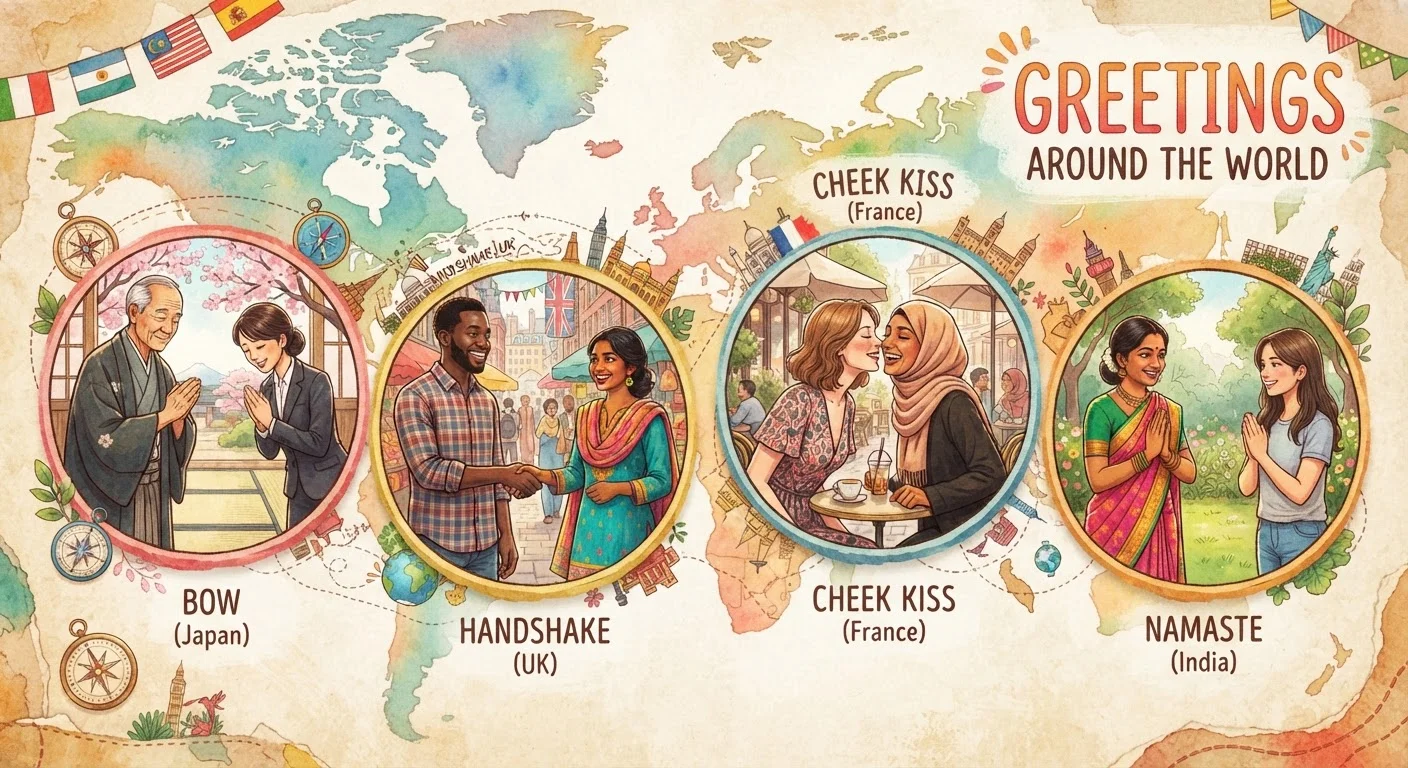
Widely used across North America, Northern Europe, and much of sub-Saharan Africa, the handshake is among the most globally recognized greetings. In many West African cultures, handshakes are elaborate and joyful — involving finger snaps and extended clasping. In Germany, a firm, brief handshake is the norm for both professional and personal introductions.
The Bow
In Japan, South Korea, and parts of China, bowing is the foundational greeting. In Japan especially, the depth of a bow communicates the level of respect: a shallow 15-degree nod for casual encounters, a deeper 45-degree bow for formal or solemn occasions. Initiating even a small bow as a visitor is generally welcomed as a sign of respect.
Cheek Kisses
Common across France, Spain, Italy, Latin America, and the Middle East (between women), the cheek kiss — or la bise in French — varies in number by region. In Paris, two kisses are standard; in parts of southern France, three or even four are expected. In the Netherlands, three kisses are customary among family and close friends.
Namaste and the Wai
In India and Nepal, pressing palms together at the chest and saying namaste is a respectful, non-contact greeting rooted in Hindu tradition. Thailand's wai is similar: hands pressed together in a prayer-like gesture, with a slight bow. The higher the hands and the deeper the bow, the more respect is conveyed — particularly toward elders or monks.
The Hongi
Among Māori communities in New Zealand, the hongi — pressing foreheads and noses together — is a deeply meaningful greeting that symbolizes the sharing of breath and life force. Visitors who participate respectfully during a formal welcome ceremony are considered to have entered the community as guests rather than strangers.
La bise
The French term for the cheek-kiss greeting common across France and parts of Europe. The number of kisses varies by region and relationship.
Wai
A Thai greeting performed by pressing the palms together in a prayer-like gesture with a slight bow. The height of the hands and depth of the bow indicate the level of respect.
Namaste
A respectful greeting used in India and Nepal, performed by pressing palms together at the chest and bowing slightly. It has roots in Hindu tradition and roughly translates as 'I honor the divine in you.'
Hongi
A traditional Māori greeting from New Zealand in which two people press their foreheads and noses together, symbolizing a sharing of breath and spiritual connection.
Contact culture
A term used by researchers to describe societies where physical touch — handshakes, hugs, or kisses — is a normal part of everyday greeting behavior.
Non-contact greeting
A greeting that conveys respect without physical touch, such as a bow, a nod, or the namaste gesture. Common in many parts of Asia.
Practical Tips for Getting It Right
No traveler is expected to be a cultural anthropologist. But a few mindful habits go a long way.
- Follow the local's lead. When in doubt, watch what the other person initiates and mirror it. This is almost always the safest approach.
- Pay attention to gender dynamics. In many cultures, physical greetings between men and women differ significantly from same-gender greetings. In some conservative Muslim-majority countries, for example, men may not initiate physical contact with women outside their family — a respectful nod or hand on the heart is often more appropriate.
- Titles and names matter. In Japan and Korea, using someone's given name without invitation can feel overly familiar. Starting with a title and surname is the respectful default in most formal contexts.
- Don't panic over mistakes. A warm smile and a genuine attempt almost always smooth things over. Locals worldwide are far more forgiving of earnest visitors than popular myth suggests.
Greetings are just one piece of the cultural puzzle. See how similar respect plays out when visiting sacred sites around the world, or explore how gift-giving customs carry their own complex etiquette. Understanding these layers together gives you a much richer picture of respectful travel.
When in Doubt, Smile and Observe
No single guide can cover every local variation — customs can differ between generations, urban and rural settings, and even individual families. When you're unsure, a warm smile and a moment of observation before acting is universally understood. Most people around the world genuinely appreciate curiosity and effort over perfection.