Two Different Things People Use Interchangeably
Most people use "the internet" and "the Web" to mean the same thing. It is an understandable mix-up — they work together so seamlessly that the distinction feels invisible in daily life. But they really do describe two completely separate things, and knowing the difference makes a surprising number of tech concepts click into place.
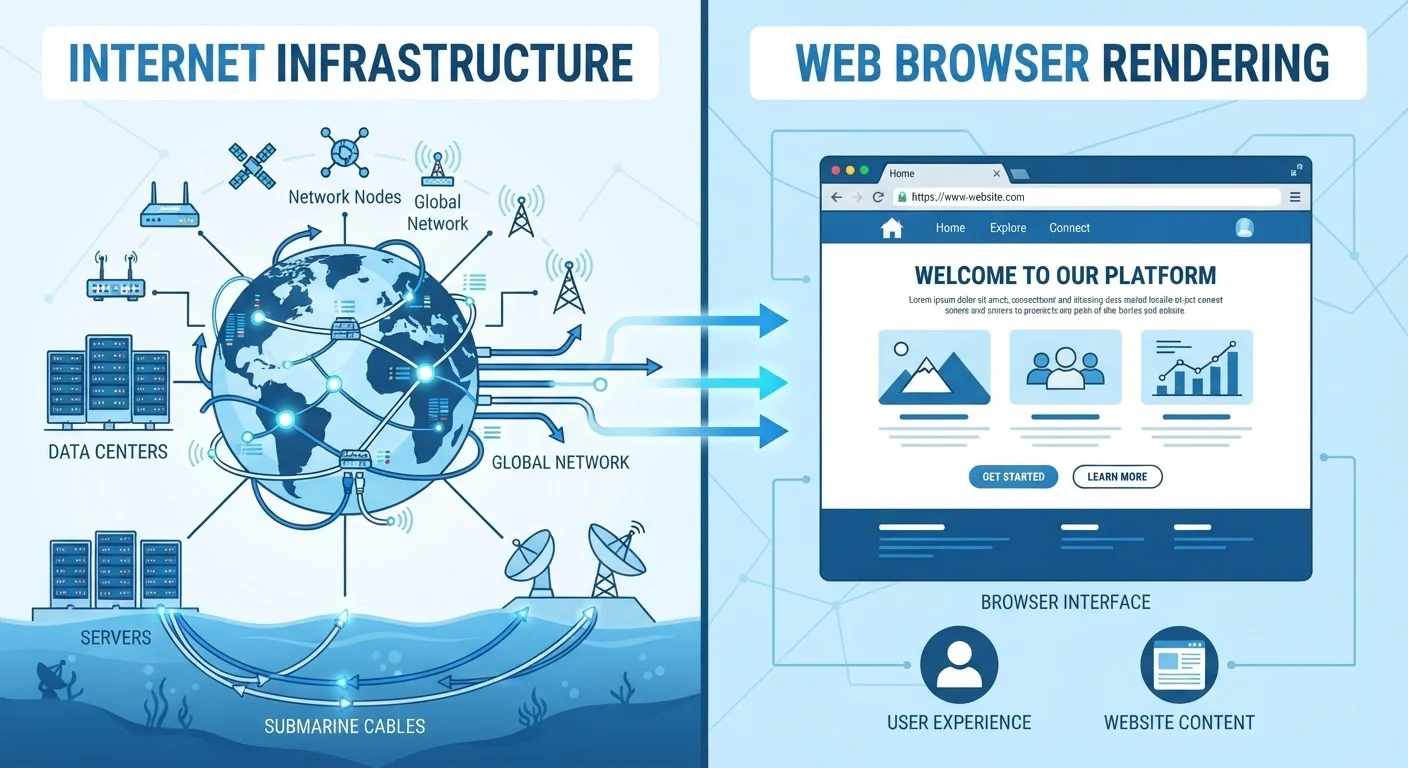
Think of it this way: the internet is like the road network of an entire country — the physical roads, bridges, and tunnels. The World Wide Web is like a specific courier service that uses those roads to deliver parcels. The roads existed before that courier company, and plenty of other delivery services use those same roads every day.
| Criterion | The Internet | The World Wide Web |
|---|---|---|
| What it is | A global network of connected devices | A system of linked web pages and resources |
| When it began | Late 1960s (ARPANET) | 1989 (Tim Berners-Lee) |
| How you access it | Via any internet connection | Via a web browser |
| Depends on the other? | No — exists independently | Yes — requires the internet |
| Examples of use | Email, gaming, streaming, calls | Websites, online articles, web apps |
| Core technology | TCP/IP protocols | HTTP/HTTPS and HTML |
What the Internet Actually Is
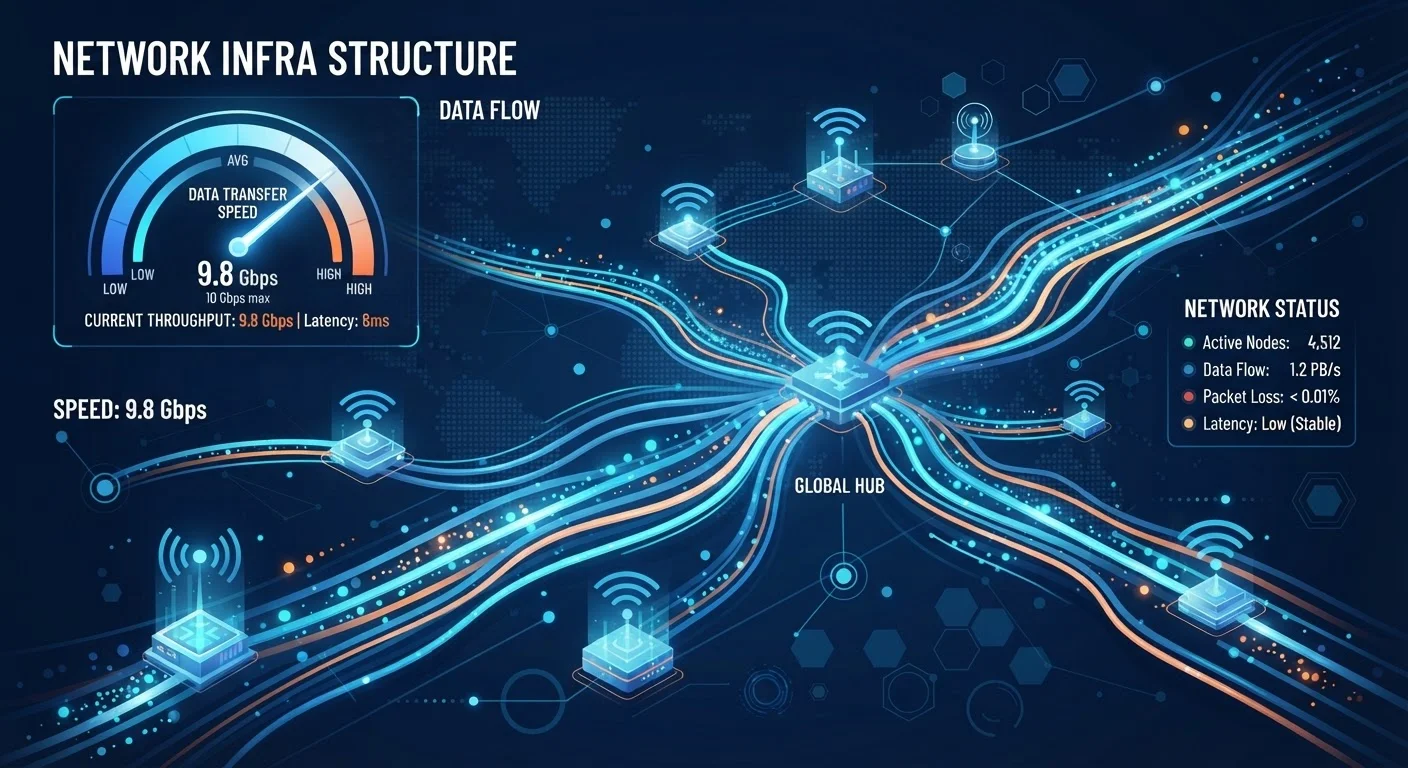
The internet is a massive, global network of computers and other devices all physically connected to one another — through cables under the ocean, fiber-optic lines, wireless towers, and satellites. The word "internet" is short for interconnected networks. It dates back to the late 1960s, when the US Defense Department built an early version called ARPANET.
The internet's job is simply to move data — any kind of data — from one device to another. That data could be an email, a video stream, a voice call, a multiplayer game session, or a web page. The internet does not care what the data is; it just delivers it. This is why you can be on the internet without ever opening a browser. Wi-Fi and mobile data are both ways to connect to the internet — neither is the Web itself.
1969
Year the internet's predecessor launched
ARPANET, funded by the US Department of Defense, sent its first message in October 1969 — two decades before the Web existed.
1991
Year the World Wide Web went public
Tim Berners-Lee made the Web publicly available in August 1991, opening it beyond the research community for the first time.
5+ billion
Internet users worldwide
According to ITU estimates, more than five billion people use the internet globally — accessing it through a wide range of services, not only the Web.
What the World Wide Web Actually Is
The World Wide Web — usually just called the Web — is a system of documents (web pages) and other resources that are linked together with hyperlinks and can be retrieved using a browser. It was invented in 1989 by British computer scientist Tim Berners-Lee while working at CERN, and it became publicly available in 1991.
When you open a browser like Chrome, Firefox, or Safari and visit a website, you are using the Web. The browser sends a request over the internet to a computer called a server, which holds the web page. The server sends the page back over the internet, and your browser displays it. The Web relies entirely on the internet to function, but it is still just one layer on top of it.
To learn about the other tools that sit alongside the Web, see the difference between an app and a browser.
Why "Going Online" Usually Means Both
In everyday speech, "going online" blurs the line because most people's first internet activity is opening a browser. But technically, your device is online — connected to the internet — the moment it joins a network, even before you open a browser. The Web only comes into play when you actually navigate to a web address.
What Uses the Internet but Not the Web?
Once you see the internet as the underlying network, it becomes obvious how much happens on it that has nothing to do with web pages. Here are the most common examples:
- Email — uses internet protocols (specifically SMTP, IMAP, and POP3) that are entirely separate from the Web's protocol (HTTP).
- Streaming services — apps like music or video platforms often use the internet directly through their own apps, not through a browser.
- Online gaming — game consoles and PC games connect directly to game servers over the internet.
- Video and voice calls — whether through a dedicated app or a business platform, these travel over the internet without visiting a web page.
For a broader look at the language around all of this, key internet terms every beginner should know offers a plain-English glossary worth bookmarking.