What a Stopcock Actually Does
Think of your stopcock as the master off-switch for your home's water supply. When it's open, mains-pressure water flows freely through every pipe, tap, and appliance in the building. When it's closed, that flow stops entirely.
This matters most in emergencies: a burst pipe, a leaking appliance connection, or a fitting that fails under pressure can release hundreds of liters of water in a short time. Knowing how to shut off the supply in those first few seconds can be the difference between a minor inconvenience and serious structural damage. For more on how small issues can escalate quickly, see why small leaks become big problems.
External Stopcocks Are Your Supplier's Responsibility
The stopcock located in a box at the edge of your property boundary belongs to and is maintained by your water supplier. You should not operate it yourself in most circumstances — contact your supplier if you believe it needs attention. Your internal stopcock is the one you should know and use.
Finding Your Stopcock
Before anything goes wrong, take five minutes to locate your internal stopcock. Here's where to look:
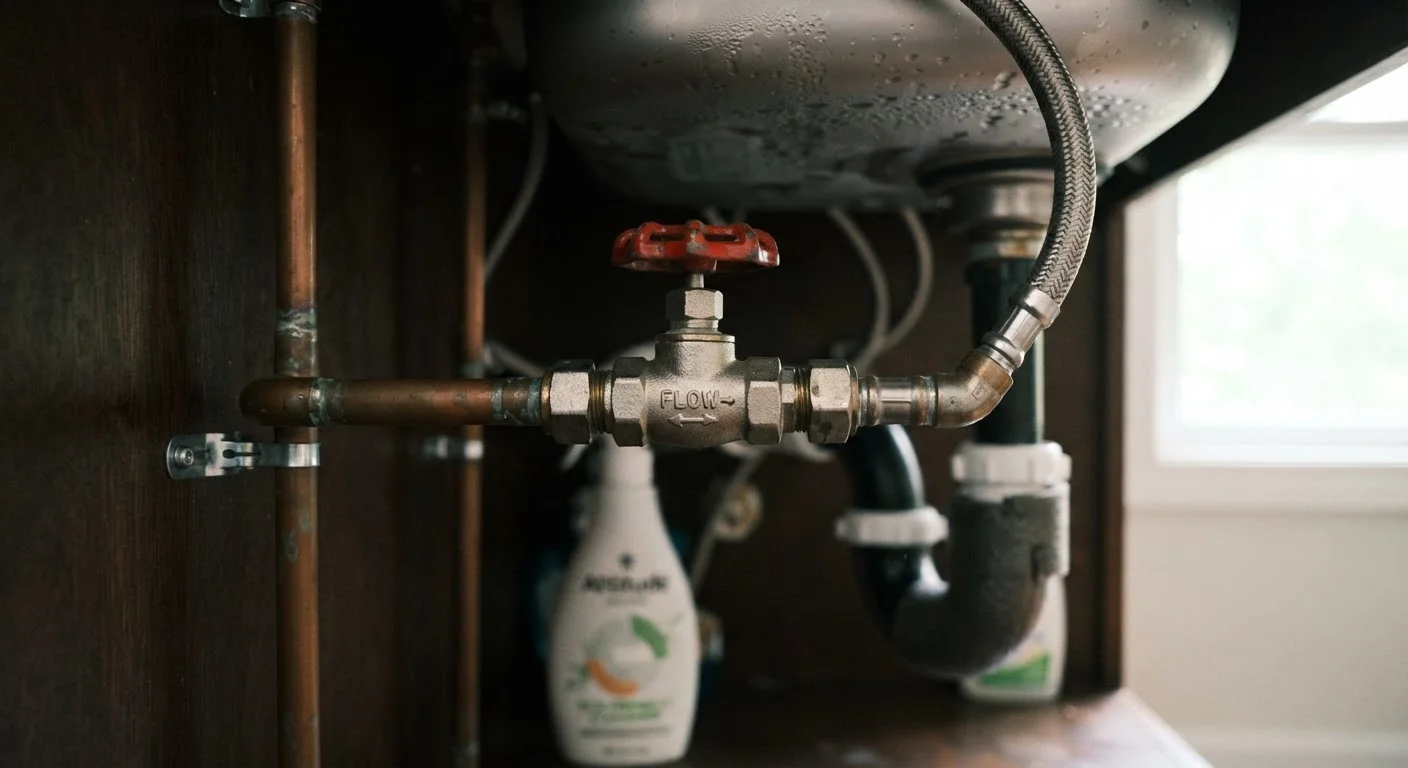
- Under the kitchen sink — the most common location in US and UK homes alike. Look along the back wall where the supply pipe comes through.
- Utility room or basement — in homes with a dedicated utility space, the supply pipe often enters there.
- Near the front door — some older homes have the stopcock in a small cupboard or under the floorboards close to the main entry point.
Once found, make sure everyone in the household knows where it is. Label it with a piece of tape if needed. You should also be aware that your water supplier maintains a separate external stopcock in a covered box set into the pavement or yard outside — this one is for their use, but it's worth knowing it exists.
Test Your Stopcock Once a Year
A stopcock that hasn't been turned in years can seize in place — leaving you unable to close it when you need to most. Add a quick test to your annual home checklist: turn it off, check a tap runs dry, then reopen. It takes under two minutes and confirms the valve is still functional.
How to Operate It Safely
Operating a stopcock is straightforward, but a few points are worth knowing before you reach for it:
- To close: Turn the handle clockwise until it stops. On a ball valve, the handle will sit at a right angle to the pipe. On a gate valve, you may need several full rotations.
- To open: Turn counterclockwise. Open it fully, then turn back a quarter-turn — this prevents the valve from jamming open over time.
- After reopening: Turn on a cold tap and let it run briefly to clear any air from the pipes. You may hear a brief spluttering sound — that's normal.
If your stopcock is stiff, do not force it. A seized valve is itself a maintenance problem worth addressing — contact a licensed plumber to service or replace it. This is exactly the kind of overlooked task covered in our guide to tasks homeowners forget until something goes wrong.
When You'll Actually Need It
Most homeowners go years without touching their stopcock — and then need it urgently. Common situations include:
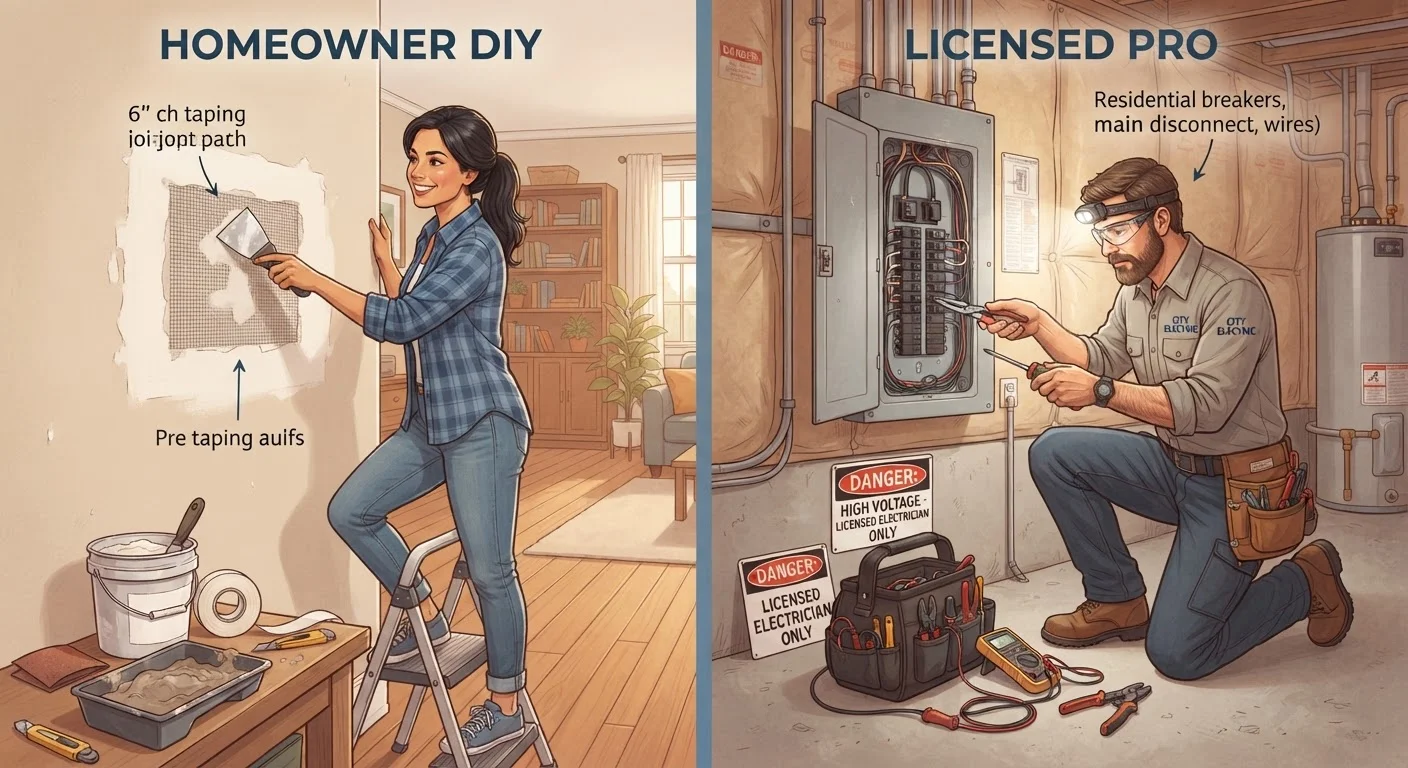
Beyond emergencies, you'll also need to shut the supply when replacing a tap, fitting a new washing machine, or carrying out any plumbing work upstream of an isolation valve. For guidance on deciding which jobs you can safely handle yourself, see DIY vs calling a professional.
Make testing your stopcock part of your annual home maintenance routine — turn it off, confirm water stops at a tap, then reopen it. This simple check confirms it works and keeps the mechanism from seizing. It fits naturally into the broader habits described in Home Maintenance Demystified.
1 in 5
Homeowners who don't know where their stopcock is
Industry surveys by UK water suppliers consistently find a significant proportion of homeowners cannot locate their internal stopcock before an emergency.
~400L
Water a burst pipe can release per hour
A mains-pressure supply pipe can discharge large volumes quickly; the sooner flow is stopped, the less structural damage occurs.