How Your Boiler Actually Works
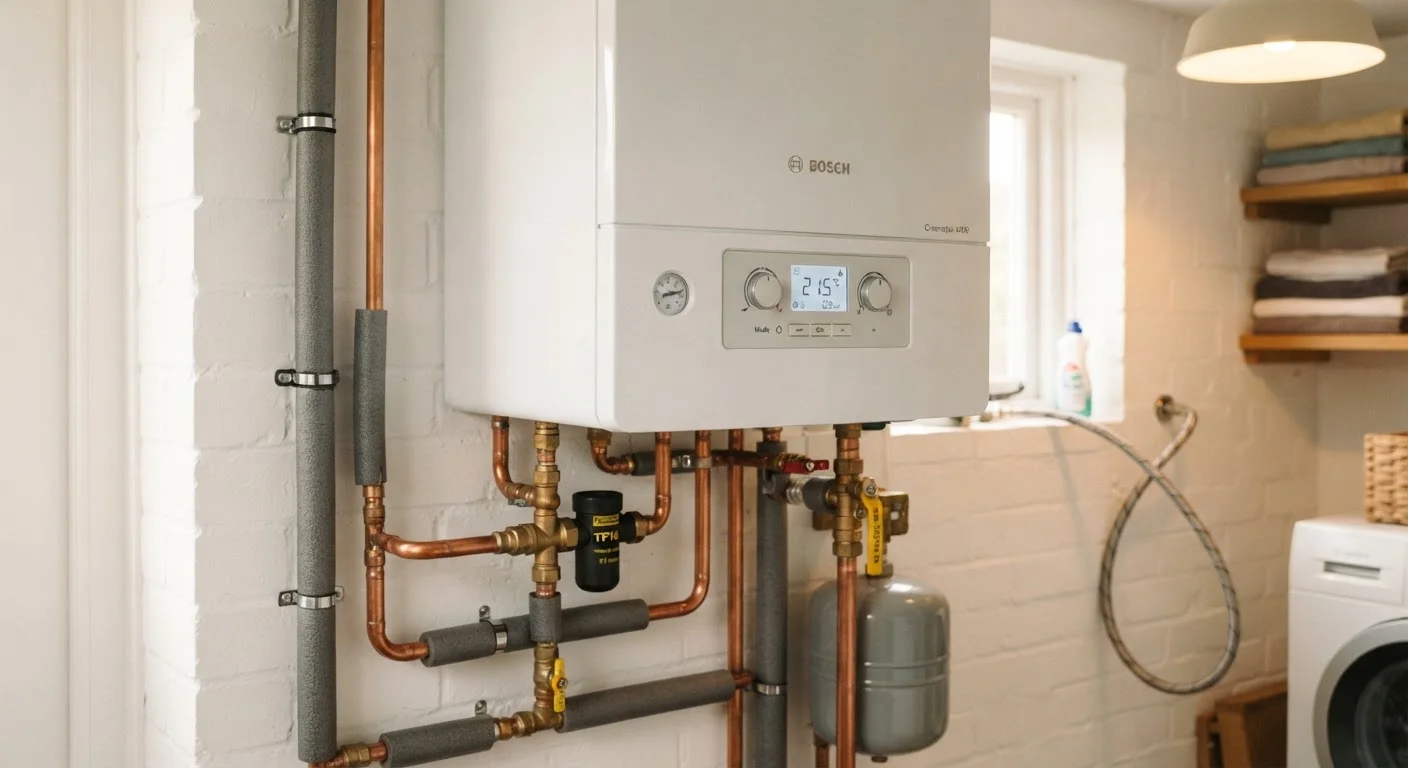
A boiler is your home's central heating engine. It heats water and distributes it through pipes to radiators throughout your home, and in most cases also supplies your hot water taps. The most common type in US and UK homes is a gas-fired condensing boiler, though oil, electric, and combination (combi) boilers are also widely used.
A combi boiler heats water on demand — meaning there's no separate hot water tank. A system boiler works with a hot water cylinder. Understanding which type you have helps you follow the right maintenance steps and have informed conversations with engineers.
For a broader look at how heating fits into your home's overall upkeep, see our beginner's guide to home maintenance.
Know Your Boiler Type Before You Start
Maintenance steps can vary depending on whether you have a combi boiler, a system boiler, or a heat-only (conventional) boiler. Check your boiler's make and model — usually printed on the front panel — and keep the manual accessible. If you don't have a physical copy, most manufacturers provide downloadable manuals on their websites.
Best Practices for Keeping Your Boiler in Good Shape
Consistent, simple habits make a significant difference in how long your boiler lasts and how reliably it performs. Here are the practices every homeowner should follow:
Schedule a professional boiler service every year, before the heating season begins.
Annual servicing catches developing faults early, ensures the boiler burns fuel safely and efficiently, and is often a condition of manufacturer warranties. Skipping a year can allow small issues to become expensive failures.
Check your boiler's pressure gauge monthly and repressurise when it drops below 1 bar.
Correct water pressure (typically between 1 and 1.5 bar when the system is cold) is essential for the boiler to function. Low pressure causes the boiler to lock out, interrupting heating and hot water.
Bleed your radiators once a year, or whenever you notice cold spots at the top.
Air trapped in radiators prevents hot water from circulating fully, making your heating system work harder and rooms heat unevenly. Bleeding releases that trapped air and restores efficiency.
Keep the area around your boiler clear and ensure the flue is unobstructed.
Boilers need adequate airflow to combust safely. A blocked flue can cause dangerous carbon monoxide to build up inside the home — a colorless, odorless gas that is life-threatening.
Install and regularly test a carbon monoxide detector near your boiler.
Carbon monoxide (CO) is produced by incomplete combustion and cannot be detected by smell or sight. A working CO alarm is your primary safety net if the boiler develops a flue or combustion fault.
Warning Signs You Shouldn't Ignore
Your boiler will often signal trouble before a full breakdown occurs. Catching these early saves money and keeps your household safe.
- Unusual noises: Banging, kettling (a rumbling sound like a kettle boiling), or whistling can indicate limescale buildup or a failing component.
- Pilot light keeps going out: On older boilers, a repeatedly extinguishing pilot light may suggest a faulty thermocouple or gas supply issue.
- Low or fluctuating pressure: A pressure gauge reading below 1 bar typically means you need to repressurise the system.
- Radiators heating unevenly: Cold spots — especially at the top of a radiator — usually mean trapped air that needs bleeding.
- Higher energy bills without explanation: A drop in efficiency is often the first sign a boiler is working harder than it should.
Any suspected gas leak — smell of gas, carbon monoxide alarm sounding — requires immediate action: leave the property, do not use electrical switches, and call your gas emergency provider. This is never a DIY situation.
Good boiler health also ties to your home's ventilation. Learn more in our article on understanding home ventilation.
What Annual Servicing Involves — and Why It's Non-Negotiable
An annual boiler service by a qualified engineer is the foundation of safe, efficient heating. During a service, the engineer will typically:
- Inspect the heat exchanger for cracks or corrosion
- Check the burner and combustion performance
- Test safety controls and the flue (the exhaust pipe that removes combustion gases)
- Look for any signs of leaks — gas or water
- Clean key components and check seals
In the US, boiler servicing should be performed by a licensed HVAC technician. In the UK, gas work must legally be carried out by a Gas Safe registered engineer — always verify registration before allowing anyone to work on a gas appliance.
~90%
Efficiency of modern condensing boilers
Modern condensing boilers can achieve around 90% or higher efficiency ratings, compared to around 70–80% for older non-condensing models, according to the U.S. Department of Energy.
1 in 7
Boilers that fail without prior servicing
Industry estimates suggest a significant proportion of boiler breakdowns occur in systems that have not received a service in the preceding year, underlining the value of routine checks.
Boiler servicing is one of those tasks that's easy to defer — but the consequences of skipping it can be serious. It's listed among the tasks homeowners most commonly overlook until something fails.