The One Variable That Separates Every Flour Type
When a recipe says 'flour,' it almost always means a specific type — and the reason that specificity matters comes down to a single variable: protein content.
All wheat flours come from ground wheat, but different wheat varieties and milling methods produce flours with different percentages of protein. That protein doesn't affect flavor much. What it does affect is gluten — the network of elastic strands that forms when flour meets water and gets mixed or kneaded.
More protein means more potential gluten. More gluten means more structure, more chew, more resistance to rising bubbles popping. Less protein means less gluten — and a softer, more crumbly, more tender final product. That's the whole game. Everything else follows from it.
7–9%
Protein content in cake flour
Cake flour's low protein content is what produces the soft, fine crumb associated with layer cakes and chiffon cakes.
12–14%
Protein content in bread flour
Bread flour's higher protein builds the strong gluten network essential for chewy, well-risen bread loaves.
~1½ tsp
Baking powder per cup in self-raising flour
This is the standard ratio already built into self-raising flour, making additional leavening in the same recipe redundant.
A Practical Map of Common Flour Types
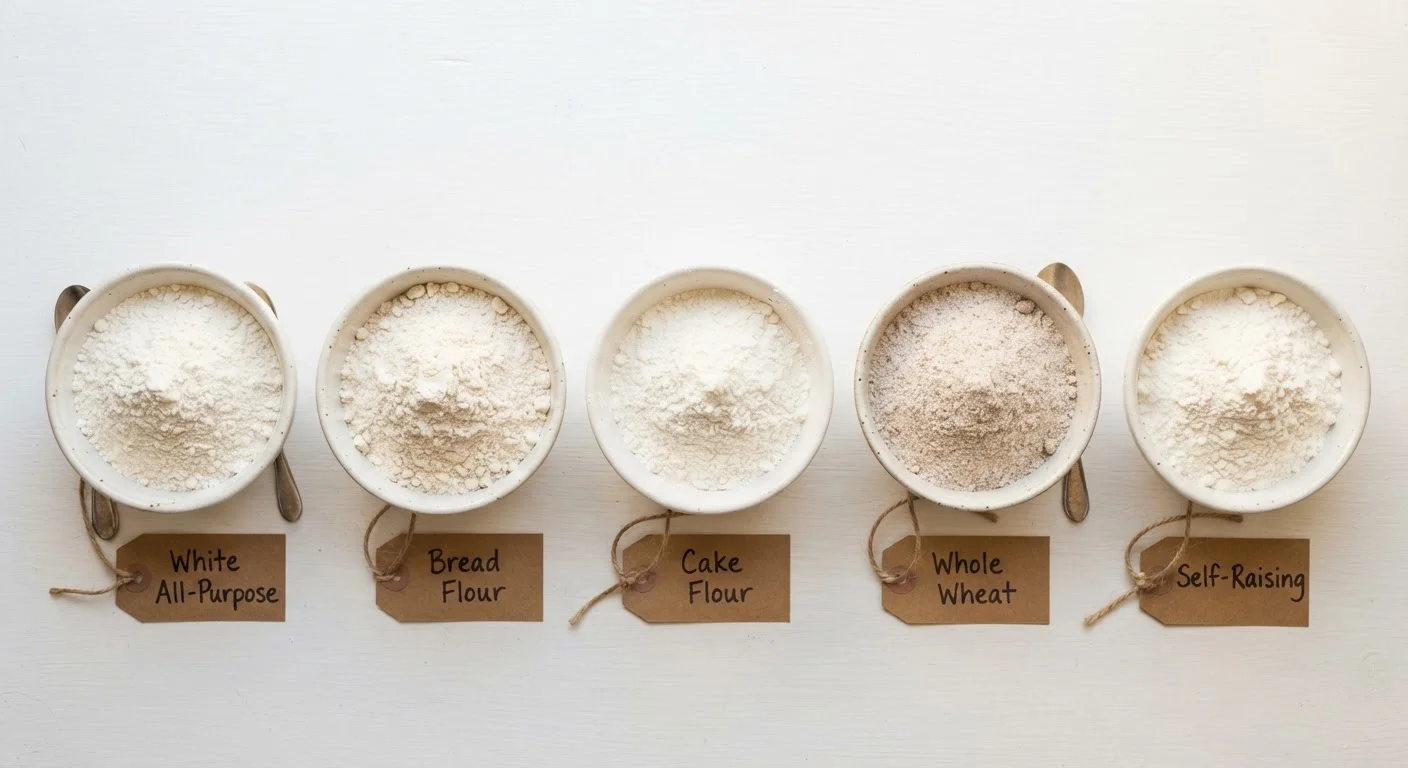
Here's how the most common flours in American kitchens actually differ:
- All-purpose flour (~10–12% protein)
- The workhorse. Milled to be versatile enough for cookies, quick breads, pancakes, and basic cakes. When a recipe just says 'flour,' this is almost always what it means. It's a deliberate middle ground — enough protein for structure, not so much that things turn tough.
- Bread flour (~12–14% protein)
- Higher protein builds the strong gluten network that traps gas from yeast, giving bread its chewy texture and airy crumb. Using this in a delicate cake would overdevelop gluten and produce a dense, rubbery result.
- Cake flour (~7–9% protein)
- Fine-milled and low-protein by design. Less gluten means a softer, more tender crumb — the kind you find in layer cakes and chiffon cakes. It's often bleached, which also slightly weakens gluten structure further.
- Self-raising flour (~10% protein + leavening)
- All-purpose flour with baking powder (and sometimes salt) already mixed in. Common in Southern American baking and throughout British and Australian recipes. If a recipe calls for this, do not add extra baking powder on top unless the recipe explicitly says so.
- Whole wheat flour (~13–14% protein)
- Includes the bran and germ of the wheat kernel, not just the starchy endosperm. Higher protein and more fiber, but the bran cuts through gluten strands, so the result is typically denser rather than chewier.
For a deeper look at how leavening agents work alongside your flour choice, see our guide to yeast, sourdough, and chemical leaveners.
When in Doubt, Check the Protein Number
Many flour bags list protein content per serving in the nutrition facts panel. A quick glance tells you where it falls on the spectrum. Anything around 10–12g per 100g is all-purpose territory; above 12g trends toward bread flour; below 9g is cake or pastry flour range.
Why Swapping Flours Can Quietly Ruin a Recipe
Most baking failures that beginners attribute to 'following the recipe exactly' actually trace back to ingredient substitutions that seemed harmless — and flour swaps are among the most common.
The structural logic of a baked good is built around the flour's behavior. A recipe's liquid ratios, mixing times, and leavening amounts are calibrated for a specific flour. Change the protein level and you change how much liquid the flour absorbs, how much gluten develops during mixing, and how the final crumb sets. These aren't cosmetic changes — they're structural ones.
If a recipe doesn't specify a type and you're unsure, all-purpose flour is the safest default. But when a recipe clearly calls for bread flour or cake flour, treat that as a meaningful instruction, not a suggestion. For more on decoding recipe language confidently, see Reading a Recipe Without Getting Confused.
Just as choosing the right butter matters more than it seems, choosing the right flour is a structural decision — not a preference.