
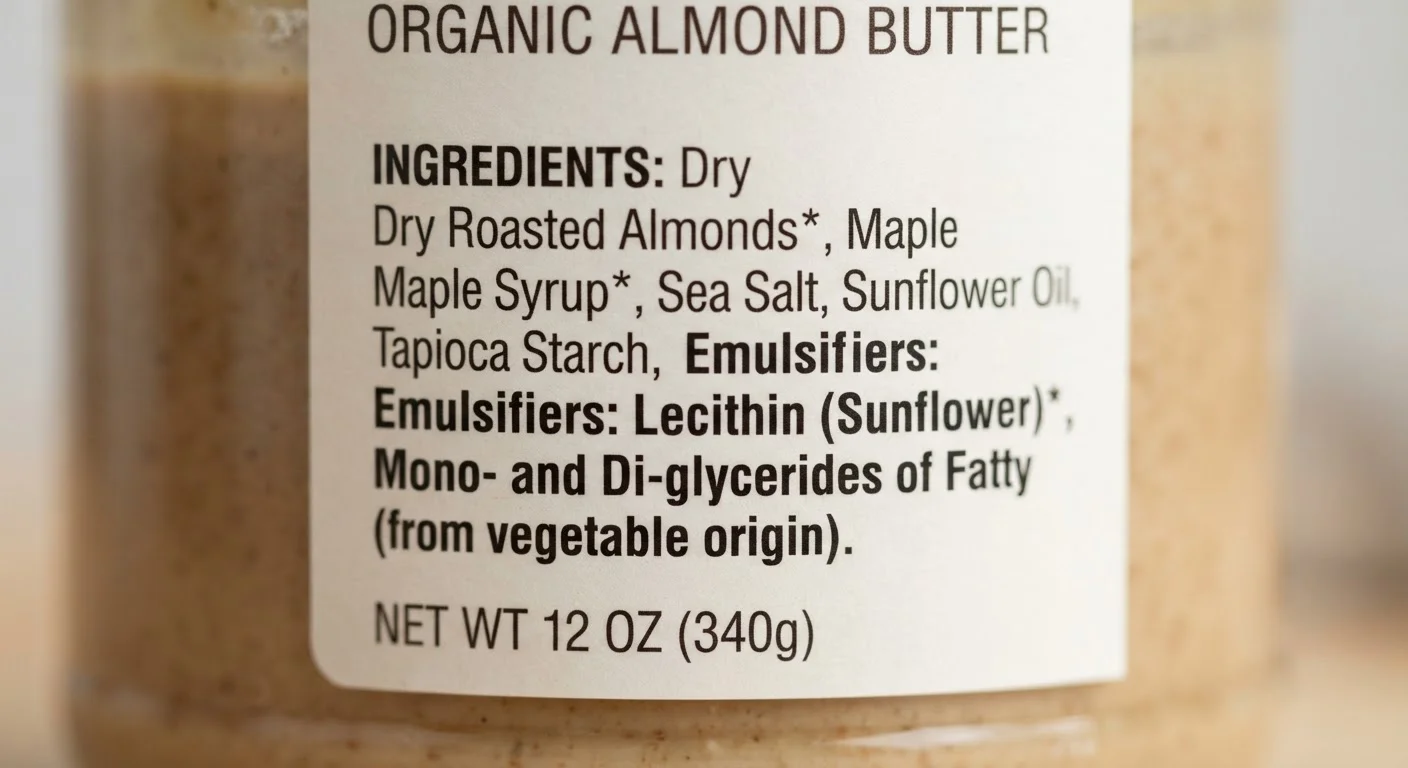
Why Oil and Water Don't Mix — And Why That's a Problem
Water and oil repel each other at a molecular level. Left to their own devices, they will always separate into two distinct layers. That's fine in a jar of salad dressing you can shake, but it's a serious problem in mayonnaise, chocolate, margarine, or a loaf of sliced bread that needs to stay soft for a week.
This is exactly the problem emulsifiers solve. By acting as a bridge between fat and water molecules, they allow the two to form a stable, uniform mixture called an emulsion. The result is a smoother product with consistent texture, no unsightly separation, and often a longer usable life.
Before you can fully decode what you're seeing on a label, it helps to understand how ingredient lists are structured — including the naming conventions manufacturers use for additives like these.
~70%
Share of processed foods containing emulsifiers
Industry estimates suggest emulsifiers are present in a large majority of commercially manufactured food products, from bread to chocolate.
1920s
Decade soy lecithin entered commercial food use
Soy lecithin has been a commercial food ingredient for roughly a century, making it one of the longest-used food additives in modern manufacturing.
2
Fatty acid chains in a diglyceride molecule
Compared to a standard dietary fat (triglyceride) with three chains, a diglyceride's two-chain structure gives it its dual affinity for oil and water.
Lecithin: The Natural Emulsifier You Already Know
Lecithin is one of the most familiar emulsifiers because it appears in everyday whole foods. Egg yolks are rich in lecithin — it's precisely why whisking an egg into oil and vinegar produces mayonnaise instead of a greasy mess. Soybeans are another abundant source, and soy lecithin is the form most often extracted for commercial food production.
On a label, you'll typically see it listed as soy lecithin, sunflower lecithin, or simply lecithin. It shows up in chocolate (to improve flow during manufacturing), salad dressings, baked goods, and infant formula. Because it comes from a recognizable natural source, many consumers find it easier to accept than chemically synthesized additives.
Checking the Source of Lecithin
If you have a soy allergy or prefer to avoid soy, look for products that specify 'sunflower lecithin' on the label. Sunflower-derived lecithin has become more common in health-oriented products and performs the same function. When a label just says 'lecithin' without specifying the source, the manufacturer's website or customer service line can usually clarify.
For people avoiding soy, sunflower lecithin is a functionally similar and increasingly available alternative. Both perform the same emulsifying role; the difference is purely the source plant.
Mono- and Diglycerides: The Less Familiar Name
Mono- and diglycerides (sometimes written as mono-diglycerides) are a class of emulsifiers derived from fats — usually vegetable oils, though animal-derived versions exist. They are fragments of triglycerides, which are the standard structure of dietary fat. A triglyceride has three fatty acid chains attached to a glycerol backbone; mono- and diglycerides have one or two chains instead, which gives them their emulsifying properties.
They are extraordinarily common. You'll find them in bread and rolls (where they soften the crumb and slow staling), peanut butter (to keep the oil from separating), ice cream (for a creamier texture), and margarine. Their neutral flavor and reliable performance make them a practical choice for large-scale food manufacturing.
One nuance worth knowing: because mono- and diglycerides are technically classified as emulsifiers rather than fats, they do not always appear in the fat or calorie count on a Nutrition Facts panel, even though they originate from fat. This regulatory distinction is one reason it's worth reading the ingredient list alongside the panel. See our guide on what the Nutrition Facts label is actually telling you for context.
What This Means for Your Shopping and Cooking
For most people, lecithin and mono-diglycerides are unremarkable background ingredients — functional, widely tested, and present in small quantities. Regulatory bodies including the FDA classify them as GRAS (Generally Recognized As Safe) at the levels used in food.
That said, being an informed reader of labels is always worthwhile. If you are avoiding soy for allergy reasons, confirm whether a product uses soy-derived lecithin. If you follow a vegan or halal diet, check whether mono-diglycerides are listed as plant-derived, since animal-sourced versions exist.
Emulsifiers are just one category of ingredient with an intimidating-sounding name. The same logic — understanding function before drawing conclusions — applies when you encounter additives like xanthan gum or MSG on a label.
Ingredient Lists vs. Skincare Labels
Emulsifiers aren't unique to food — they appear in lotions, creams, and cosmetics for exactly the same reason: keeping oil and water from separating. If you've started decoding food labels and want to apply the same logic to personal care products, the principles are largely the same. Our article on decoding a skincare ingredient list walks through that process.