One Plant, Four Completely Different Drinks
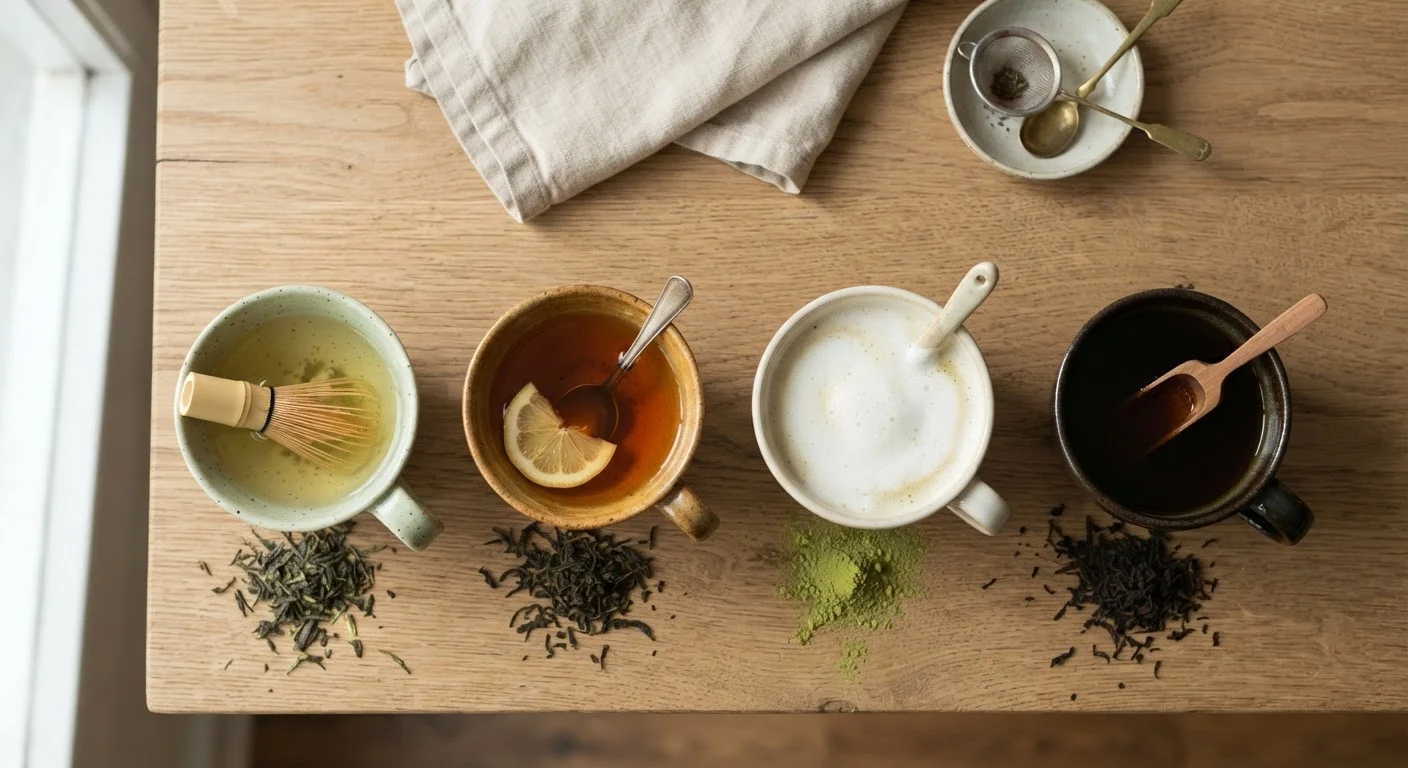
It surprises many people to learn that green tea, black tea, white tea, and oolong all come from the same plant: Camellia sinensis, an evergreen shrub native to parts of East Asia. What ends up in your cup depends almost entirely on what happens to the leaf after it is picked — not on the plant variety itself.
Think of it like grapes and wine. The same grape, handled differently in the winery, produces wildly different results. Tea works the same way. The processing journey — particularly a chemical process called oxidation — transforms a fresh green leaf into something pale and delicate, or dark and robust, or anything in between.
Just as coffee's flavor is shaped by how beans are handled after harvest, tea's character is almost entirely a product of post-harvest decisions.
~3,000
Recognized tea varieties worldwide
The World Tea Academy estimates thousands of distinct teas exist globally, all traceable to Camellia sinensis cultivars and processing variations.
15–85%
Oxidation range in oolong teas
Oolong producers deliberately stop oxidation at different points, creating a spectrum from near-green to near-black in flavor and color.
~40–70 mg
Caffeine per cup of black tea
According to general nutritional data, an 8 oz cup of brewed black tea typically contains 40–70 mg of caffeine, varying by steep time and leaf grade.
The Role of Oxidation — The Central Concept
Oxidation is the process that distinguishes tea types from one another. When a tea leaf is physically damaged — by rolling, bruising, or crushing — enzymes inside the leaf react with oxygen in the air. This reaction darkens the leaf, changes its aroma, and develops new flavor compounds.
Producers control oxidation by applying heat, which deactivates those enzymes and stops the process. The moment they apply heat, and for how long they allow the reaction to continue before stopping it, determines the tea type:
- No oxidation → Green tea
- Minimal oxidation → White tea
- Partial oxidation → Oolong tea
- Full oxidation → Black tea
This is why the difference between tea types is best understood as a spectrum, not a set of totally separate categories.
“The difference between a green tea and a black tea is not the plant — it is the patience of the producer. How long you let the leaf breathe before stopping it defines everything about what ends up in the cup.”
— Lu Ann Pannunzio, Tea educator and founder of a North American tea academy
Breaking Down Each Type
Green Tea
After picking, green tea leaves are heated almost immediately — either by pan-firing (common in China) or steaming (common in Japan). This halts oxidation entirely, keeping the leaf green and preserving fresh, plant-forward flavors. Expect grassy, vegetal, or sometimes nutty notes. Brewing green tea with boiling water often produces bitterness; around 160–175°F (70–80°C) is typically recommended.
White Tea
White tea undergoes the least intervention. Young leaves and buds are simply withered and dried — often just left in controlled conditions to lose moisture slowly. There is minimal oxidation and no rolling. The result is a delicate, subtly sweet cup, often with floral notes. Silver Needle, made from unopened buds, is a well-known example.
Oolong Tea
Oolong is intentionally oxidized — but only partway. Leaves are withered, then gently tossed or rolled to bruise them, triggering oxidation for a set period before heat is applied to stop the process. Oxidation levels range from about 15% to 85%, which is why some oolongs taste light and floral while others are dark and roasted. This range makes oolong one of the most complex tea categories. See how oolong features in traditional tea ceremonies across different cultures.
Black Tea
Black tea leaves are withered, rolled vigorously to break down cell walls, and then left to oxidize fully before being dried. Full oxidation turns the leaf dark brown or black and creates the bold, malty, sometimes astringent flavors that make black tea pair well with milk. It also generally produces a higher caffeine content per cup than the other types.
Match Your Water Temperature to Your Tea
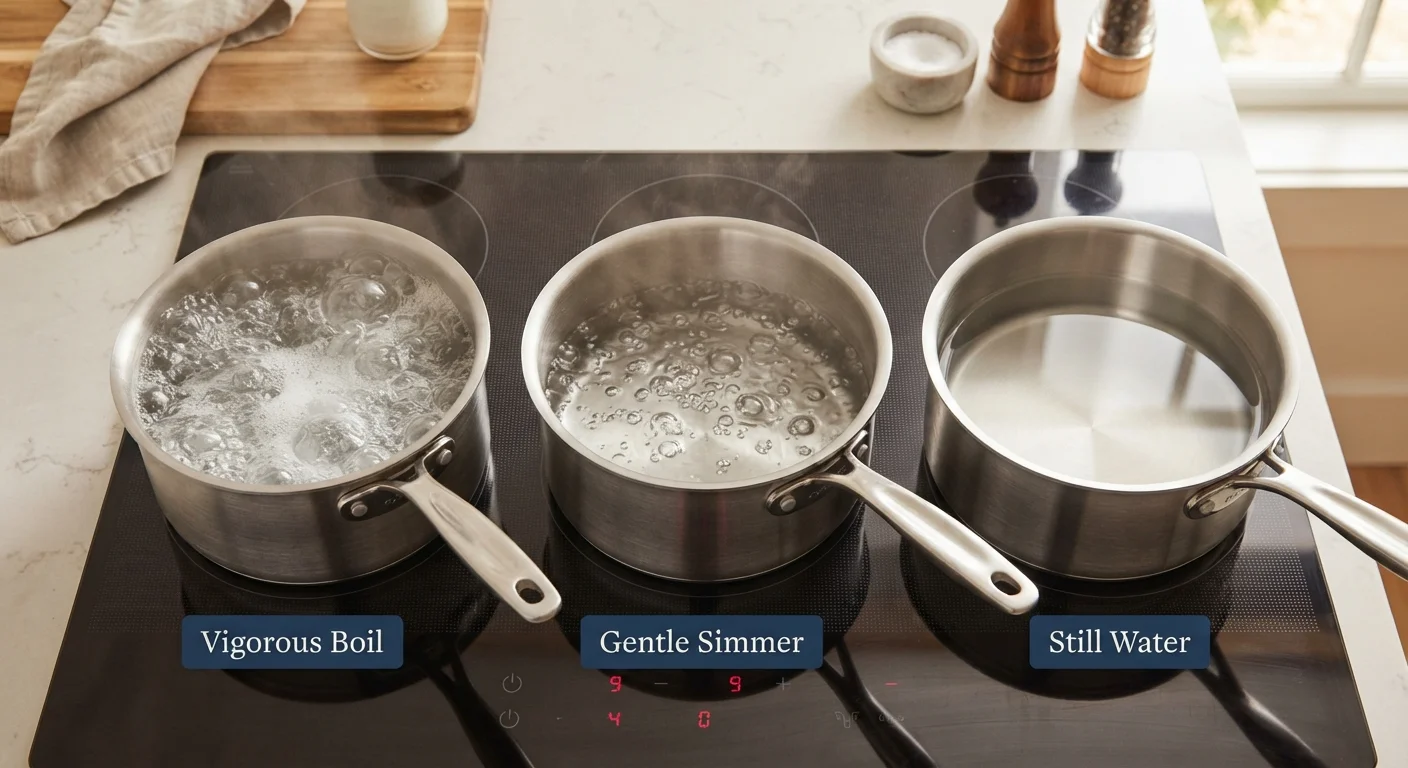
Using boiling water on green or white tea is one of the most common beginner mistakes — it scorches the delicate leaves and produces a bitter, astringent brew. Green tea generally brews best around 160–175°F (70–80°C), white tea around 175°F (80°C), oolong around 185–205°F (85–96°C), and black tea can handle a full boil at 212°F (100°C). A simple kitchen thermometer takes the guesswork out.
Why Processing Choices Were Developed
These processing methods evolved partly from geography and trade. Full oxidation in black tea helped preserve the leaves during long sea voyages from Asia to Europe — oxidized tea stayed stable far longer than green tea. Green and white teas, consumed closer to where they were grown, didn't need that durability.
Oolong processing developed in China's Fujian province and Taiwan, where producers discovered that partial oxidation allowed them to create complex flavor profiles suited to local palates and high-altitude growing conditions.
Today, processing is as much an art as a science. Variables like the altitude of the garden, the season of harvest, the humidity of the drying room, and the skill of the producer all layer on top of the fundamental oxidation process to produce teas with distinct regional identities.
If you're ready to move from understanding to tasting, our step-by-step guide to brewing loose-leaf tea walks you through water temperature, steep times, and quantities for each type.