
Growing: Where Coffee Begins
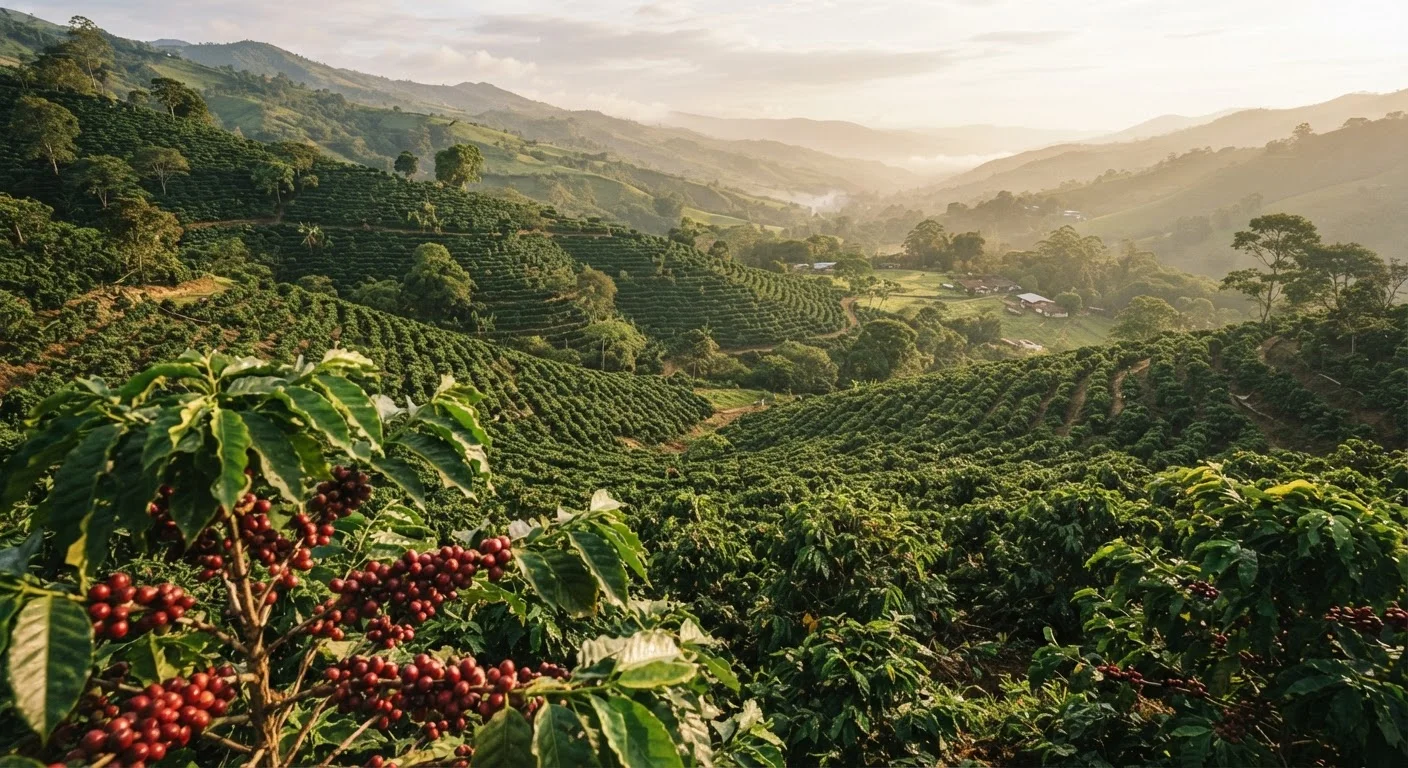
Every cup of coffee starts with a flowering evergreen shrub or small tree. Coffee plants grow within a narrow equatorial band known informally as the Coffee Belt, where tropical heat, altitude, and rainfall create ideal conditions. Countries like Ethiopia, Brazil, Colombia, and Vietnam dominate global supply.
The plant produces small, white jasmine-scented blossoms that mature into round fruits called coffee cherries. These cherries turn deep red or yellow when ripe — a process that takes roughly nine months after flowering. Inside each cherry sit two seeds facing each other. Those seeds are what we call coffee beans.
Altitude matters enormously. Beans grown at higher elevations develop more slowly, which allows greater complexity of flavour to form. You'll often see packaging note terms like "high-grown" or list the altitude in metres above sea level for precisely this reason.
~170
Countries that import coffee
The International Coffee Organization estimates coffee is exported to around 170 countries, making it one of the most globally traded agricultural commodities.
9 months
Time for cherry to ripen after flowering
On most arabica plants, cherries take approximately nine months to fully ripen from the point of flowering, depending on altitude and climate.
~2 billion
Cups of coffee consumed daily worldwide
The International Coffee Organization cites figures suggesting roughly two billion cups of coffee are consumed globally every day.
Processing: Separating Bean from Cherry
Once cherries are harvested — often by hand on smaller farms — the fruit flesh must be removed to reach the seeds inside. This stage is called processing, and it has a profound effect on the final flavour in your cup.
The three most common methods are:
- Washed (wet) processing: The cherry skin and pulp are removed mechanically before the beans are fermented in water tanks to loosen remaining mucilage, then dried. This produces clean, bright flavours with clear acidity.
- Natural (dry) processing: Whole cherries are spread on raised beds or patios and dried in the sun for weeks. Sugars from the fruit ferment into the bean, creating fruity, wine-like, and sweet notes.
- Honey processing: A middle path — some fruit mucilage is left on the bean during drying, producing a balance of sweetness and clarity.
After drying, beans are hulled to remove any remaining layers, sorted by size and density, and graded for quality before export as green coffee.
Look for Processing Method on the Bag
Many specialty roasters now print the processing method — washed, natural, or honey — on the packaging. If you find a coffee you enjoy, noting its processing method is a reliable shortcut to finding others with a similar flavour profile. It's one of the most informative pieces of information on a coffee label after the origin.
Roasting: Unlocking Flavour with Heat
Green coffee beans are pale, dense, and smell faintly grassy — nothing like the coffee aroma you know. Roasting changes everything. Inside a commercial drum roaster, beans are tumbled at high temperatures (typically 180–230 °C / 356–446 °F) for eight to fifteen minutes.
Heat triggers hundreds of chemical reactions collectively called the Maillard reaction and caramelisation, which develop the complex aromatic compounds responsible for coffee's flavour and colour. Roasters listen for two audible "cracks" — internal pressure releases — to guide how far they take the roast.
- Light roast: Stopped before or just after the first crack. Retains the bean's origin character — floral, fruity, and acidic notes shine through.
- Medium roast: Balanced. Origin character and roast flavours coexist — often nutty, caramel, or chocolatey.
- Dark roast: Taken well past the second crack. Bold, bitter, and smoky; origin character is largely replaced by roast flavours.
Beans are typically sold within days to weeks of roasting. Once roasted, the clock on freshness begins.
“Coffee is one of the most chemically complex foods humans consume — a single cup contains over a thousand distinct aromatic compounds. Roasting is where most of that complexity is created.”
— Harold McGee, Food science writer and author of 'On Food and Cooking'
Grinding and Brewing: The Final Transformation
Grinding exposes the bean's interior so hot water can extract its soluble compounds. The key principle: grind size must match your brew method. A coarse grind suits a French press; a fine grind is needed for espresso. Using the wrong grind size leads to either under-extraction (sour, thin coffee) or over-extraction (bitter, harsh coffee).
Water temperature, brew time, and the ratio of coffee to water round out the variables. Most brewing guides suggest water between 90–96 °C (195–205 °F) — just off the boil. Boiling water can scorch grounds and create harsh bitterness.
Common brew methods each produce a distinct result:
- Espresso: Pressurised hot water forced through finely ground coffee in about 25–30 seconds. Concentrated and bold.
- Pour-over (drip): Hot water poured slowly over a filter of medium-ground coffee. Produces a clean, nuanced cup.
- French press: Coarsely ground coffee steeps in hot water before a plunger filters it. Fuller-bodied and rich.
- Cold brew: Coarse grounds steeped in cold water for 12–24 hours. Low acidity and smooth.
Curious about how the caffeine in your cup compares to tea or energy drinks? See how coffee stacks up against other beverages for a detailed breakdown. And if you're thinking about making coffee part of a daily habit, this balanced look at daily coffee consumption covers what regular drinking may mean for your health.