Why Caffeine Content Varies So Much
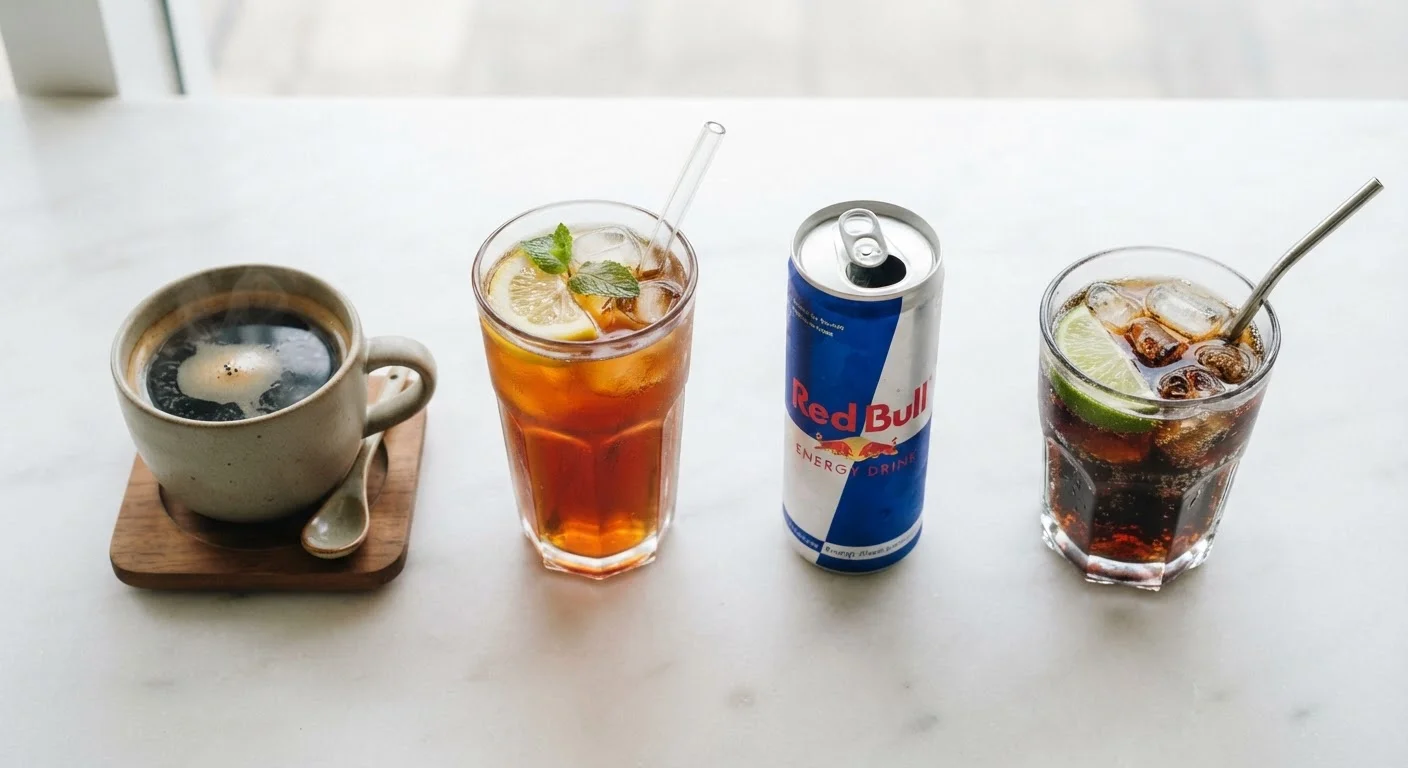
Caffeine is a naturally occurring stimulant found in dozens of plants, including coffee beans, tea leaves, and cacao. When you compare beverages, the amount of caffeine in your cup or can depends on three main factors: the plant source, how the drink is prepared, and how large the serving is.
A brewed coffee and a can of cola might both be called "caffeinated," but they can differ by a factor of five or more in actual caffeine content. Understanding why helps you make more informed choices about what — and how much — you're drinking. For a deeper look at how the coffee bean itself shapes your brew, see how coffee goes from plant to cup.
| Coffee (8 oz) | Tea (8 oz) | Energy Drink (8 oz) | Soda (12 oz) | |
|---|---|---|---|---|
| Typical caffeine range | 80–120 mg | 20–70 mg | 80–150 mg | 20–40 mg |
| Caffeine source | Coffee bean | Tea leaf (Camellia sinensis) | Added caffeine + extracts | Added caffeine |
| Serving size variability | Moderate (shots to mugs) | Low (standard cup) | High (8–16 oz cans) | High (can to fountain) |
| Other stimulants present | None typically | L-theanine (naturally) | Taurine, B-vitamins common | None typically |
| Caffeine-free options available | Yes (decaf) | Yes (herbal teas) | Rarely | Yes (many varieties) |
| Label transparency | Usually disclosed | Variable by brand | Usually disclosed per can | Usually disclosed |
Coffee: The Highest Natural Caffeine Concentration
Of the four beverage categories, brewed coffee typically delivers the most caffeine per ounce. An 8-ounce cup of standard drip coffee contains roughly 80–120 mg of caffeine, though this varies significantly with bean type, roast, and brew method.
Espresso is concentrated but served in smaller amounts — a single 1-ounce shot contains about 63 mg. That sounds like less, but espresso-based drinks like lattes often use two shots, putting them on par with drip coffee. Cold brew, which steeps grounds in cold water for 12–24 hours, can be particularly strong — sometimes reaching 150–200 mg per 8 oz depending on dilution. For a comparison of cold brew versus regular iced coffee, see how these chilled drinks differ.
Watch Your Brew Method
If you're trying to manage your caffeine intake, brew method matters as much as bean choice. Drip coffee, French press, and cold brew all extract caffeine differently. A weaker-tasting light roast often contains slightly more caffeine than a dark roast by weight, since roasting breaks down some caffeine. When in doubt, check if your coffee brand publishes its caffeine data.
Tea: Gentle Caffeine With Natural Variability
Tea comes from the same plant — Camellia sinensis — but the way leaves are processed determines both flavor and caffeine level. Black tea is the most oxidized and typically the strongest, averaging 40–70 mg per 8-ounce cup. Green tea is less processed and milder, generally ranging from 20–45 mg. White tea and herbal teas sit at the lower end; many herbal infusions (such as chamomile or peppermint) contain zero caffeine at all, since they come from different plants entirely.
Steeping time and water temperature also affect how much caffeine ends up in your cup — longer steeps extract more. This variability means two cups of "green tea" could differ noticeably depending on the brand and brewing habits.
Energy Drinks: High Caffeine, Highly Variable
Energy drinks are where caffeine content becomes hardest to predict. A standard 8-ounce energy drink typically contains around 80 mg of caffeine — comparable to a cup of coffee. But many energy drinks are sold in 16-ounce cans, effectively doubling that dose. Some products marketed for sustained alertness or exercise performance contain 200–300 mg per can.
Beyond caffeine, energy drinks often include other stimulating compounds like taurine and B-vitamins. These don't add caffeine, but the combination can amplify the perceived effect. Always check the label carefully, since serving sizes listed on the nutrition panel may cover only half the can.
Energy Drink Labels Require Careful Reading
Caffeine totals on energy drink labels sometimes refer to a single serving within a larger can — not the whole container. A 16-ounce can listed as "two servings" at 100 mg each contains 200 mg total. People who are sensitive to caffeine, pregnant, or under 18 are generally advised to limit or avoid high-caffeine products. When in doubt, consult a healthcare professional about what's appropriate for your situation.
Soda: Light Caffeine, Large Volumes
Cola-style sodas contain the least caffeine among these four categories, typically 20–40 mg per 12-ounce can. That's roughly one-third to one-half the caffeine in a cup of coffee. Not all sodas are caffeinated — citrus-flavored sodas like lemon-lime varieties and most root beers contain none at all.
The key consideration with soda is volume. Because sodas are often consumed in larger quantities than coffee (think fountain drinks in 20- or 32-ounce cups), the cumulative caffeine can add up faster than expected. Reading beverage labels carefully is a useful habit that applies just as much to sodas as it does to juice products.
If you're curious how your daily coffee habit stacks up against the broader evidence, our balanced look at daily coffee consumption covers what current research suggests.
This article is for general informational purposes only. Individuals with health conditions, sensitivities to caffeine, or questions about appropriate intake should consult a qualified healthcare professional.