
Why Carry-On Size Rules Matter More Than You Think
Airline size limits aren't suggestions — exceeding them can mean a forced gate-check fee, a bag sent to baggage claim, or a frantic curbside reshuffle before you even reach security. The most commonly cited carry-on limit for US domestic and many international carriers is 22 x 14 x 9 inches (56 x 36 x 23 cm), including wheels and handles. However, airlines can and do vary, so checking your specific carrier's current policy before every trip is non-negotiable.
Budget airlines often apply stricter limits and charge for overhead-bin bags as a separate fare. International legs — especially on regional connector flights — may restrict you to bags smaller than a standard North American carry-on. If you're deciding whether carry-on-only travel is the right call for your trip at all, our guide on carry-on vs. checked luggage can help you weigh the trade-offs first.
The checklist below is designed to fit within the most common airline limits while covering the essentials for trips of roughly one to five days. Use it as a physical audit before you zip up.
Airline Carry-On Policy Page
Verify your specific carrier's current size, weight, and fee rules before every trip — policies change without notice.
Packing Cubes
Compress and organize clothing categories so your bag stays tidy and every inch of space is used efficiently.
1-Quart Clear Zip Bag
Required by TSA to carry liquids, gels, and aerosols through US security checkpoints.
Luggage Scale
Weigh your packed bag at home so you aren't caught off guard by airline weight limits at the gate.
Your Complete Carry-On Checklist
Work through each group below before heading to the airport. The must items are non-negotiable for smooth travel; should items are strongly recommended; nice-to-have items are worthwhile additions if space permits. If you find yourself consistently stuffing too much in, our piece on why overpacking happens offers practical strategies for trimming down.
The Bag Itself
Documents & Valuables
Clothing
Toiletries (TSA 3-1-1 Compliant)
Electronics & Cables
In-Flight Comfort
Prescription Medications: Keep Them Accessible
Never pack essential prescription medications in a checked bag — or even in the overhead bin. Keep them in your personal item so they're within reach at all times. Carry medications in their original labeled containers, and if you're traveling internationally, verify entry rules for your medications with the destination country's official embassy or consulate before departure.
Smart Packing Techniques That Make the List Work
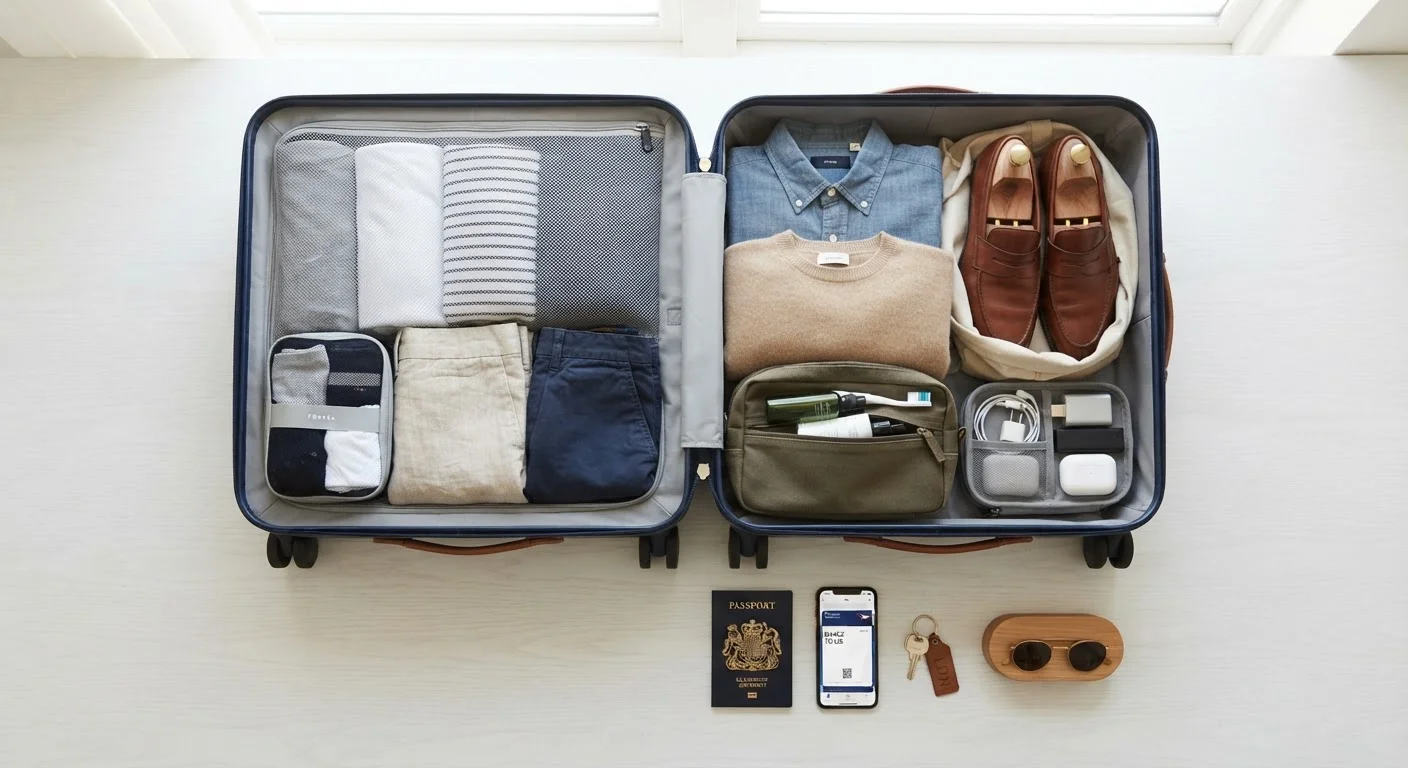
A checklist only gets you so far — how you pack is just as important as what you pack. Here are the techniques that make these 28 items actually fit:
- Roll, don't fold: Rolling clothes reduces wrinkles and takes up noticeably less space than flat folding.
- Use packing cubes: Cubes compress contents and keep categories separated so you're not excavating your bag at every hotel.
- Wear your bulkiest items: Board the plane in your heaviest shoes, thickest sweater, or heaviest jacket so they don't eat bag space.
- Fill dead space: Stuff socks inside shoes. Tuck a scarf around electronics. Every cubic inch counts.
- Personal item = in-flight essentials: Move your book, headphones, snacks, and anything you'll reach for mid-air into your under-seat bag. The overhead bin bag stays closed from takeoff to landing.
For a deeper look at building a versatile wardrobe inside a single bag, see our guide to living out of a carry-on. And before you leave home, don't overlook your documents — knowing which copies to carry and where to store them can save enormous stress if something goes wrong.
Gate-Check Fees Can Surprise You
Even if your bag passes the size check at home, a full overhead bin or a strict gate agent can result in a forced gate check — sometimes at significant cost on budget carriers. Arriving early to board in an earlier boarding group gives you the best chance at overhead bin space. Always have a card handy in case a gate-check fee is unavoidable.