What Both Methods Have in Common
Before comparing the two approaches, it helps to understand what they share. Both the avalanche and snowball methods are structured debt repayment strategies — meaning you follow a deliberate order for paying off debts rather than making random extra payments.
The foundation of both methods is the same: each month, you make the minimum payment on every debt you owe. Then, any extra money you can put toward debt goes entirely to one specific account — your target debt. Once that target debt is paid off, you roll that payment amount into the next target. This rolling effect is sometimes called a "debt payoff cascade."
If you're new to terms like minimum payment, APR, or principal, the borrower's glossary is a helpful starting point before diving into strategy.
Track Every Debt Before You Start
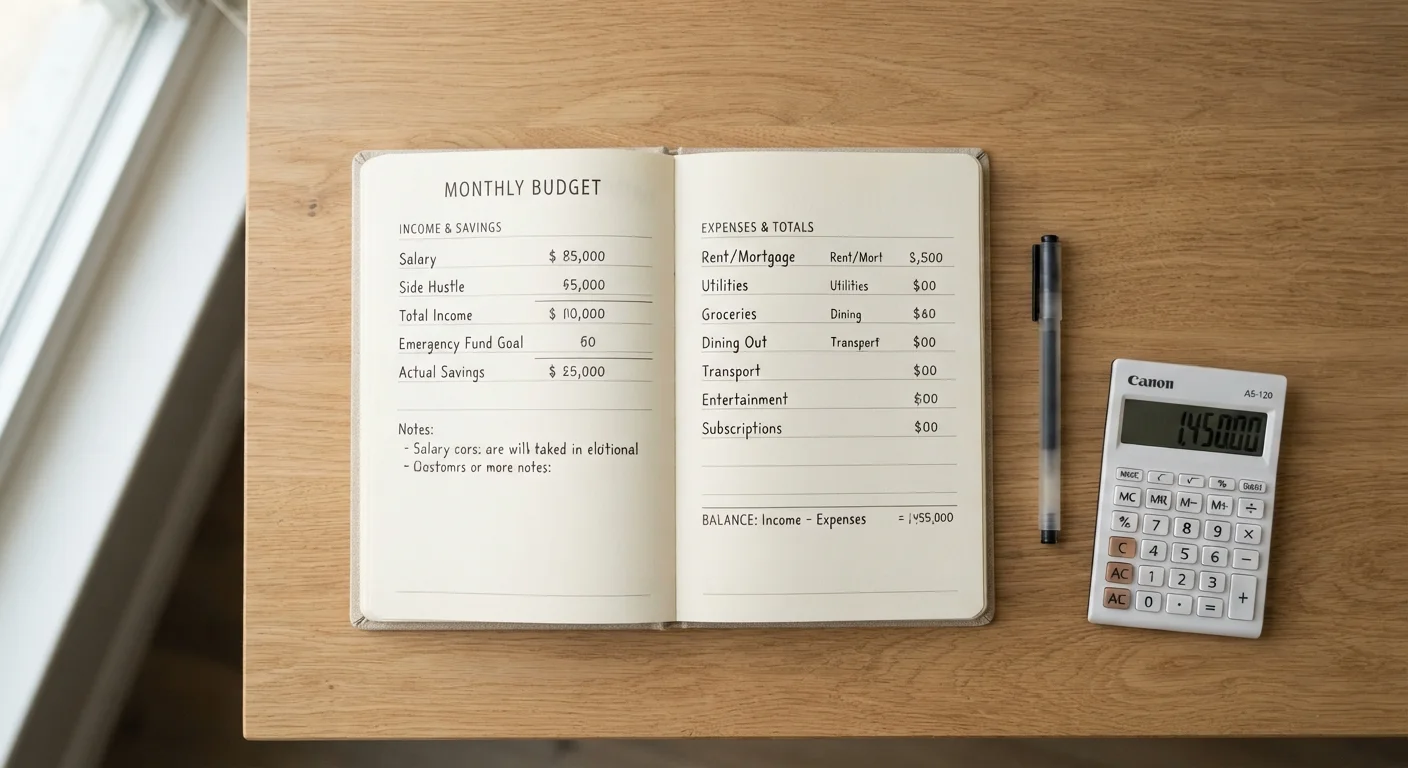
Before choosing a method, list every debt you owe along with its current balance, minimum payment, and interest rate (APR). This single step makes it far easier to rank debts correctly and calculate how much extra you can afford to put toward your target each month. A simple spreadsheet or notebook works fine.
The Avalanche Method: Pay Less Interest Overall
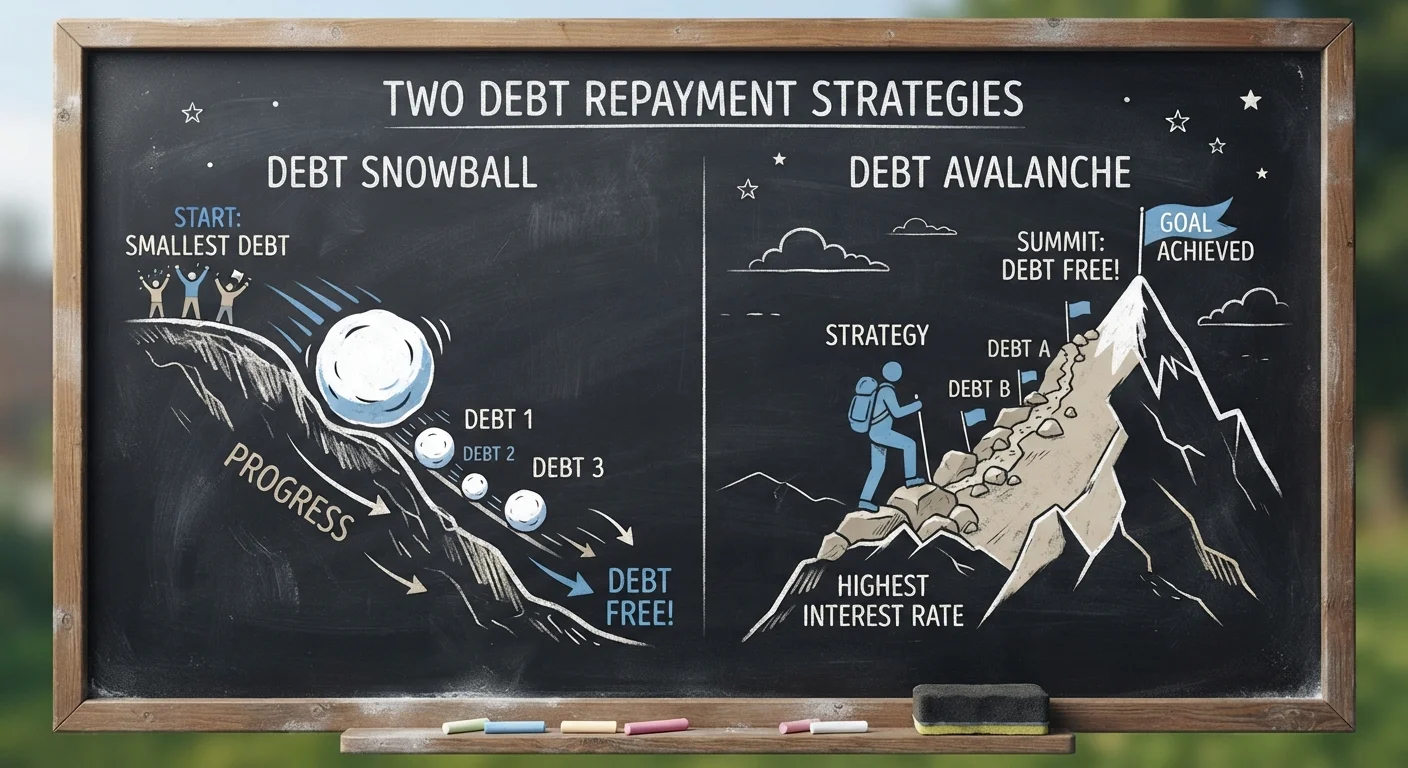
With the avalanche method, you rank your debts by interest rate — the annual percentage rate (APR) — from highest to lowest. You direct extra payments toward the debt with the highest APR first, regardless of its balance size.
Why does this save money? Interest accrues as a percentage of your outstanding balance. The higher the rate, the faster a debt grows when left unpaid. Eliminating high-rate debt quickly cuts off that growth at the source.
Example: Suppose you have a credit card at 22% APR and a personal loan at 9% APR. The avalanche method says: throw extra money at the credit card first. Once it's gone, attack the loan.
The downside is that your highest-interest debt may also have a large balance, which means it can take months before you see a debt fully disappear. That delay can make it harder to stay motivated.
| Avalanche Method | Snowball Method | |
|---|---|---|
| Payoff order | Highest interest rate first | Smallest balance first |
| Total interest paid | Lower — saves more over time | Higher — extra interest on unpaid high-rate debt |
| Speed of first payoff | Slower if high-rate debt is large | Faster — smallest balance clears quickly |
| Psychological motivation | Requires patience for delayed wins | Quick wins support ongoing motivation |
| Complexity | Requires knowing each debt's APR | Only requires knowing balances |
| Best suited for | Disciplined savers focused on cost | Those who need early momentum |
The Snowball Method: Build Momentum First
The snowball method, popularized by personal finance educators, takes the opposite approach. You rank debts by balance — smallest to largest — and pay the smallest one off first, ignoring interest rates.
The logic is psychological: paying off a whole debt, even a small one, creates a concrete sense of progress. That early win can reinforce the habit and make it easier to keep going. Research in behavioral economics suggests that this kind of visible progress genuinely helps people persist with long-term goals.
The trade-off is cost. If your smallest balance carries a low interest rate and a higher-rate debt lingers unpaid, you'll accumulate more interest charges over the life of your repayment plan than you would with the avalanche approach.
Example: If you have a $300 medical bill, a $1,200 store card, and a $5,000 personal loan, the snowball method starts with the $300 bill — even if the personal loan has a higher rate.
Choosing the Approach That Works for You
There's no universally correct answer. Personal finance is, ultimately, personal. A strategy that's mathematically optimal but too hard to maintain isn't as useful as one you actually follow through on.
A few questions worth considering:
- Do you have one debt with a dramatically higher interest rate? If so, the cost difference between methods may be significant — the avalanche approach could save you meaningful money.
- Do you have several small debts dragging on your attention? The snowball method can simplify your financial life faster by eliminating accounts.
- What's kept you on track with other habits? If you tend to need early feedback to sustain effort, snowball-style wins may suit you better.
Debt repayment doesn't happen in isolation. How you structure your monthly budget directly affects how much extra you can put toward a target debt each month. See popular budgeting methods compared for an overview of approaches that pair well with a debt payoff plan.
It's also worth understanding how debt fits into your broader financial picture. Our guide on savings, credit, and debt together covers how these pieces interact — including why carrying certain kinds of debt while holding no emergency savings can create risk. And if you've encountered the idea that some debt is inherently useful, good debt vs. bad debt unpacks that distinction in plain terms.
This article is for general informational purposes only and does not constitute personalized financial advice. For guidance specific to your situation, consult a qualified financial professional.