Why Tracking Feels Hard — and Why It Doesn't Have To
Most people who try to track their spending give up within two weeks. The usual reason isn't lack of discipline — it's that the system they chose was too complicated to maintain alongside real life. Logging every transaction in a color-coded spreadsheet sounds thorough, but it creates friction every single day.
The fix is simpler than most budgeting guides suggest: pick the most low-effort method you'll actually use, and keep it up long enough to see one month of data. That's it. You don't need a perfect system upfront.
For a broader look at how tracking fits into a full budgeting approach, the complete beginner's guide to personal budgeting covers the whole picture in one place.
What you will need
Choosing Your Tools
There's no universally superior tracking method. What matters is that your chosen tool is always within reach and requires minimal effort to use. Here are the main options worth considering:
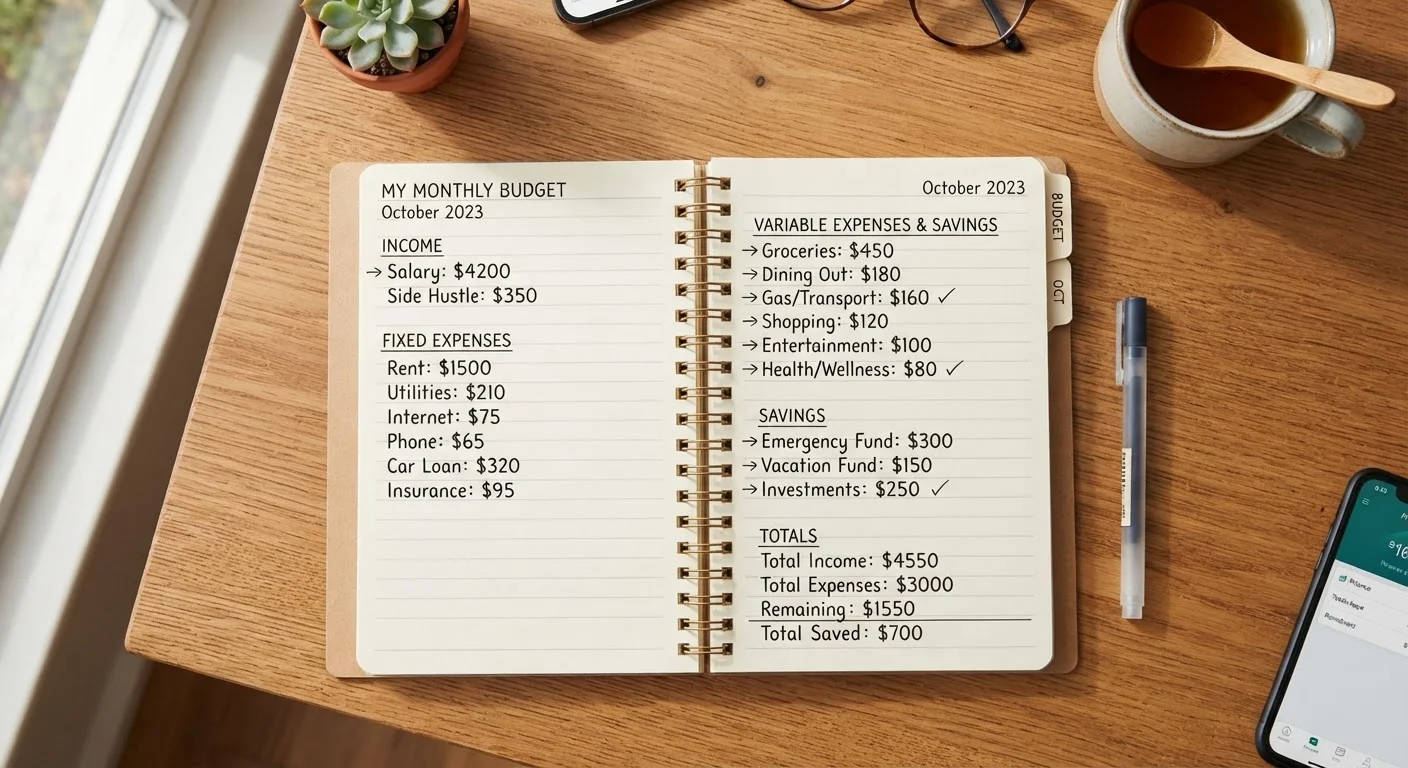
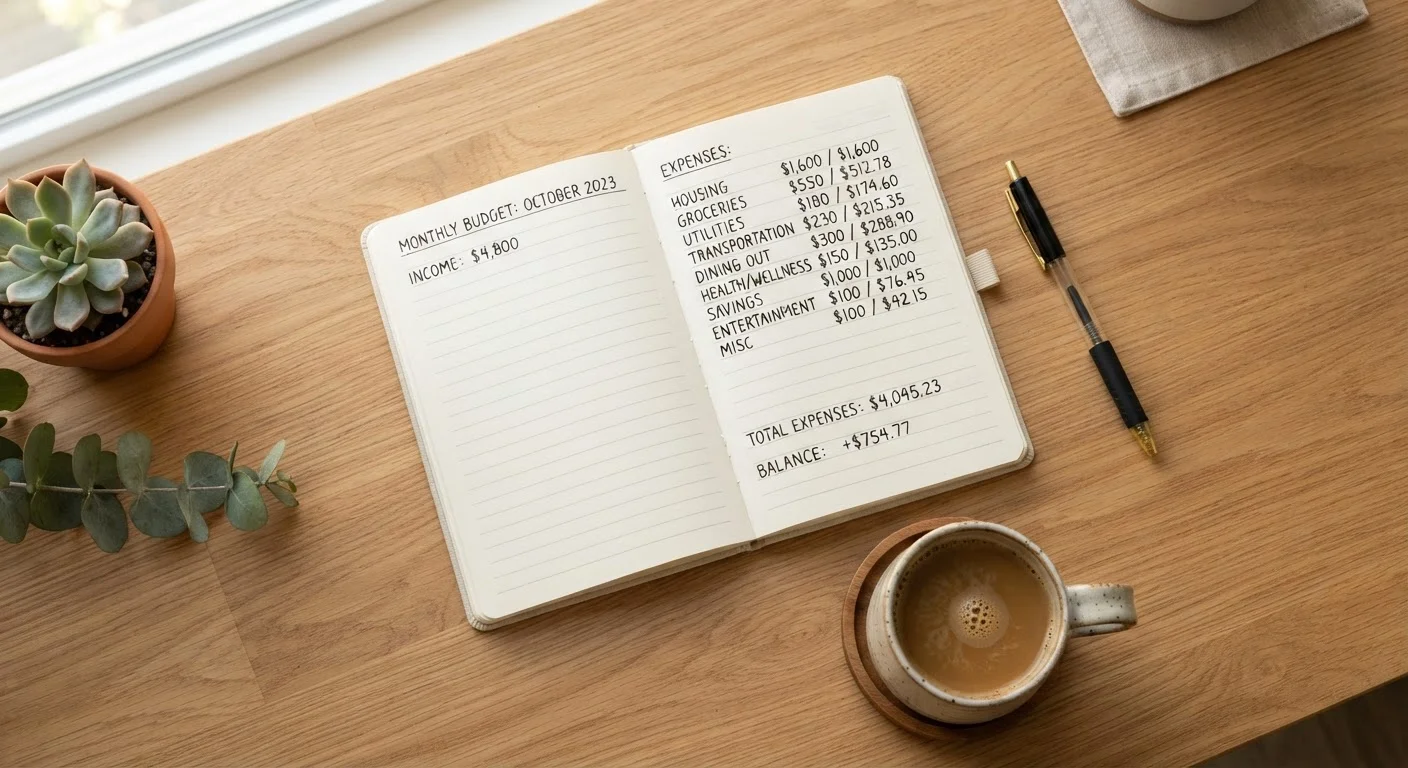
- Pen and paper: A small notebook works well for people who find physical writing more memorable. The act of writing by hand can make spending feel more concrete.
- Phone notes app: Fast, always on you, and requires zero setup. A running daily list works fine.
- Spreadsheet: Better for people who want totals calculated automatically. Free options are widely available and a basic layout — date, description, amount, category — is all you need.
If you're debating between a physical and digital approach, envelope budgeting vs. spreadsheet budgeting explains the trade-offs clearly.
Bank or credit card statements
Gives you a complete record of past transactions to review and categorize.
Notebook and pen
Used to log daily purchases by hand — ideal for people who retain information better when writing.
Spreadsheet app (such as a free option like Google Sheets)
Lets you total spending by category automatically and adjust column labels to fit your life.
Notes app on your phone
A quick place to jot a purchase the moment it happens, before you forget it.
How to Follow the Steps
The process below takes about 15–30 minutes to set up and roughly 5–10 minutes per week to maintain after that. Work through each step in order the first time, then repeat steps 3 and 4 as an ongoing routine.
Pick one tracking method and commit to it
Choose a single format — a small notebook, a phone notes app, or a simple spreadsheet. The goal is one place where every purchase lands. Switching between tools is where most people lose the thread, so resist the urge to use your notebook and an app at the same time until the habit is solid.
Set up simple spending categories
Create five to eight broad categories that reflect your actual life — for example: housing, groceries, transport, eating out, subscriptions, personal care, and a catch-all called "other." Broad categories are easier to maintain than granular ones. You can always split a category later once the habit is established.
Log each purchase as close to real time as possible
Record what you spent, where, and which category it belongs to — ideally right after the transaction. A coffee at 8 a.m. that you plan to log "later" is often forgotten by noon. Even a one-word entry in your phone's notes app ("coffee $4.50 – eating out") is enough to work with later.
See our guide to writing down every purchase for a deeper look at why even small amounts matter.
Reconcile with your bank statement once a week
At the end of each week, open your bank or card statement and compare it against your log. Fill in anything you missed and correct any errors. This weekly check takes five to ten minutes and is far less overwhelming than trying to reconstruct a full month at once.
Total each category at month's end and look for patterns
Add up what you spent in each category. Don't judge the numbers yet — just observe them. Most people are surprised by one or two categories. That surprise is exactly the point. Once you can see where money actually goes, you have real information to work with rather than guesses.
If patterns like routine small purchases are quietly draining your budget, everyday overspending habits walks through the most common culprits.
Adjust your approach after the first month
After four weeks you'll know what's working. Maybe logging in real time isn't realistic and a nightly two-minute recap works better. Maybe you need fewer categories or one more. Tune the system to fit your life rather than forcing yourself to fit the system.
Consistency Beats Perfection Every Time
A tracking system with a few gaps is still far more useful than no system at all. If you miss a day or two, just pick up where you left off. The habit builds over weeks, not overnight, and a rough record is always better than none.
What to Do With What You Learn
A month of tracked data is genuinely useful information. You now know, in concrete numbers, where your money goes. That knowledge is the foundation of any budget. From here, you might decide to reduce spending in one category, set a monthly cap, or simply keep tracking to confirm whether a pattern continues.
Building on this habit over time is what makes budgeting feel natural rather than forced. money habits that make budgeting easier explains how small, consistent practices compound into real financial clarity.
Don't Rely on Memory Alone
Research on recall consistently shows that people underestimate how much they spend, particularly on small, frequent purchases. Memory is not a reliable substitute for a written record. Even a rough log is more accurate than trying to reconstruct a month from scratch.
This Is General Information, Not Financial Advice
The guidance here is for educational purposes only. Everyone's financial situation is different. For decisions about debt, savings goals, or major financial changes, consider speaking with a licensed financial adviser or certified financial counselor.
This article is for general informational and educational purposes only and does not constitute personalised financial advice. For guidance specific to your financial situation, consult a qualified financial professional.