Why Acids Matter in the Kitchen
When you squeeze lemon juice over fish or splash vinegar into a salad dressing, you're adding acid — but the effects go well beyond a sour note. Acids are fundamental tools in cooking, altering how ingredients look, feel, and behave. Understanding them helps you cook with more intention rather than relying on guesswork.
Just as salt changes far more than flavour, food acids act on the molecular structure of ingredients. They interact with proteins, pigments, starches, and other compounds in ways that produce real, visible results in your pan or bowl.
Acids Work Alongside Other Flavour Elements
Acidity is one of the five basic tastes (alongside sweet, salty, bitter, and umami), and it interacts with all the others. A dish that tastes flat or overly rich will often benefit from a small addition of acid rather than more salt. Thinking about acid as a seasoning tool — not just an ingredient — opens up new possibilities in everyday cooking.
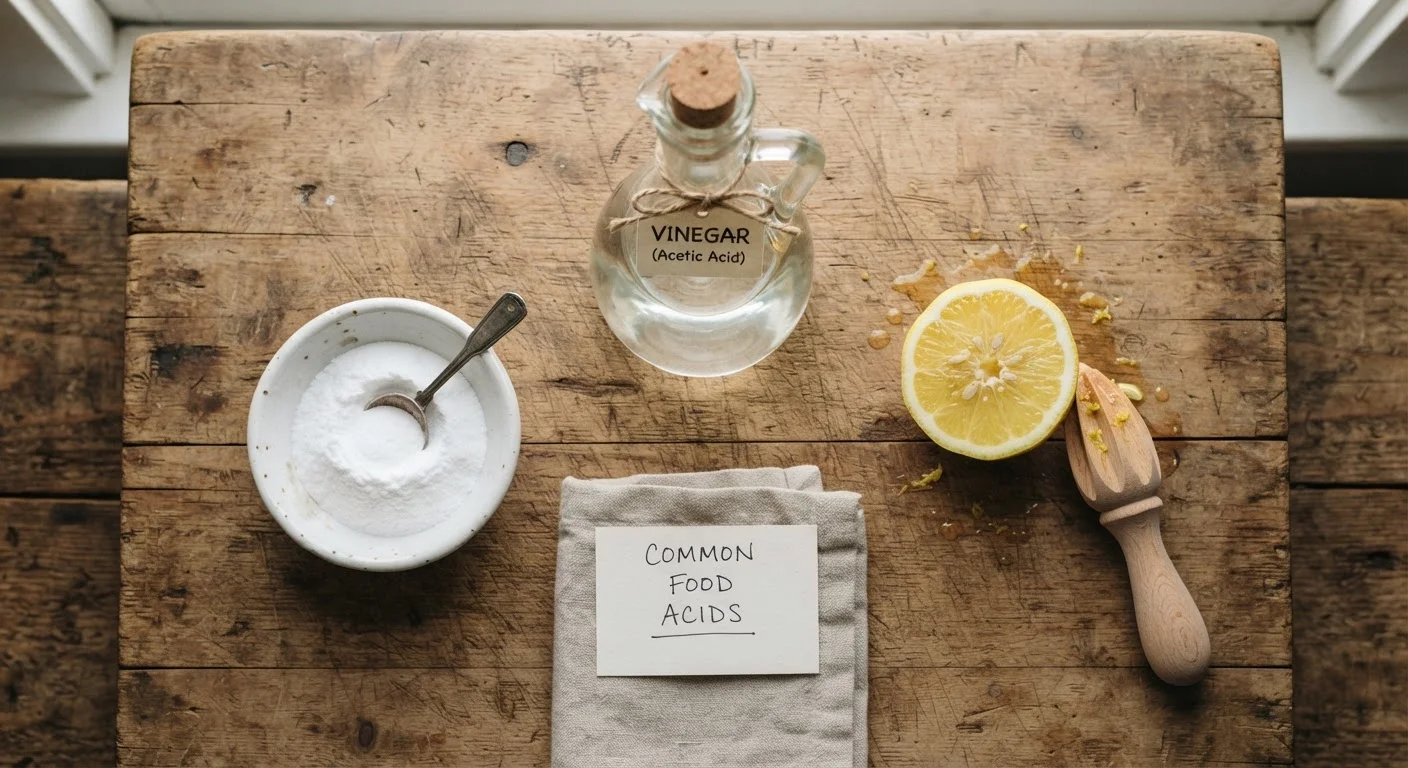
The three most common acids found in home kitchens — vinegar, lemon juice, and cream of tartar — are each derived from very different sources, yet all share the key property of donating hydrogen ions that drive chemical change in food.
Vinegar: Fermented Acidity with a Broad Range of Uses
Vinegar is produced when bacteria convert the alcohol in fermented liquids (wine, cider, rice wine) into acetic acid. That acetic acid, typically making up 5–8% of vinegar's volume, is responsible for its sharp, pungent character.
In marinades, vinegar partially denatures — or unravels — the surface proteins of meat, which makes the texture more tender and allows other flavour compounds to penetrate more easily. In pickling, the same acidity lowers the pH of the surrounding liquid enough to inhibit the growth of harmful bacteria, preserving vegetables for weeks or months. In baking, a small amount of vinegar added to a cake batter can react with baking soda to produce carbon dioxide bubbles, giving lift to the final bake.
5–8%
Acetic acid concentration in standard vinegar
This is the typical range for white distilled and apple cider vinegars sold for culinary use.
pH 2–3
Approximate acidity of fresh lemon juice
This makes lemon juice acidic enough to slow browning enzymes and balance sweetness in desserts and dressings.
~1/4 tsp
Cream of tartar per 2 egg whites for stable meringue
This is a widely used ratio in professional pastry kitchens to achieve consistent, stable whipped egg foam.
Vinegar also has a colour-preservation function. Adding a splash to the water when poaching eggs helps the egg whites coagulate more quickly and neatly around the yolk.
Lemon Juice: Fresh, Bright, and Chemically Versatile
The primary acid in lemon juice is citric acid, present at around 5–8% concentration. This gives lemons their clean, fruity sharpness — distinct from vinegar's fermented bite. Lemon juice is used fresh in kitchens around the world for reasons that extend well beyond taste.
Citric acid slows enzymatic browning in cut fruit and vegetables. When you toss sliced apples in lemon juice, the acid inhibits the enzyme responsible for the familiar brown discolouration. It also brightens the colour of green vegetables when used correctly — though too much can actually dull them, so a small amount added at the end of cooking is usually more effective than long exposure.
In desserts and dressings, lemon juice balances sweetness. This connects directly to the idea of tasting throughout cooking: tasting as you cook lets you judge when a dish needs a few drops of acid to lift and balance other flavours.
Use Acid at the Right Moment
When adding lemon juice to cooked vegetables, stir it in right before serving rather than during cooking. Prolonged heat and acid together can break down chlorophyll — the compound responsible for bright green colour — turning vegetables a dull olive tone. A squeeze at the end preserves both colour and freshness.
Cream of Tartar: The Quiet Workhorse of Baking
Cream of tartar — chemically known as potassium bitartrate — is a dry, odourless, slightly acidic powder that forms naturally as a byproduct of wine fermentation. Because it has no pronounced flavour of its own, its roles are almost entirely structural and chemical.
Its most celebrated use is stabilising whipped egg whites. When you're making meringue or an angel food cake, a small pinch of cream of tartar added before whipping allows the foam to form more easily and hold its structure longer before collapsing. The acid strengthens the protein network created during whipping.
Cream of tartar also plays a role in candy-making: added to a sugar syrup, it prevents sucrose molecules from re-forming crystals, keeping fudge and caramel smooth. When combined with baking soda, it creates the acid-base reaction at the heart of baking powder — in fact, many homemade baking powder recipes are simply a mix of the two. For more on how leavening works in baked goods, see our guide on yeast, sourdough, and chemical leaveners.