What Is a Starch Thickener and How Does It Work?
When you stir a starch into a liquid and apply heat, something called gelatinization occurs. Starch granules absorb water, swell, and eventually burst — releasing molecules that tangle together and create a thicker, more viscous liquid. Remove the heat and the mixture sets further as it cools.
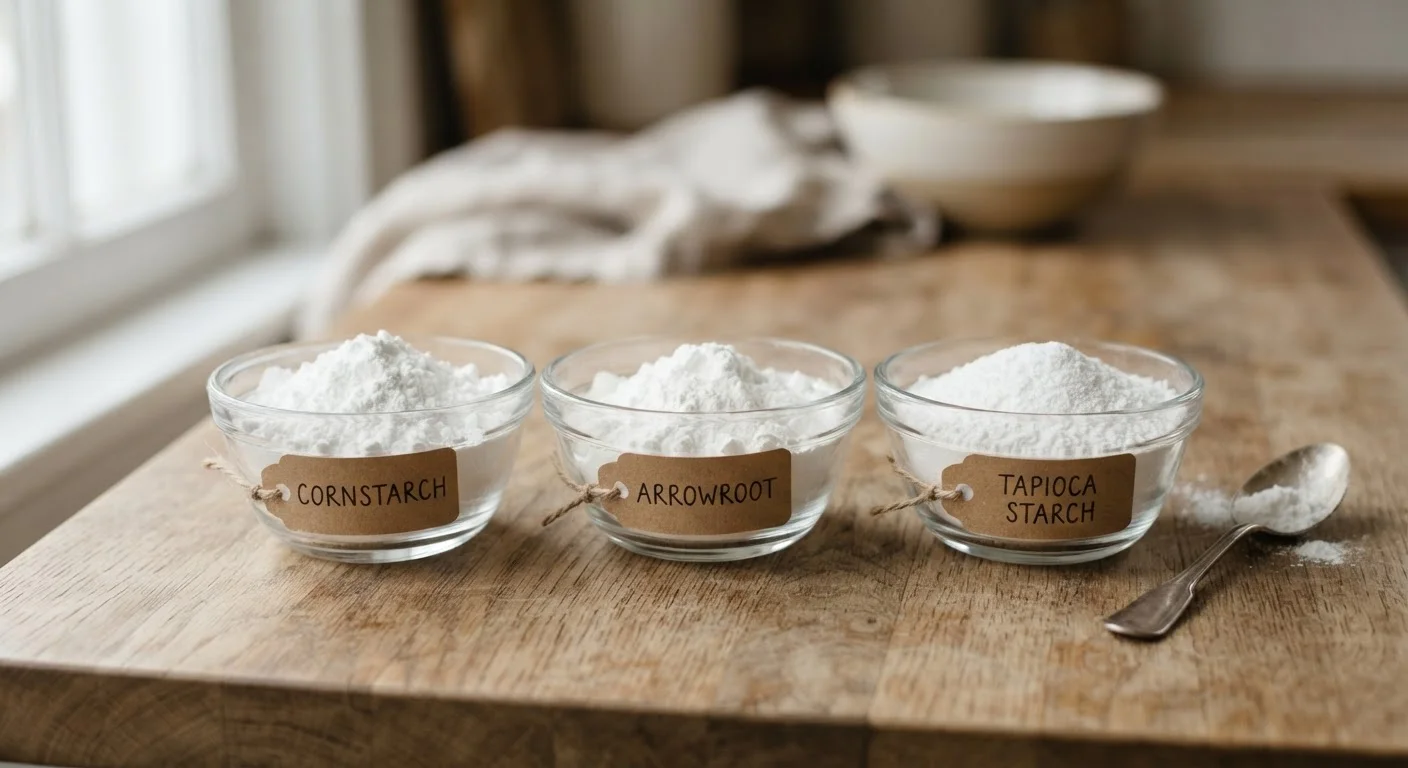
The three starches compared here — cornstarch, arrowroot, and tapioca — all work through this same mechanism, but their granule size, source plant, and molecular structure cause them to behave quite differently in your pot. Just as different flour types affect baking outcomes, different starches affect the texture, clarity, and stability of whatever you're cooking.
A key concept to keep in mind: slurry. Before adding any of these starches to a hot liquid, you almost always mix them with a small amount of cold water first. This prevents clumping. The starch-water mixture is the slurry.
Cornstarch: The Kitchen Workhorse
Cornstarch is milled from the starchy endosperm of corn kernels. It's cheap, widely available, and the default thickener in most Western kitchens. When cooked correctly, it produces a thick, opaque, and relatively neutral-flavored result — perfect for gravies, stir-fry sauces, and cream-based soups.
| Cornstarch | Arrowroot | Tapioca Starch | |
|---|---|---|---|
| Source plant | Corn (maize) endosperm | Maranta root | Cassava root |
| Finished appearance | Opaque, slightly cloudy | Clear and glossy | Clear, slightly glossy |
| Texture produced | Smooth, neutral | Smooth, silky | Stretchy, slightly chewy |
| Acid tolerance | Poor | Good | Good |
| Dairy compatibility | Good | Poor (turns slimy) | Moderate |
| Freeze-thaw stability | Poor (turns watery) | Moderate | Good |
| Best uses | Gravies, stir-fry, soups | Glazes, fruit sauces, pie fillings | Fruit pies, puddings, boba |
Key limitations to know:
- Heat sensitivity: Cornstarch thickens quickly and efficiently, but overcooking breaks it down. Sauce that simmers for too long after thickening will turn thin again.
- Freezing: Cornstarch-thickened sauces often become watery and grainy after freezing and thawing — a phenomenon called syneresis. Avoid it in dishes you plan to freeze.
- Acidic ingredients: High-acid liquids (think tomatoes or citrus juice) weaken cornstarch's thickening power. You may need more starch or a different choice entirely.
As a general rule, use about 1 tablespoon of cornstarch per 1 cup of liquid for a medium-thick result.
Arrowroot: The Clear-Finish Specialist
Arrowroot starch is extracted from the roots of the Maranta arundinacea plant, native to tropical regions. Its standout quality is the glossy, perfectly clear gel it creates — making it the right call whenever you want a sauce or glaze to look polished and translucent rather than cloudy.
Use Arrowroot for Beautiful Glazes
If you're making a sauce or glaze that will be drizzled over a dish and you want it to look restaurant-quality, arrowroot is your best option. Its crystal-clear finish lets the natural color of your ingredients shine through. Add the arrowroot slurry off the heat or at a very low simmer, stir gently, and serve promptly — it will lose its shine if reheated aggressively.
Arrowroot handles acidic ingredients significantly better than cornstarch, so it's a solid choice for lemon curd, berry compotes, or sweet-and-sour sauces. It also thickens at a lower temperature, which is helpful for dishes you don't want to overheat.
Where arrowroot struggles:
- It does not mix well with dairy. Combined with milk or cream, it produces a slimy, slightly unpleasant texture. Stick to cornstarch for cream sauces.
- Like cornstarch, it breaks down with prolonged heat. Add it toward the end of cooking and avoid extended simmering.
- Arrowroot is typically more expensive and less universally stocked than cornstarch.
Use roughly 2 teaspoons of arrowroot to replace 1 tablespoon of cornstarch — it is slightly more powerful by weight.
Tapioca Starch: Texture and Chew
Tapioca starch (also called tapioca flour) comes from the cassava root. You may already know tapioca from bubble tea pearls or baked tapioca pudding — both leverage its most distinctive property: a stretchy, chewy, glossy texture that no other common starch fully replicates.
For fruit pie fillings, tapioca is often the professional choice. It holds up under high oven heat without breaking down, tolerates acidic fruits well, and produces a jammy, clear filling that doesn't weep after slicing. It also freezes and thaws better than cornstarch, making it practical for make-ahead desserts.
Tapioca's trade-offs:
- Its texture can feel gummy or stringy if overused — keep proportions measured.
- Instant tapioca (small pearls) and tapioca starch/flour behave differently; they are not always interchangeable in recipes.
- It doesn't work well as a sauce thickener for savory dishes where a neutral, smooth consistency is expected.
For thickening, use approximately 1 tablespoon of tapioca starch per 1 cup of liquid — similar to cornstarch by volume, though results will be slightly more elastic.
Tapioca is also one of several options explored in the world of gluten-free baking, often alongside other starches. For a parallel look at another functional ingredient you'll encounter on labels, see what xanthan gum actually does in food.
Practical Substitutions and When They Fail
Swapping one starch for another is possible but requires adjustment. Here's a quick reference:
- Replacing cornstarch with arrowroot: Use about two-thirds the amount. Works in most non-dairy sauces and acidic dishes.
- Replacing cornstarch with tapioca starch: Use equal volume. Expect a slightly chewier, glossier result.
- Replacing arrowroot with cornstarch: Use slightly more cornstarch. Be aware of reduced clarity and poorer acid tolerance.
There are situations where none of these starches is ideal — for example, a slow-simmered stew that will cook for an hour is better thickened with flour or a roux, since starches break down under prolonged heat. Similarly, if you're working with a rich stock or broth-based sauce, the natural gelatin already present may reduce your need for starch significantly.
~1 tbsp
Cornstarch needed per cup of liquid
Standard culinary guideline for achieving a medium-thick sauce consistency with cornstarch.
~2 tsp
Arrowroot needed per cup of liquid
Arrowroot has slightly stronger thickening power than cornstarch by volume, so less is needed.
When in doubt, start with less starch than you think you need. You can always add more slurry; you cannot un-thicken a sauce that has turned into a paste.