Why the Distinctions Actually Matter
Walk down any grocery aisle and you'll find shelves crowded with sparkling waters wearing different names. Most people grab whichever is cheapest or most familiar, assuming these products are interchangeable. They're not — and knowing the differences can change how you cook, mix drinks, and hydrate.
The confusion is understandable. All three products — club soda, seltzer, and sparkling mineral water — contain carbon dioxide that creates bubbles. Beyond that shared characteristic, each has a distinct origin, mineral composition, and flavor profile that makes it better suited to some uses than others.
| Seltzer ingredients | Water + CO₂ only |
| Club soda additions | Mineral salts (sodium bicarbonate, potassium sulfate, etc.) |
| Sparkling mineral water origin | Protected underground spring or aquifer |
| Carbonation source in seltzer | Artificially injected CO₂ |
| Sodium in club soda | Typically 35–75 mg per 12 oz serving (Varies by manufacturer; check label for exact values) |
| Best cocktail mixer | Club soda (mineral salts enhance spirits) |
For a broader look at how beverage labels can mislead, see how fruit beverage labels work — the same careful reading pays off across the drinks aisle.
Seltzer: The Purest Fizz
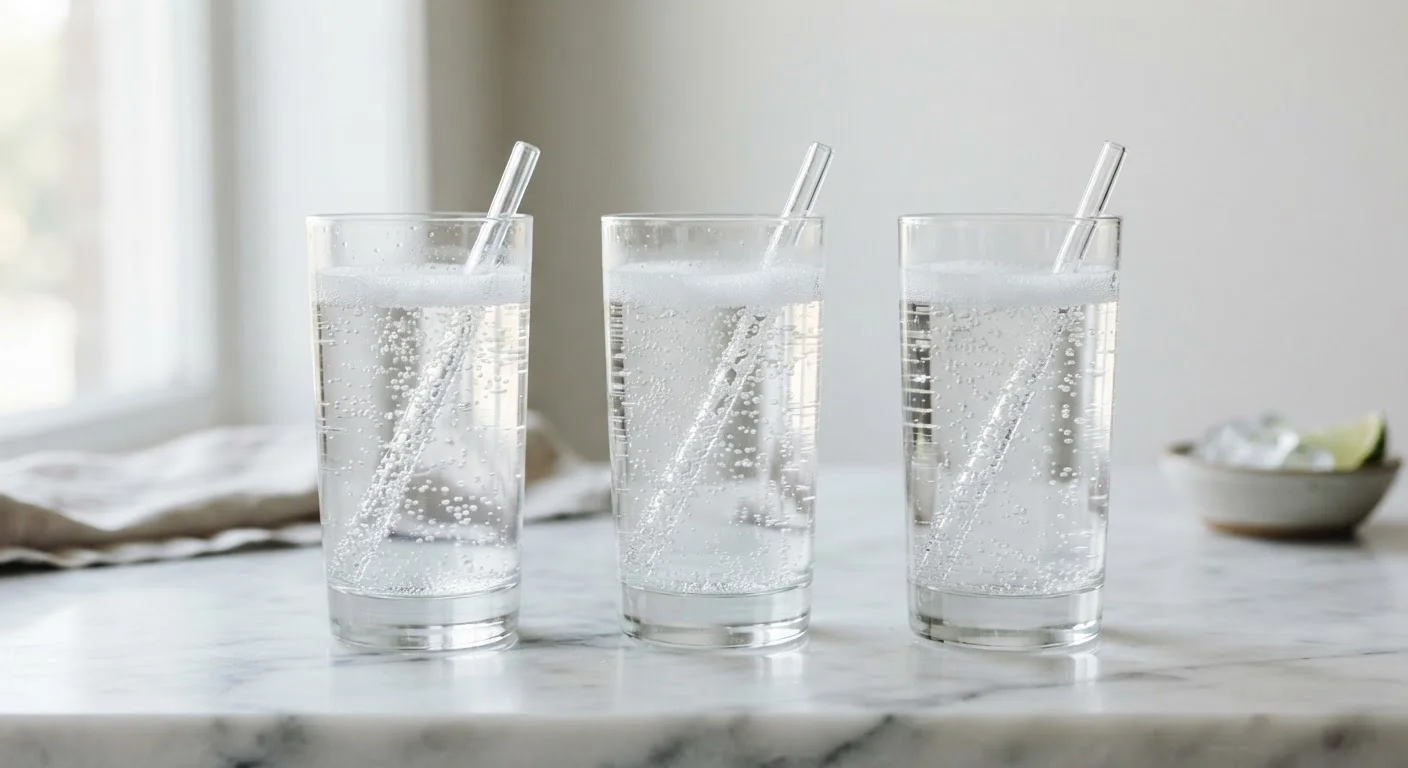
Seltzer is simply water with carbon dioxide injected under pressure. That's it. No minerals, no salts, no additives. The result is a clean, neutral fizz with a very mild tartness — that slight bite comes from carbonic acid, which forms when CO₂ dissolves in water.
Because it's flavorless beyond that gentle acidity, seltzer is the go-to base for flavored sparkling waters. It's also the most widely made at home with countertop carbonation devices. If a recipe calls for carbonated water without specifying a type, seltzer is usually the safest choice.
Carbonation
The process of dissolving carbon dioxide (CO₂) gas into water under pressure, creating bubbles. When pressure is released — like opening a can — the gas escapes as fizz.
Carbonic acid
A weak acid formed when CO₂ dissolves in water. It's responsible for the slight tartness or bite in all carbonated waters, even unflavored ones.
Mineral water
Water sourced from a protected underground spring or aquifer that naturally contains dissolved minerals. These minerals must be present at the source, not added during processing.
Sodium bicarbonate
A mineral salt (also known as baking soda) commonly added to club soda. It contributes a mild, slightly alkaline flavor and a small amount of sodium.
Club Soda: Seltzer's Saltier Cousin
Club soda starts the same way seltzer does — plain water carbonated with CO₂ — but manufacturers add mineral salts during production. Common additions include sodium bicarbonate, sodium chloride, potassium sulfate, and potassium bicarbonate. The exact blend varies by brand.
These salts serve two purposes: they mimic the mineral quality of naturally sparkling water, and they subtly enhance flavor. Club soda has a slightly savory, almost briny character that makes it a preferred mixer in cocktails. Bartenders often choose it over seltzer because its mineral notes complement spirits without competing with them.
One practical note: the added sodium is modest — typically 35–75 mg per 12 oz — but it's worth noting if you track sodium intake carefully. Check the label if this matters to you.
Sparkling Mineral Water: Naturally Effervescent
Sparkling mineral water is the most complex of the three. True mineral water comes from a protected underground source — a spring or aquifer — and contains minerals picked up as the water moves through rock over many years. These minerals, which may include calcium, magnesium, and bicarbonate, must be naturally present at the source to qualify under most regulatory definitions.
Some mineral waters are naturally carbonated at the source; others have their carbonation removed and then re-added to a consistent level before bottling. Either way, the mineral content gives sparkling mineral water a distinctly fuller, sometimes slightly sulfurous or earthy taste compared to seltzer or club soda.
~70+
Named mineral water springs in Europe
Europe has a long tradition of named, regulated mineral water sources; many well-known sparkling mineral waters are drawn from the same springs used for centuries.
0 mg
Sodium in plain seltzer
Unlike club soda, unflavored seltzer contains no added minerals or salts, making it sodium-free.
Sparkling mineral water's bold flavor means it pairs well with food — particularly rich dishes, charcuterie, or fine cheese — but can overpower delicate cocktails. It's also typically more expensive than seltzer or club soda, reflecting its sourced-water origins.
Curious how sparkling water fits into a wider world of traditional non-alcoholic beverages? Explore non-alcoholic drinks from around the world for cultural context.
Choosing the Right One for the Job
Each type has a natural home in the kitchen and at the table:
- Seltzer — Best for flavored drinks, pancake and waffle batter (bubbles add lightness), and any application where you want pure neutral fizz.
- Club soda — Ideal for cocktails and mocktails; the added minerals give mixed drinks a rounder, more complete mouthfeel.
- Sparkling mineral water — Best sipped on its own or alongside food; its complexity is a feature, not just a backdrop.
If a recipe specifies one type, it's worth honoring that choice. Substituting club soda for seltzer in a delicate cocktail syrup, for instance, can introduce unwanted saltiness. When in doubt, seltzer is the most neutral and forgiving option.