Why Non-Alcoholic Drinks Tell a Culture's Story
Every culture on earth has developed its own signature non-alcoholic drinks, and rarely by accident. What people brew, mix, and serve reflects what grows nearby, how they gather socially, and what they value about hospitality. A cup of tea in Japan is a meditative ritual; a glass of tamarind water in Mexico is a casual, cooling refreshment sold on street corners. Both are defining cultural expressions.
Non-alcoholic beverages also adapt to climate. Hot, dry regions favor sweet-tart drinks made from dried fruit or floral petals that replenish energy and electrolytes. Cold, mountainous communities lean toward warming spiced brews. Understanding this geography-drink connection makes traveling — or simply reading a menu — far more interesting.
This guide tours the globe region by region, introducing the drinks you're most likely to encounter and explaining the traditions behind them. For a deeper look at how beverages have shaped entire civilizations, see how drinks shaped history.
Over 3 billion
Cups of tea consumed worldwide daily
Tea is the second most consumed beverage on Earth after water, according to widely cited estimates from the Food and Agriculture Organization.
70+
Countries where hibiscus tea is traditionally consumed
The hibiscus plant (Hibiscus sabdariffa) spread across Africa, Asia, the Caribbean, and the Americas through centuries of trade routes.
6 million tons
Yerba mate harvested annually in South America
Argentina is the world's largest producer and consumer of yerba mate, according to figures from the Argentine Yerba Mate Institute.
Latin America: Freshness in a Glass
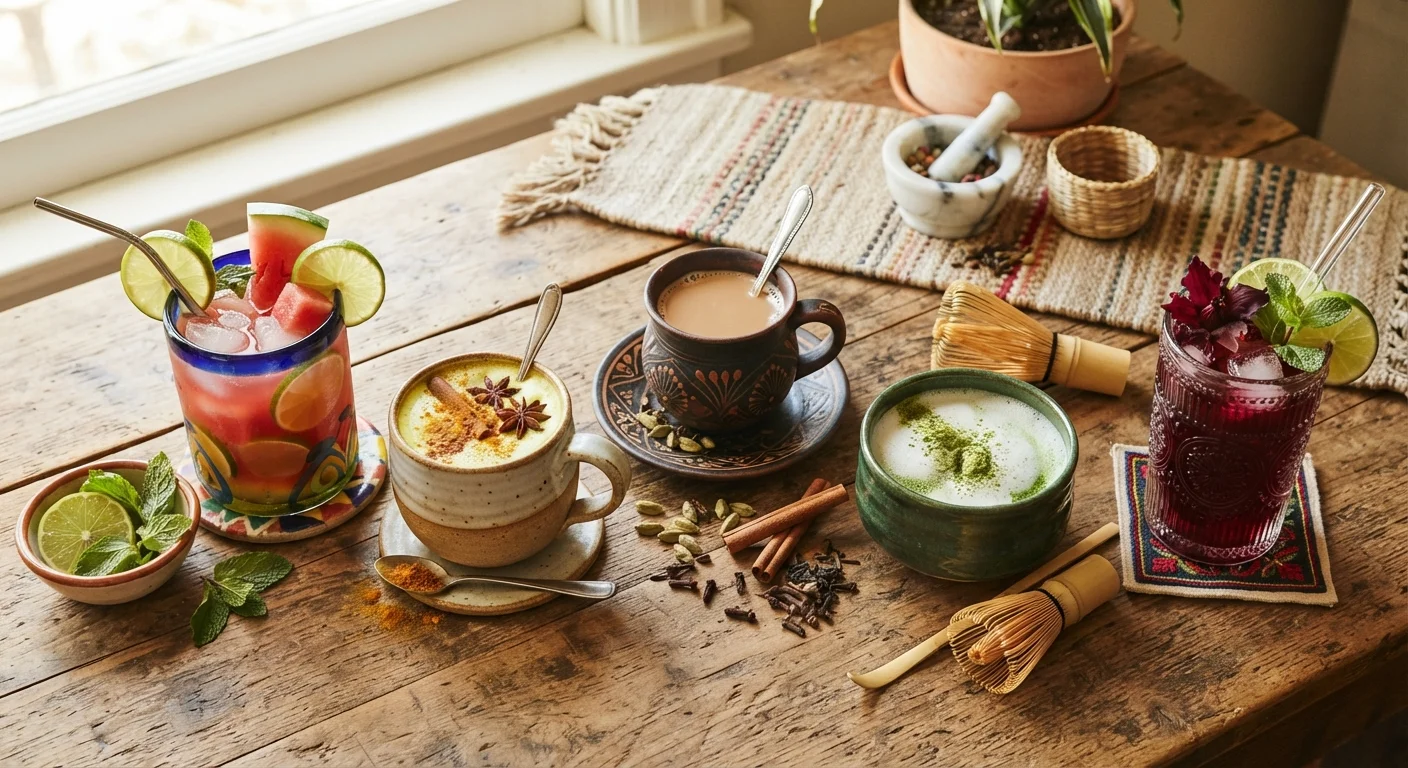
Agua fresca — literally "fresh water" — is Mexico's most beloved non-alcoholic street drink. It's made by blending water with fruit (watermelon, tamarind, or guava are classics), flowers (Jamaica, the dried hibiscus flower, produces a vivid crimson drink), or seeds like chia. The mixture is lightly sweetened and served over ice. It's thirst-quenching rather than heavy, designed for warm climates.
Horchata appears across Latin America, though its base ingredient changes by country. In Mexico it's made from rice, while in parts of Central America it can incorporate morro seeds or cacao. The common thread is a creamy, subtly sweet, cinnamon-scented drink that sits somewhere between a beverage and a light dessert.
In Argentina, Uruguay, and parts of Brazil, mate (pronounced mah-teh) occupies a category of its own. Made from the dried leaves of the yerba mate plant and sipped through a metal straw called a bombilla, mate is central to daily social life. Sharing a gourd of mate is an act of friendship — refusing it is considered impolite. It contains caffeine and is consumed morning to evening. See how its caffeine compares to coffee and tea in our caffeine content comparison.
Making Horchata Without a Recipe
Traditional horchata varies so much by household and region that there is no single authoritative version. A basic Mexican-style horchata starts with soaking raw white rice and cinnamon sticks overnight in water, then blending and straining the mixture before sweetening. Trust the process and adjust sweetness to your own taste.
Middle East and North Africa: Warmth, Spice, and Ceremony
Across the Arab world, qahwa (Arabic coffee) is far more than a morning pick-me-up. Brewed from lightly roasted green coffee beans and flavored with cardamom and sometimes saffron, it's pale gold in color and served in small handleless cups. Offering qahwa to a guest is a gesture of respect; refusing repeated refills requires a specific wrist-shake gesture to signal you've had enough.
Tamarind juice and jallab — a Syrian drink blending grape juice, rose water, and tamarind, garnished with pine nuts and raisins — are popular throughout the Levant, particularly during Ramadan when sweet, energy-giving drinks help break the fast.
In Morocco and much of North Africa, mint tea (called atay) is poured theatrically from a height to create a frothy top. The tea — gunpowder green tea steeped with fresh spearmint and sugar — is served in three rounds, each traditionally representing a different stage of life. Declining the first cup is unusual; staying for all three is a sign of respect.
When trying traditional drinks abroad, pay attention to how they're served — temperature, vessel, and pace are part of the experience, not just the liquid itself.
In cultures like Ethiopia's buna ceremony or Japan's matcha service, the preparation ritual carries as much meaning as the drink's flavor, and rushing through it misses the point entirely.
To make a simple agua de Jamaica at home, steep dried hibiscus flowers in hot water, sweeten to taste, chill, and serve over ice — no special equipment needed.
Dried hibiscus flowers are widely available at Latin American grocery stores and many general supermarkets, making this one of the most accessible traditional drinks to recreate.
South and East Asia: From Chai to Matcha
India's masala chai is black tea simmered with milk, sugar, and a blend of spices — typically ginger, cardamom, cinnamon, cloves, and black pepper. While the word "chai" simply means "tea" in Hindi, in most of the world it refers to this spiced, milky preparation. Vendors called chaiwalas serve it in small clay cups at train stations and street corners across the subcontinent.
Lassi, a yogurt-based drink from Punjab, is another staple. Blended smooth with water, it comes salted (namkeen), sweet (meetha), or fruited with mango. The lactic cultures in yogurt make it probiotic-rich and easy to digest — a practical choice in hot climates.
In Japan, matcha — powdered green tea whisked into hot water — carries centuries of ceremonial meaning rooted in Zen Buddhist traditions. The preparation itself, using a bamboo whisk in deliberate, careful strokes, is considered a practice of mindfulness. Modern cafes worldwide now serve matcha lattes, though the traditional bowl remains a distinct experience.
China's vast tea culture encompasses hundreds of varieties — white, green, oolong, and pu-erh — each tied to specific growing regions and seasons. Tea in China is less a single drink than an entire culinary and philosophical discipline.
Africa: Ancient Traditions in Every Cup
Ethiopia and Eritrea are home to the buna ceremony, one of the world's most elaborate coffee rituals. Fresh green coffee beans are roasted over charcoal in front of guests, ground by hand, and brewed in a clay pot called a jebena. The coffee is served in three rounds — abol, tona, and baraka — the last of which is said to carry a blessing. The ceremony can last up to two hours and is an expression of community and welcome.
In West Africa, bissap (also called sobolo or zobo depending on the country) is made from dried hibiscus flowers steeped in water with sugar and often flavored with mint, ginger, or pineapple. The result is a deep ruby drink that is tart, floral, and refreshing — closely related to agua de Jamaica in Mexico, reflecting the shared Hibiscus sabdariffa plant's spread across continents via trade routes.
South Africa's rooibos (red bush) tea is brewed from a native shrub found only in the Cederberg mountains. It's caffeine-free, naturally sweet, and rich in a reddish-amber color. It has been consumed by indigenous Khoisan communities for generations and is now one of South Africa's most recognized exports. For readers interested in naturally fermented African and Eastern European drinks, fermented drinks explained is a useful companion read.
'Herbal Tea' Is a Broad Category
Many traditional herbal drinks worldwide are consumed with the understanding that certain plants have potent effects on the body. Rooibos is generally considered safe and caffeine-free, but other traditional herbal preparations may interact with medications or affect specific health conditions. If you have any medical concerns, consult a healthcare professional before regularly consuming unfamiliar herbal preparations.
Europe and North America: Everyday Sips With Deep Roots
Europe's non-alcoholic tradition is often overshadowed by its wine and beer culture, but regional soft drinks tell a rich story. In the UK, squash — a concentrated fruit syrup diluted with still or sparkling water — is a household staple. Elderflower cordial, made from the flowers of the elder shrub, has a delicate floral flavor beloved in Britain and Scandinavia.
Germany and Austria have a strong culture of Schorle — still or sparkling mineral water mixed with fruit juice, most commonly apple. It's a standard alternative to soda at meals. If you're curious about the differences between types of carbonated water, our sparkling water guide breaks it down clearly.
In North America, lemonade holds an iconic place in food culture — from roadside stands to baseball stadiums — though it is sweeter and more diluted than its European counterparts. Native American communities across the continent traditionally made drinks from local ingredients: sumac berry water, pine needle tea, and cactus fruit juice were all practical, place-specific refreshments.
No matter the region, the pattern is consistent: the most beloved non-alcoholic drinks are shaped by what grows locally, what the climate demands, and how people choose to welcome one another. When you pick up a cup of rooibos or sip a glass of bissap for the first time, you're tasting not just a flavor — you're tasting a place.
“Tea is not just a drink in China. It's a form of respect, a medium for conversation, and a way of understanding where you come from.”
— Lin Yutang, Chinese-American writer and philosopher, author of 'The Importance of Living'