
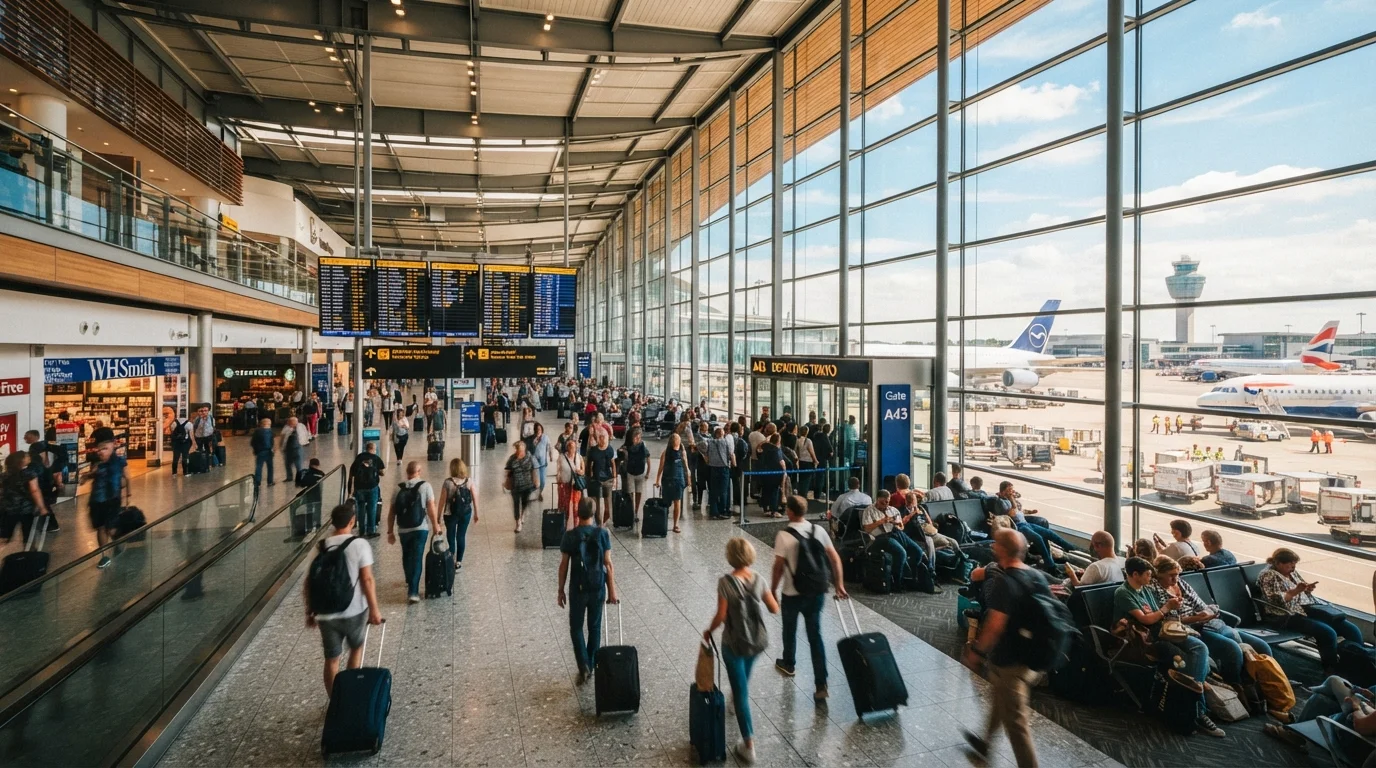
Short Connections: What's at Stake
A short layover — generally anything under 90 minutes — is where most travel stress is born. The appeal is obvious: less waiting, faster journey. The risk is equally obvious: if your first flight lands even slightly late, you're sprinting through a terminal hoping the gate agent is still there.
Every major airport publishes a Minimum Connection Time (MCT) — the shortest gap the airport considers realistic for moving between flights. This number changes based on whether you're connecting between two domestic flights, arriving internationally, or switching terminals. At a compact regional airport, 45 minutes might be comfortable. At a sprawling hub with multiple concourses, that same window could leave you stranded.
Carry-On Travel Speeds Up Short Connections
If you're regularly booking tight connections, traveling with a carry-on only removes one major variable: waiting at baggage claim. You step off the plane and move directly to your next gate. It won't save you from a 20-minute late arrival, but it eliminates the baggage transfer risk entirely on single-itinerary bookings.
Your luggage strategy plays a big role here. Traveling with only a carry-on means you skip baggage claim entirely — a major time saver on short connections. If you have checked bags on a single itinerary, they're usually transferred automatically, but any delay on the first flight still eats into your window. See our guide to carry-on vs. checked luggage for a fuller breakdown of the trade-offs.
Long Layovers: From Waiting Room to Mini-Adventure
A layover of four hours or more shifts the equation completely. Suddenly, you have choices — and that can feel genuinely exciting.
45–60 min
Typical MCT for US domestic connections
Most major US carriers publish Minimum Connection Times in this range for same-terminal domestic-to-domestic connections at standard hub airports.
2–3 hrs
Recommended buffer for international arrivals
Travel advisors generally suggest at least this much time when an international flight requires customs, immigration, and potential terminal changes before a connecting departure.
6+ hrs
Layover length that may allow a city visit
A layover of six hours or more is often cited as the practical minimum for leaving the airport, visiting a nearby city center, and returning comfortably — subject to visa rules.
Inside the airport, longer layovers give you time to eat a real meal, use a shower lounge, rest in a quiet area, or simply decompress. Many large international airports — think Singapore Changi, Amsterdam Schiphol, or Dubai International — are designed to entertain passengers for hours, with gardens, cinemas, and spas airside.
If your layover stretches to six hours or beyond, leaving the airport becomes a real possibility. Some cities are easy to access from their airports in under an hour, making a quick city visit genuinely feasible. However, never assume you can leave without checking visa rules first. Many countries require a transit visa even for a brief exit. Confirm requirements through your government's official travel advisory site or the destination country's embassy well before you travel.
For those curious about weighing a full city visit against a leisurely pace, our article on city breaks vs. slow travel explores the broader philosophy of how you spend time in a place.
Booking Smart: Building in the Right Buffer
When you're booking flights, the temptation to choose the shortest layover to reduce overall travel time is understandable. But a missed connection costs far more in time, money, and stress than an extra hour of waiting ever would.
Single Itinerary vs. Separate Tickets
Booking all your flights on one itinerary (even across partner airlines) means the carrier is contractually responsible for getting you to your destination if a delay causes a missed connection. Separate tickets bought independently do not carry this protection — you are responsible for re-booking at your own cost. This distinction is worth understanding before you finalize any multi-leg trip.
A practical rule of thumb: domestic connections at smaller airports — allow at least 60 minutes. Domestic connections at large hub airports — budget 90 minutes minimum. International arrivals requiring customs and immigration — give yourself at least 2.5 to 3 hours, more if you have checked bags or are arriving from a long-haul flight.
It also pays to think about how your flight was booked. Flights on a single itinerary from one airline (or partner airlines) mean the carrier is responsible for re-booking you if a delay causes a missed connection. Separate bookings — bought independently to save money — put that responsibility entirely on you. Our flight booking research guide covers how itinerary structure affects both price and protection.
And once you're onboard that long-haul leg, keeping yourself comfortable matters. General tips on staying well during long flights can help you arrive at your layover feeling less depleted and more ready to navigate whatever the airport throws at you.