Bangkok Is Not the City You Imagined
Bangkok lands differently than almost any other city on the planet. It's enormous, exhilarating, and layered with customs that reward a little homework. Most first-time visitors arrive with a rough mental picture — temples, street food, tuk-tuks — and quickly discover the real city is both more complex and more wonderful than the postcard version. The missteps that follow aren't signs of a bad traveler; they're simply the product of assumptions that travel marketing rarely corrects. Here's where most people go wrong, and how to arrive better equipped.
If you're also planning a first trip to another major Asian city, our guide to Tokyo for first-time visitors offers a similarly grounded starting point for navigating transit and neighbourhoods.
Common Mistakes First-Timers Make
The following errors show up again and again among first-time Bangkok visitors. Understanding why they happen is just as useful as knowing how to avoid them.
Assuming tuk-tuks are the budget transport option.
Why it happens: Tuk-tuks are visually iconic and heavily associated with Bangkok's identity, so visitors assume they must be a local, inexpensive choice.
Arriving at temples without appropriate clothing.
Why it happens: Visitors often don't realize that Bangkok's heat makes covering up feel counterintuitive, and dress code signage isn't always visible from the entrance.
Scheduling outdoor sightseeing for midday.
Why it happens: Itineraries are often built around opening hours rather than climate, and travelers underestimate how draining sustained heat and humidity can be.
Bargaining aggressively in every shopping setting.
Why it happens: Travelers hear 'Bangkok is a bargaining city' and apply that approach universally, not realizing context matters enormously.
Underestimating the city's geographical scale.
Why it happens: Maps can make Bangkok look manageable, but the city covers roughly 1,569 square kilometers — traffic and distances are far greater than they appear.
Ignoring the significance of the monarchy and religious customs.
Why it happens: Visitors sometimes apply home-country assumptions about public commentary and casual behavior to a country with very different cultural and legal norms.
For a broader look at how cultural misunderstandings develop on the road, this piece on cultural missteps travelers repeatedly make puts many of these patterns in useful context.
Getting Around and Staying Safe
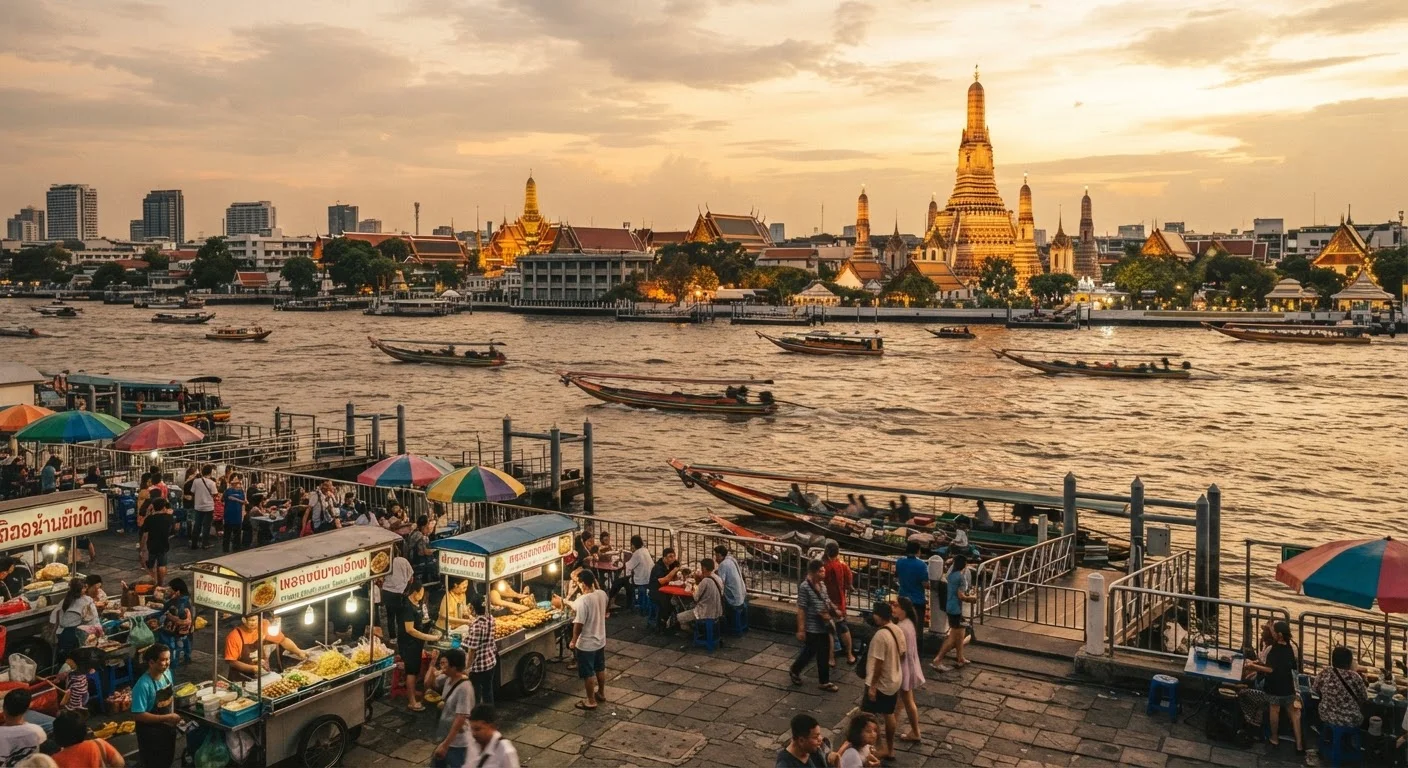
Bangkok's transport network is genuinely impressive once you understand it. The BTS Skytrain and MRT subway cover a huge swath of the city quickly and affordably. The Chao Phraya Express Boat is both scenic and practical for reaching riverside temples. Metered taxis — always insist the driver uses the meter — are comfortable and reasonably priced for longer journeys. Grab (Southeast Asia's equivalent of a rideshare app) removes the negotiation problem entirely.
Tuk-Tuk 'Tours' Can Be Scams
A common scam involves tuk-tuk drivers offering very low fares or 'free city tours' that conveniently stop at gem shops or tailor shops, where drivers earn commission. If a deal sounds unusually generous, treat it with skepticism. Use Grab or metered taxis for unfamiliar routes, and verify any suggested stops independently before agreeing to an itinerary.
For practical trip-planning advice that goes beyond a single city, the Travel Tips hub is a reliable starting point for everyday travelers.
One often-overlooked consideration: Bangkok's size means neighbourhood selection is a genuine strategic decision. Staying near a BTS or MRT station dramatically reduces daily transit friction. Areas like Silom, Sukhumvit, and the riverside near Tha Tien give you metro access and proximity to major attractions. Choosing a hotel purely on price, without checking transit access, is a mistake that compounds every single day of your trip.
~22 million
International visitors to Bangkok annually
Bangkok consistently ranks among the world's most-visited cities, according to Mastercard's Global Destination Cities Index reports.
1,569 km²
Bangkok's total land area
Bangkok's official metropolitan area is significantly larger than cities like London or Los Angeles, making neighborhood planning essential for first-timers.