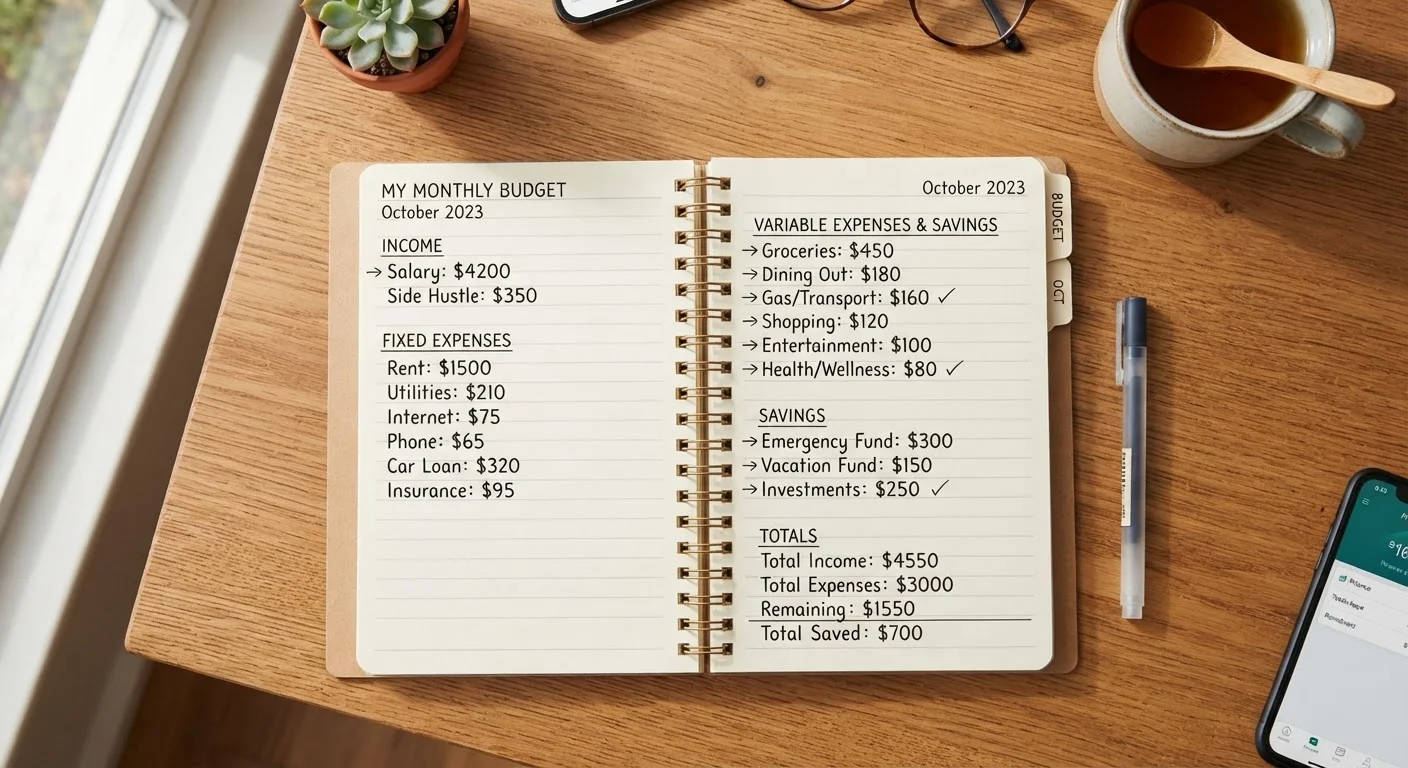

Why Some Saving Habits Last and Others Don't
Most people have tried to save money at some point. Many have also watched that effort quietly fall apart after a few weeks. The difference between saving habits that stick and those that don't usually isn't discipline — it's structure. The principles covered here aren't new, and they aren't extreme. They're the approaches that consistently work across different income levels and life circumstances.
This article is general financial education, not personalised advice. For decisions specific to your situation, a licensed financial professional can help. With that said, understanding the underlying logic of saving is something anyone can benefit from — and that's exactly what we'll cover.
For a broader foundation, see The Complete Guide to Building a Healthier Money Mindset, which puts saving in the context of your overall relationship with money.
The Core Practices That Hold Up
These aren't hacks or workarounds. Each one is grounded in how people actually behave with money over time — not how we wish we behaved.
Pay yourself first by saving before you spend
When saving is the last step — whatever's left after spending — there's rarely anything left. Moving money to savings the moment income arrives removes that problem entirely. It reframes saving as a non-negotiable expense rather than an optional extra.
Automate your savings so the decision is made once
Willpower is unreliable. Automation replaces the need to make a saving decision repeatedly, which is where most people slip. Once a recurring transfer is set up, saving happens whether or not you're motivated that day.
Give every pool of savings a specific purpose
Unnamed savings feel abstract and are easy to raid. When money is labelled — 'emergency fund,' 'car repair,' 'holiday' — it's psychologically easier to leave alone and easier to stay motivated about building.
Build a small emergency buffer before anything else
Without any reserve, an unexpected expense — a car repair, a medical bill — forces people to abandon other financial plans entirely. Even a modest buffer of a few hundred dollars meaningfully reduces that disruption.
Save a percentage of income rather than a fixed amount
A fixed dollar target feels manageable during good months and punishing during tight ones, which increases the chance of quitting. A percentage scales automatically with what's actually coming in.
If you're also working on setting targets to direct your savings toward, Financial Goals That Actually Stick walks through how to make those goals durable.
Start Here: Quick Actions You Can Take Today
You don't need to overhaul your finances overnight. A few small structural changes, made now, tend to produce more lasting results than a full reset that's hard to sustain.
One area many people overlook is everyday spending. Money Habits That Make Budgeting Easier Over Time covers the recurring habits that make staying on track feel less like a chore. And if you want to spot patterns that might be quietly undercutting your progress, Signs Your Money Habits May Be Working Against You is worth an honest read.
What Counts as an Emergency Fund?
An emergency fund is money set aside specifically for unexpected, necessary expenses — think job loss, urgent repairs, or unplanned medical costs. It's not for planned purchases or irregular (but predictable) expenses like annual insurance premiums. Most guidance suggests working toward one to three months of essential expenses, but even a small starting amount is meaningfully better than nothing. Keep it somewhere accessible but not too easy to spend impulsively.
The Long View: Why Consistency Beats Intensity
Saving a modest amount every month for several years will almost always outperform saving a large amount for a few months and then stopping. The math isn't complicated, but the human side of it is — life gets in the way, motivation fluctuates, and circumstances change.
“Do not save what is left after spending; instead, spend what is left after saving.”
— Warren Buffett, Investor and chairman, widely cited on personal finance principles
The principles in this article are designed to work with those realities, not against them. Saving a percentage of income rather than a fixed dollar amount means you scale naturally — when income dips, so does the required saving, which makes it easier to keep the habit alive.
57%
Americans unable to cover a $1,000 emergency from savings
According to a Bankrate survey, more than half of U.S. adults could not pay for an unexpected $1,000 expense from savings alone.
~1 in 3
U.S. adults with no retirement savings at all
Federal Reserve data has consistently found that a significant share of American adults have set aside nothing for retirement, underscoring how common a savings gap is.
If frugality appeals to you as a more intensive approach, it's worth reading The Honest Trade-Offs of Adopting a Frugal Lifestyle first — it gives a balanced picture of what that path actually involves.
This article is for general informational and educational purposes only. It does not constitute personalised financial, investment, or legal advice. Please consult a qualified financial professional before making decisions about your own finances.