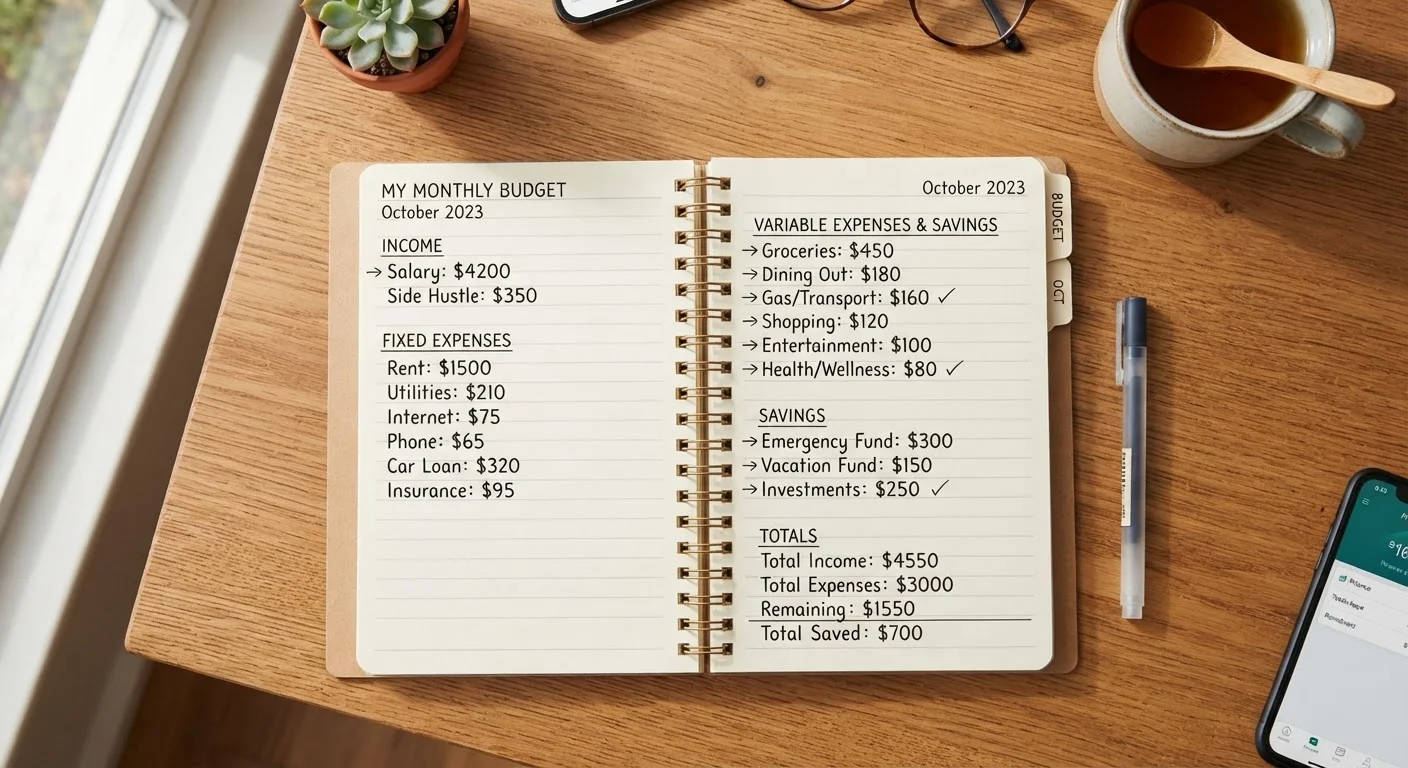
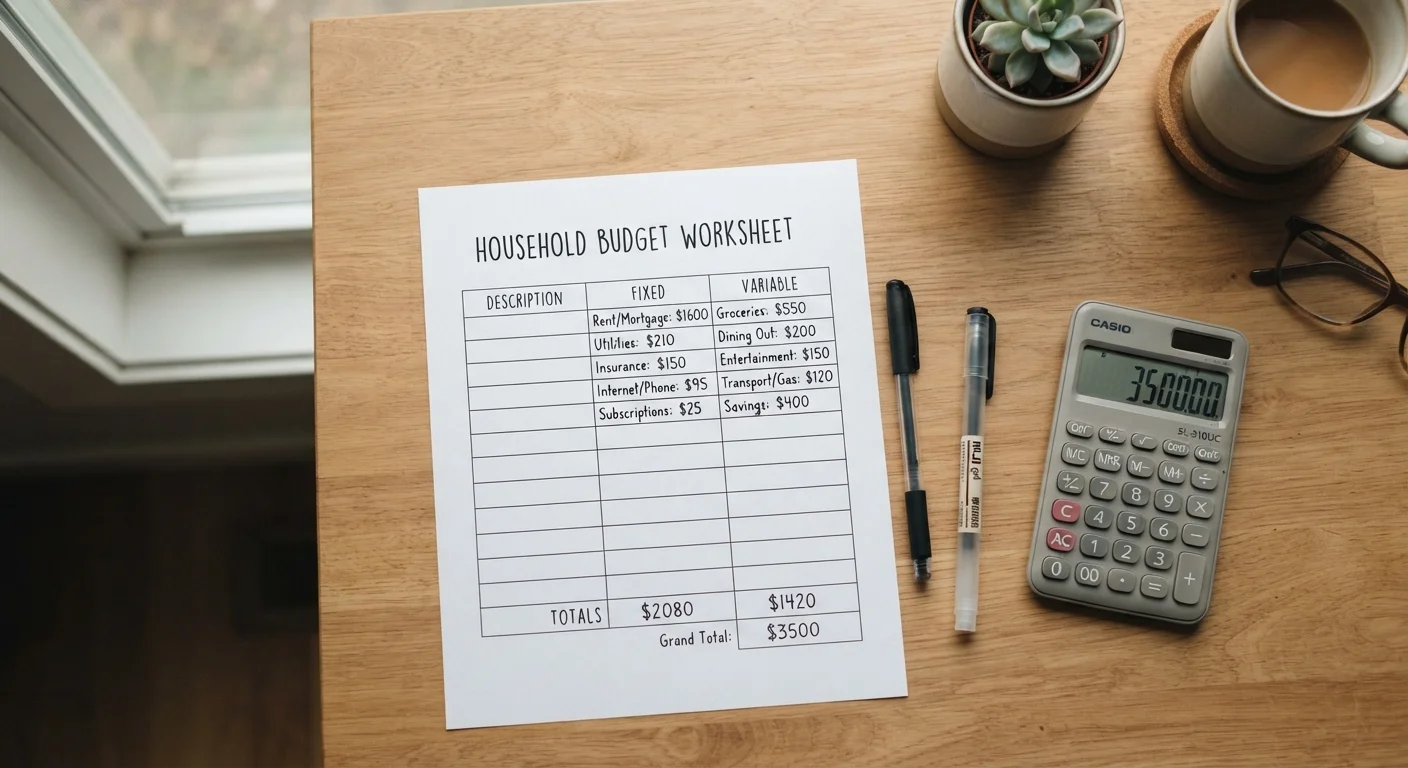
What Makes an Expense 'Fixed'?
A fixed expense is any cost that hits your account for the same amount, on roughly the same schedule, every month. You've usually agreed to it in advance — through a lease, a loan, or a subscription contract — so there's little ambiguity about what you'll owe.
Common examples include:
- Rent or mortgage payments
- Car loan or lease payments
- Health insurance premiums (if paid directly)
- Fixed-rate student loan payments
- Certain subscription services at a set monthly price
Because fixed expenses don't change, they form the foundation of your budget. Before you can make decisions about how to spend the rest of your money, you need to know exactly how much of your income is already spoken for. That's the job fixed expenses do in a budget.
Fixed Doesn't Mean Permanent
A fixed expense stays the same month to month, but that doesn't mean you're stuck with it forever. Leases end, loans get paid off, and subscriptions can be canceled. Periodically reviewing your fixed expenses — especially when a contract is up for renewal — is a healthy budgeting habit.
What Makes an Expense 'Variable'?
Variable expenses are costs that change — sometimes week to week, sometimes month to month — based on your habits, choices, or circumstances. They aren't locked in by a contract. You decide how much you spend on them, at least to some degree.
Common examples include:
- Groceries and household supplies
- Gas or public transit costs
- Dining out and takeout
- Clothing and personal care
- Entertainment and hobbies
Variable expenses are where most people find the most flexibility in their budgets. If money is tight one month, you can often cut back on dining out or delay a non-essential purchase. That flexibility is genuinely useful — but it also means variable expenses require more active tracking to keep under control.
Track Variable Expenses for 30 Days First
If you've never tracked your spending before, start by recording every variable expense for a full month before building your budget. Most people are surprised by how much small, irregular purchases add up. This gives you real numbers to work with rather than guesses.
Why This Distinction Matters for Budgeting
Once you can separate your expenses into fixed and variable buckets, budgeting gets more concrete. You're no longer looking at a vague pile of spending — you're looking at two distinct categories with different properties.
Your fixed expenses tell you your floor: the minimum amount you must earn each month to meet your obligations. If your fixed expenses total $2,000 per month, you know that $2,000 of your income is already committed before you make a single discretionary decision.
Your variable expenses tell you where your choices live. This is where budgeting methods like the 50/30/20 rule or zero-based budgeting give you a framework for deciding how much to allocate. See how popular budgeting methods handle these categories for more context.
~33%
Share of income the average U.S. household spends on housing
According to the U.S. Bureau of Labor Statistics Consumer Expenditure Survey, housing is consistently the largest single fixed expense for most American households.
~15%
Share of household spending attributed to food
The BLS Consumer Expenditure Survey indicates food — a largely variable expense — typically accounts for around 12–15% of household spending, split between groceries and dining out.
If you're new to budgeting altogether, understanding what a personal budget is is a good place to start before diving deeper into expense categories.
The Gray Area: Semi-Fixed Expenses
Not every expense fits neatly into one category. Some costs are paid regularly — like a fixed expense — but the amount changes each time, like a variable expense. These are sometimes called semi-fixed or semi-variable expenses.
Utilities are the most common example. You get an electric bill every month, but whether it's $80 or $150 depends on the season and your usage. The same applies to a cell phone bill with overage charges, or a credit card minimum payment that shifts based on your balance.
For budgeting purposes, the most practical approach is to estimate an average for these costs — look back at three to six months of statements and calculate a monthly average to use as your planning figure. This won't be perfect, but it gives you a reasonable baseline.
For a deeper look at how fixed versus variable structures show up in savings products too, fixed-rate vs. variable-rate savings accounts is worth reading alongside this concept.
You can also find this term and others defined in the budgeting terms glossary for beginners.
This article is for general informational and educational purposes only and does not constitute personalized financial advice. For guidance specific to your situation, consider speaking with a qualified financial professional.