The Core Idea Behind a Budget
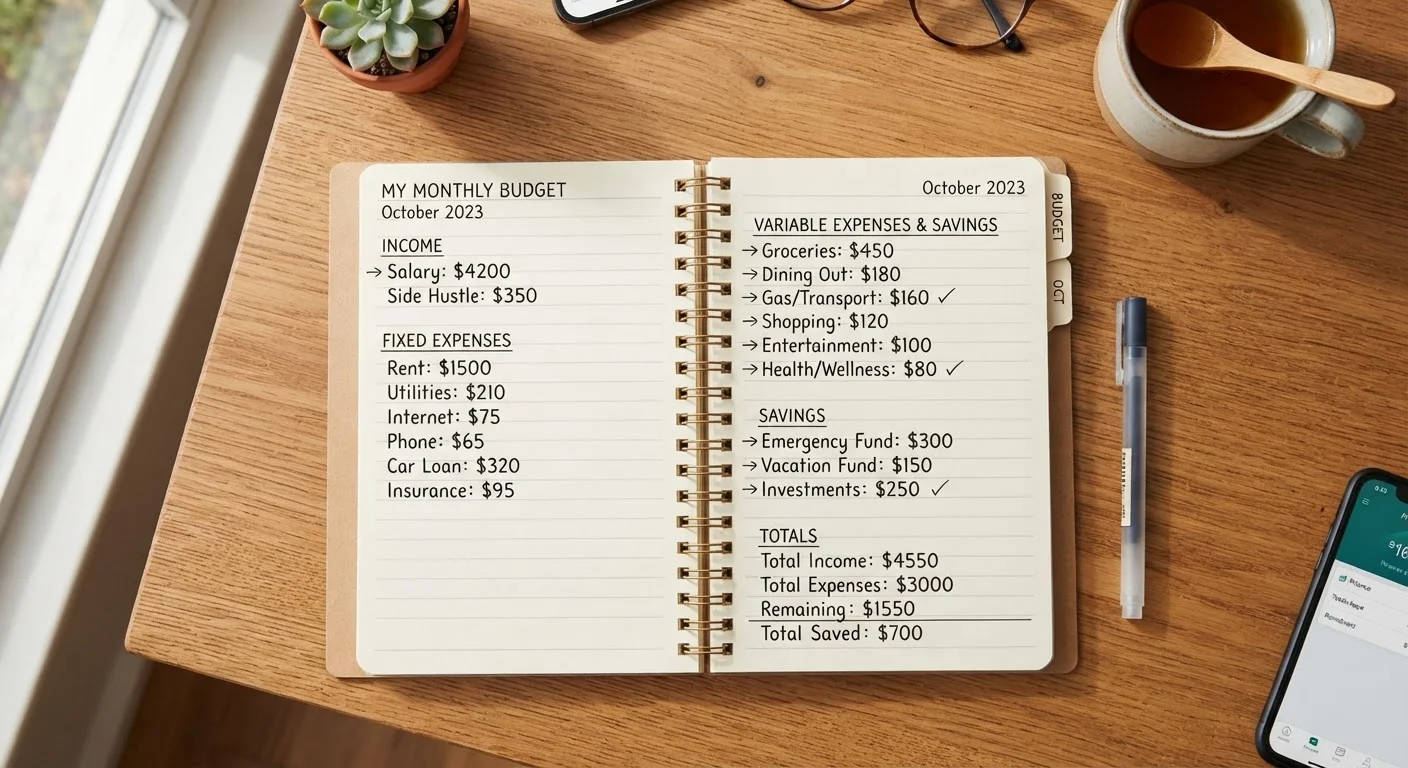
At its simplest, a personal budget answers one question: does your money plan match your actual life? It lists every source of income you expect — wages, freelance work, benefits — and then maps those dollars to where they need to go: rent, groceries, transportation, savings, and everything else.
The result is a snapshot of your financial life on one page. When income exceeds expenses, you have room to save or pay down debt. When expenses exceed income, a budget shows you exactly where the pressure is coming from — so you can make an informed decision rather than just hoping for the best.
For a deeper look at the vocabulary that comes up when you start budgeting, see the glossary of common budgeting terms — it defines words like 'net income' and 'discretionary spending' in plain English.
~33%
U.S. adults with a written budget
Surveys by organizations such as the National Foundation for Credit Counseling have consistently found that fewer than half of American adults maintain a detailed household budget.
20%+
Average spending underestimation
Behavioral finance research suggests people routinely underestimate their discretionary spending by 20% or more when relying on memory alone.
What a Budget Is Not
A budget is not a punishment, and it's not a rigid cage that tells you to stop enjoying your life. A common misconception is that budgeting means cutting everything to the bone — skipping coffee, never eating out, and living on canned beans. That's not what this is.
A budget can absolutely include spending on things you enjoy. The difference is that you've decided in advance how much to spend there, so it doesn't quietly drain money you needed elsewhere. It's intention, not deprivation.
A budget is also not a one-time event. Life changes — income shifts, rent goes up, a new bill arrives. A useful budget gets reviewed and updated regularly. Think of it less like a rule and more like a running conversation with your own finances.
Start Simple — You Can Always Refine Later
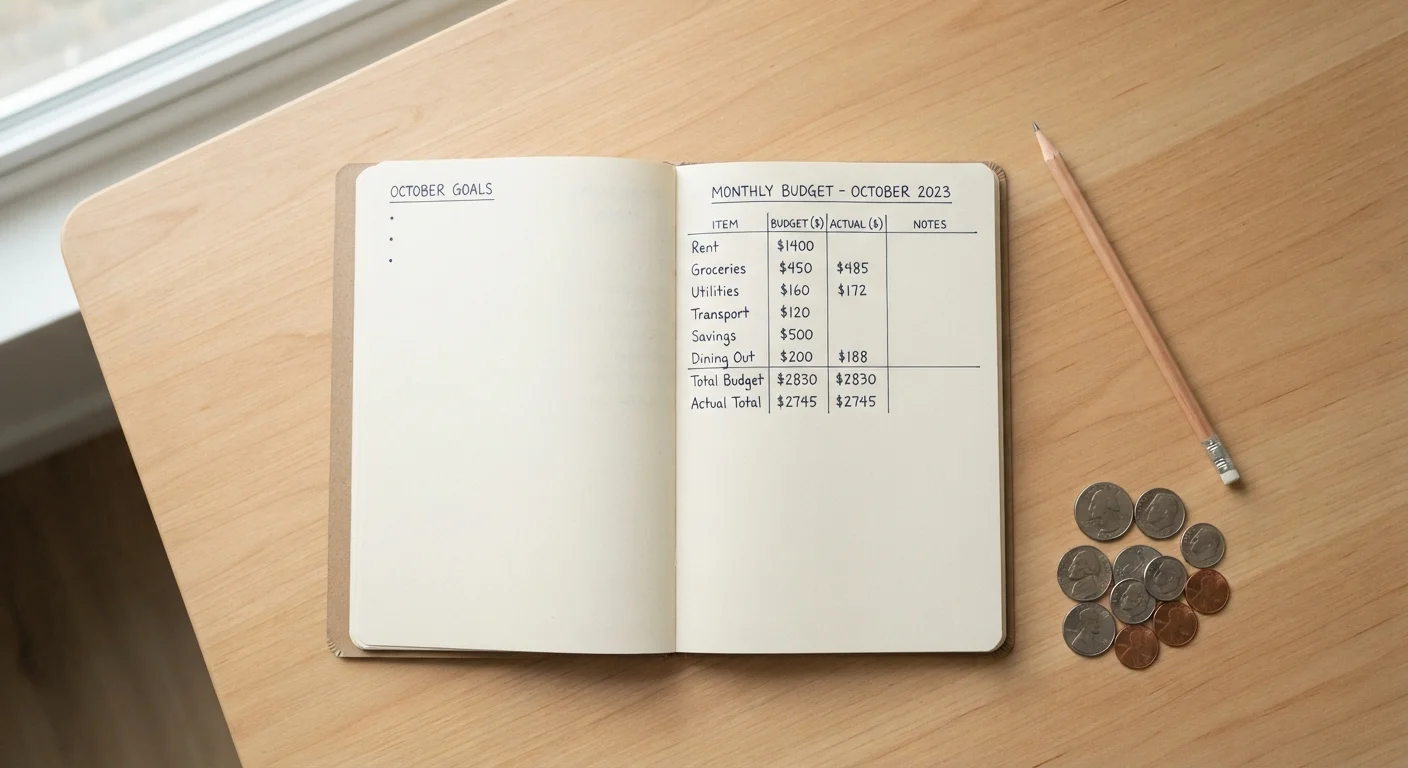
Your first budget doesn't need to be a detailed spreadsheet. Even a list of your income and five or six expense categories on paper is a real budget. The habit of looking at your finances regularly matters far more than having a perfect system. Once the habit is in place, you can add detail over time.
Why Having a Budget Actually Matters
Without a budget, most people operate on a rough mental estimate of their finances — and that estimate is usually off. Research consistently shows that people underestimate their spending, especially on small, frequent purchases that add up quietly over a month.
A budget fixes that by making the numbers visible. Once you can see where every dollar is going, you can decide whether that reflects what you actually value. Maybe you're spending three times more on streaming services than on the savings goal you care about. You can't realign spending you can't see.
Beyond day-to-day awareness, a budget also connects directly to your broader money mindset — the habits and attitudes that shape every financial decision you make. A budget is one of the most concrete tools for turning vague financial intentions into real behavior.
Ready to Build One?
Understanding what a budget is puts you ahead of a lot of people who never stop to think about it. The next step is actually building one — and it's less complicated than it sounds.
If you've never made a budget before, the complete walkthrough for first-time budgeters covers every step from listing your income to setting spending limits. If you'd prefer a more structured monthly approach, see the step-by-step guide to building a monthly budget. And if you're thinking about how budgeting fits into your overall financial picture — including saving and managing credit — the saving and credit hub is a useful next stop.
This article is for general informational and educational purposes only. It does not constitute personalized financial advice. For guidance specific to your situation, consider consulting a qualified financial professional.