What Makes Silicone and Acrylic Caulk Different?
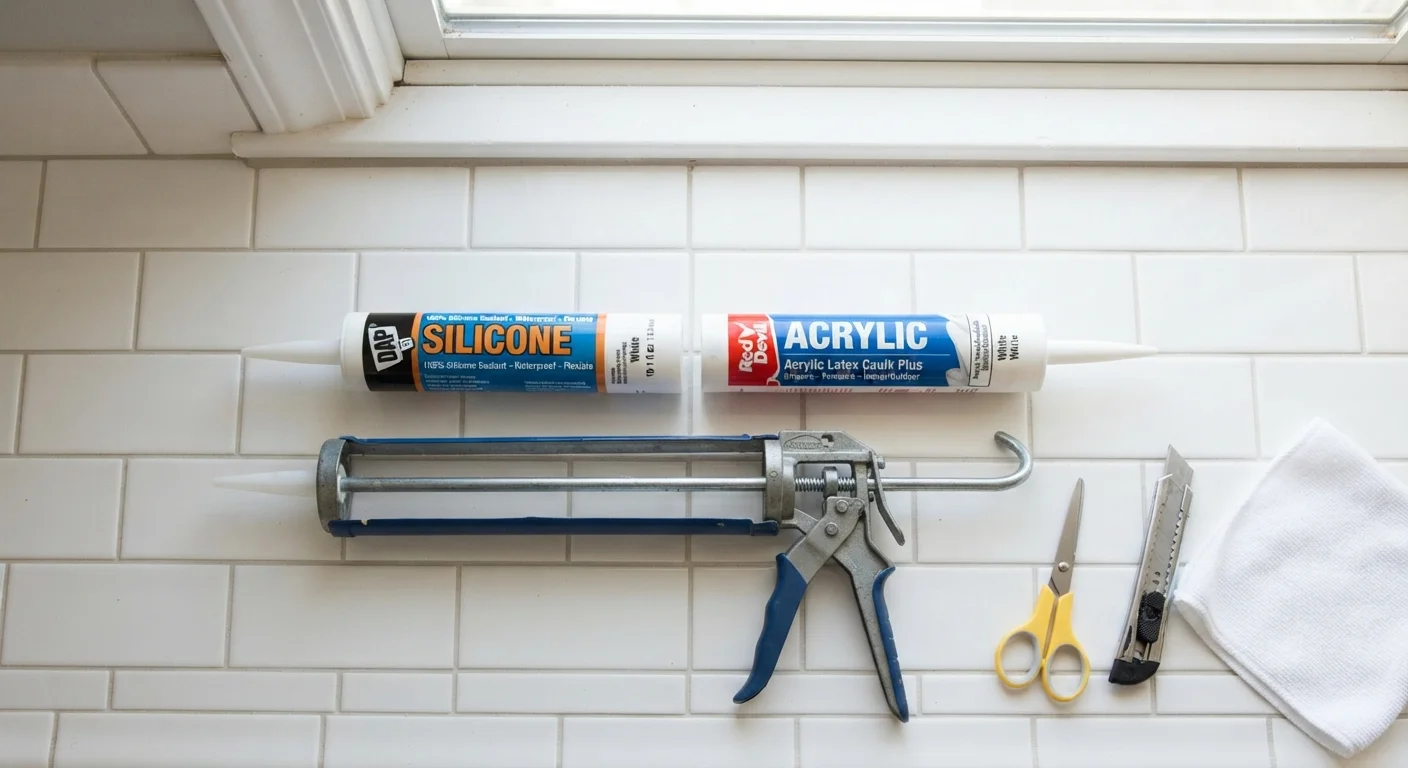
Caulk is a flexible sealant used to fill gaps and joints around the home — between tiles, along window frames, around pipes, and more. While silicone and acrylic caulk look nearly identical in the tube, they're made from entirely different materials that behave very differently once applied.
Silicone caulk is made from a synthetic rubber compound. It stays flexible permanently after curing, bonds strongly to non-porous surfaces like glass, tile, and metal, and repels water with excellent reliability. Its flexibility also means it handles slight structural movement without cracking — useful wherever surfaces expand and contract with temperature changes.
Acrylic caulk (often labeled "latex" or "painter's caulk") is water-based and made from acrylic polymers. It's easier to apply and tool (smooth into shape), cleans up with just water while wet, and can be painted once dry. The trade-off is that it is less flexible and significantly less water-resistant than silicone over time.
Not sure whether caulk or a different material is appropriate for your project? See our guide to caulk vs. grout to understand when grout is the correct choice instead.
Head-to-Head: How They Compare Across Key Criteria
Understanding the practical differences between these two sealants helps you choose the right one the first time — avoiding the frustration of peeling caulk or a surface that won't accept paint.
| Criterion | Silicone Caulk | Acrylic Caulk |
|---|---|---|
| Water resistance | Excellent — fully waterproof | Moderate — can degrade with prolonged moisture |
| Flexibility after curing | Highly flexible, handles movement | Less flexible, can crack over time |
| Paintability | Generally not paintable | Paintable once dry |
| Ease of application | Trickier — requires careful tooling | Beginner-friendly, easy to smooth |
| Cleanup (uncured) | Mineral spirits or rubbing alcohol | Soap and water |
| Mold resistance | High (especially mold-resistant formulas) | Lower — more prone to mold in wet areas |
| Typical best use | Wet areas, exterior joints | Interior trim, painted surfaces |
| Lifespan | 20+ years in ideal conditions | 5–10 years typical |
One important hybrid option worth knowing: siliconized acrylic caulk blends both materials. It is paintable like acrylic and slightly more water-resistant than standard acrylic — a useful middle ground for areas that see occasional moisture but aren't constantly wet, such as around a kitchen backsplash or window interior.
Where to Use Each Type in Your Home
Use Silicone Caulk For:
- Bathtubs and showers — constant moisture and soap residue demand waterproof performance
- Kitchen sinks — the sink-to-countertop seam is regularly splashed and submerged
- Exterior window and door frames — rain, UV exposure, and thermal movement require silicone's durability
- Around plumbing penetrations — pipes through walls or floors benefit from silicone's moisture seal
Use Acrylic Caulk For:
- Baseboards and crown molding — these joints need to be painted to match your walls
- Interior window and door casings — gaps here are decorative, not water-related
- Ceiling-to-wall transitions — easy to apply and paint for a seamless finish
- Drywall gaps and nail holes — acrylic's smooth texture blends well under paint
20+ yrs
Potential lifespan of properly applied silicone caulk
Silicone's polymer structure resists UV, moisture, and temperature extremes, contributing to its extended durability compared to acrylic.
72 hrs
Maximum cure time before water exposure for silicone
Many silicone formulations require up to 72 hours of cure time in low-ventilation or high-humidity environments — always verify on the product label.
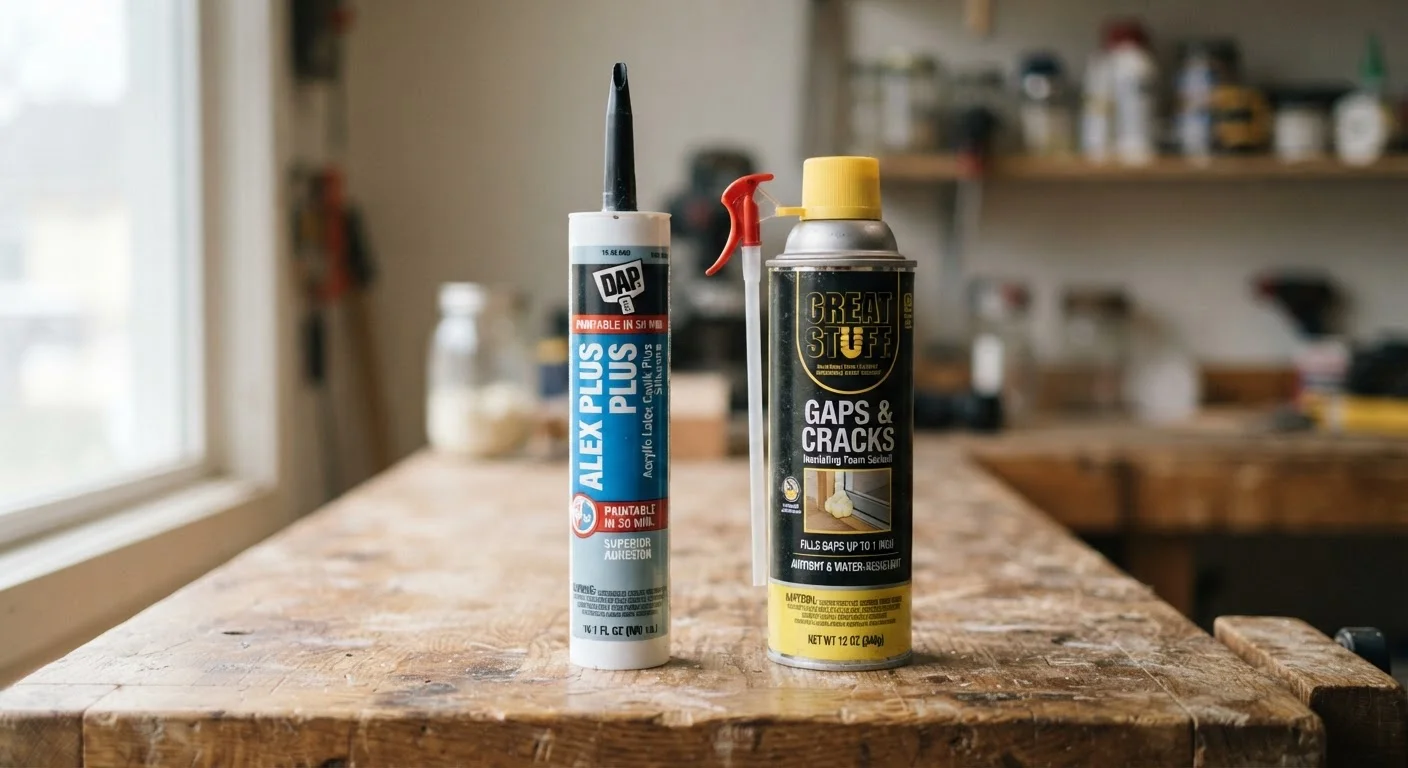
If you're working on large gaps beyond what caulk handles well, expanding foam may be a better solution for deep or wide voids.
Application Tips for Beginners
Whichever type you choose, proper application makes all the difference in how long your caulk job lasts and how professional it looks.
- Clean the surface thoroughly. Remove old caulk, dirt, soap scum, and moisture. Silicone especially will not bond well to contaminated surfaces. Allow the area to dry completely before applying.
- Cut the nozzle at a 45-degree angle. A smaller opening (about 3/16 inch) gives you more control. You can always trim more off if needed.
- Apply in a single, steady pass. Move the gun at a consistent pace while pressing the trigger smoothly. Pausing creates lumps; going too fast leaves gaps.
- Tool (smooth) the bead immediately. Use a wet fingertip or a caulk-finishing tool to press the caulk into the joint and create a concave seal. Do this before the caulk begins to skin over — silicone skins faster than acrylic.
- Allow full cure time before exposing to moisture. Acrylic typically dries to the touch in one to two hours but needs 24 hours before painting. Silicone usually requires 24 hours and sometimes up to 72 hours before water exposure, depending on the formulation. Always check the manufacturer's label.
Cleanup note: Wipe up fresh acrylic caulk with a damp cloth. Silicone requires mineral spirits or rubbing alcohol to remove before it cures — after it cures, removal is mechanical (cut and peel).