Why Dark-to-Light Repaints Catch People Off Guard
Repainting a dark wall seems straightforward — roll on the new colour and let it dry. But this assumption is one of the most common sources of DIY frustration. Dark pigments are chemically designed to be highly saturated and light-resistant, which is exactly what makes them so hard to cover. Understanding what's actually happening at the surface level helps you plan realistically and avoid wasted effort.
The myths below are widespread, and many homeowners only discover they're wrong partway through a job. Getting the facts first makes the whole process faster, cheaper, and far less stressful. For a broader look at how misconceptions create costly home-repair cycles, see home maintenance myths that cost homeowners money.
Myth
One coat of white paint will completely cover any dark wall.
Fact
A single coat of white or any light colour is rarely sufficient to fully cover a dark shade, regardless of paint quality.
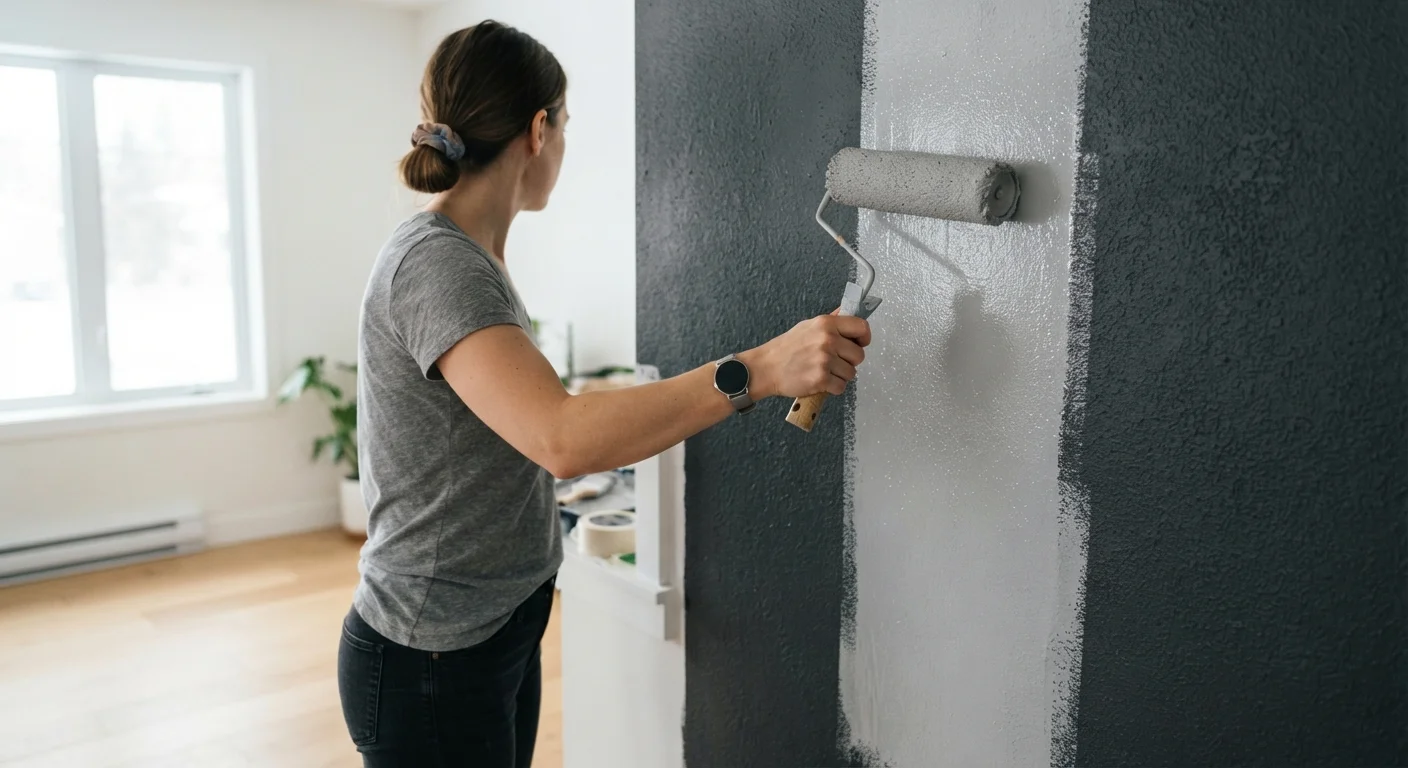
No matter how premium a paint's formulation, pigment density has limits. Dark colours — especially deep blues, reds, and charcoals — have strong undertones that bleed through thin layers of lighter paint. Achieving true coverage typically requires a primed base plus two or more topcoats. Expecting otherwise leads to streaky, uneven results that require even more product to fix.
Myth
Expensive paint means you won't need primer.
Fact
Higher-quality paint improves coverage and durability, but it is not a substitute for primer when painting over dark colours.
Paint-and-primer-in-one products are useful for repainting similar or lighter tones, but they are not formulated to block strong, saturated dark colours. A dedicated primer — particularly a tinted one matched roughly to your topcoat — creates the neutral, sealed surface that makes topcoat coverage possible. Investing in primer upfront saves paint and effort overall.
Myth
You should always use white primer, no matter the new wall colour.
Fact
Tinted primer — toned to a shade close to your chosen topcoat — significantly reduces the number of finish coats needed.
White primer is a solid default, but if your final colour is a medium or deep tone itself (say, a dusty blue or sage green), a grey or colour-matched primer gives your topcoat a far easier job. Ask a paint counter to tint your primer; it's a low-cost step that can reduce your finish coats from three to two, saving both time and material.
Myth
Sanding the old paint makes no difference to the final result.
Fact
Light sanding smooths glossy or uneven surfaces and helps new paint bond correctly, producing a cleaner finish.
If the existing dark paint has a satin or gloss finish, new paint applied directly over it can have adhesion problems — it may peel or look uneven. A light pass with fine-grit sandpaper (around 120–150 grit) dulls the sheen and creates a mechanical key for the primer or paint to grip. This is especially important on trim and doors. See the room-painting steps most people skip for more prep guidance.
Myth
All paint sheens cover dark colours equally well.
Fact
Flat and matte finishes generally provide better initial coverage than satin or gloss, which are more translucent by nature.
Gloss and satin paints contain more binder and less pigment relative to flat paints, which makes them slightly more see-through in thin coats. This matters most when covering dark tones. If your room calls for a washable finish (kitchens, hallways), a satin is still practical — just factor in an extra coat. Understanding sheen differences before you buy helps set the right expectations. Learn how each paint finish behaves on walls before making your choice.
How to Set Yourself Up for Success
Now that the myths are out of the way, a straightforward approach works reliably for most dark-to-light repaints:
- Clean the wall. Wipe down with a damp cloth or sugar soap solution to remove grease and dust. Paint won't bond to a dirty surface.
- Sand lightly if needed. Any glossy or uneven sections benefit from a light pass with fine-grit sandpaper.
- Apply a tinted primer. One coat of a quality primer tinted close to your topcoat colour is almost always sufficient.
- Apply topcoat in thin, even layers. Two coats of a flat or eggshell finish over primer will cover most dark colours completely. Allow full drying time between coats — do not rush this step.
Don't Paint Over Damaged or Damp Walls
Before repainting any wall — dark or light — check for moisture, peeling, or flaking. Painting over these problems traps them beneath the surface and guarantees they'll resurface, often worse than before. Address any wall damage or damp issues first. See what happens when repairs are rushed for a closer look at why skipping prep costs more in the long run.
Following these steps won't just improve the final look — it will also make your new colour last longer and hold up better to everyday wear.
Primer Isn't Optional Here
When moving from a dark colour to any lighter shade, skipping primer almost always results in visible bleed-through — the dark hue shows through the new paint even after multiple coats. A quality primer seals the existing colour and gives the new paint a neutral base to adhere to. This single step can cut your total number of topcoats in half.