What Makes a Sugar 'Natural' or 'Added'?
Sugar itself is a simple carbohydrate. Chemically, the glucose in an apple and the glucose in a candy bar are identical molecules. What differs — and what matters enormously — is the context in which that sugar arrives in your body.
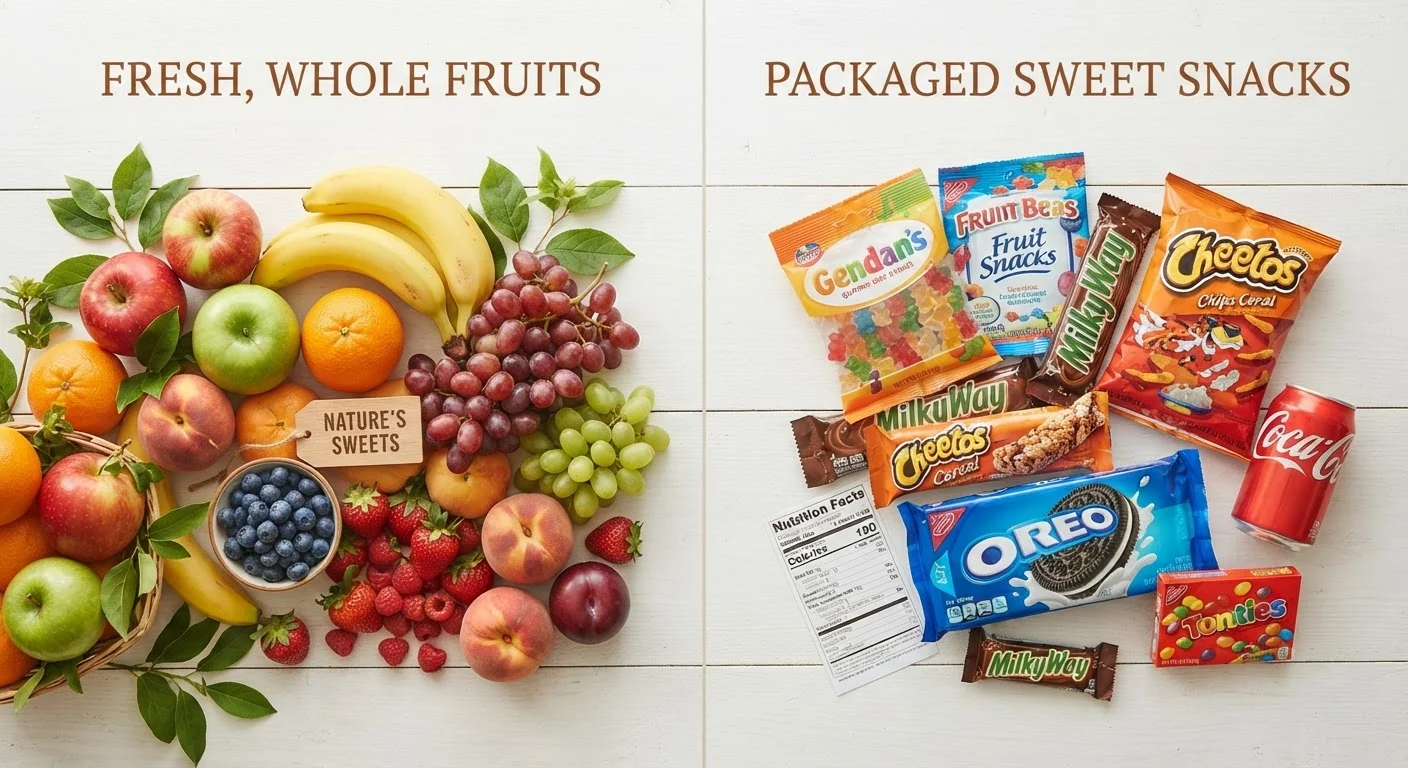
Natural sugars are those present in a food as it exists in nature. Fructose in a strawberry, lactose in milk, and glucose in a carrot are all natural sugars. They have never been separated from their original food and reintroduced elsewhere.
Added sugars, by contrast, are any sugars or caloric sweeteners incorporated into a food during processing or preparation. This includes cane sugar stirred into yogurt, high-fructose corn syrup in a soft drink, honey drizzled into a granola bar, and maple syrup used in baking. Even ingredients that sound wholesome — like agave nectar or fruit juice concentrate — count as added sugars when introduced to another food. For a wider look at the many names sugar travels under, see The Many Forms of Sugar.
Why the Food Matrix Changes Everything
The reason nutrition experts distinguish between these two categories isn't chemical snobbery — it's about what surrounds the sugar when you eat it.
When you eat a whole apple, the fructose it contains is embedded in a structure of dietary fibre, water, vitamins, and plant compounds. That fibre slows digestion, which moderates how quickly sugar enters the bloodstream. The vitamins and minerals contribute genuine nutritional value. The whole package takes time to chew and eat, naturally limiting how much you consume.
When added sugar is consumed — say, in a sweetened beverage — none of that buffering exists. The sugar absorbs quickly, and the calories arrive with little to no additional nutritional benefit. Habitually eating large amounts of added sugar is associated, in population-level research, with higher risk of weight gain, dental decay, and metabolic concerns. Health authorities note these associations, though individual responses vary.
| Criterion | Natural Sugars | Added Sugars |
|---|---|---|
| Origin | Inherent in whole foods | Added during processing or cooking |
| Common sources | Fruit, vegetables, plain dairy | Soft drinks, baked goods, sweetened yogurts |
| Comes with nutrients? | Yes — fibre, vitamins, minerals | Rarely; mostly empty calories |
| Absorption speed | Slower (buffered by fibre) | Generally faster |
| Listed separately on labels? | No | Yes, under 'Added Sugars' line |
| Targeted by dietary guidelines? | Not specifically | Yes — limits recommended |
This is why dietary guidelines from bodies such as the Dietary Guidelines for Americans focus on limiting added sugars specifically, rather than telling people to avoid the sugars naturally present in fruit or plain dairy.
The Label Evidence: Spotting Added Sugars
In the United States, the FDA updated Nutrition Facts label rules to require a separate line for Added Sugars, distinct from total sugars. This makes it straightforward to see, at a glance, how much sugar in a product was deliberately introduced versus naturally present.
17 tsp
Average daily added sugar intake in the US
The CDC has reported that US adults consume roughly 17 teaspoons of added sugar per day, well above the American Heart Association's recommended limits.
10%
Added sugar limit as share of daily calories
The Dietary Guidelines for Americans recommend that added sugars account for less than 10% of total daily calorie intake.
60+
Names for added sugar on ingredient lists
Nutrition researchers have identified more than 60 terms used on ingredient lists that indicate added sugar, making label literacy a genuinely useful skill.
The ingredient list is also revealing. Added sugars appear under more than 60 names, including sucrose, dextrose, maltose, corn syrup, barley malt, coconut sugar, and fruit juice concentrate. Scanning for these terms — particularly when they appear near the top of an ingredient list — signals a product that is heavily sweetened. See how fruit beverage labels work to practise this skill on a notoriously confusing category.
One area that trips people up is fruit juice. A glass of 100% orange juice contains no added sugar, but the juicing process removes most of the fibre, so the naturally occurring fructose absorbs much faster than it would from whole fruit. It sits in an in-between territory — technically natural, behaviourally closer to an added sugar in terms of absorption. This connects to the broader conversation about whole foods versus processed foods and how processing changes nutritional character.
What About Honey and Maple Syrup?
Honey, maple syrup, and agave nectar are often marketed as 'natural' alternatives to table sugar, and they do contain trace minerals. However, when added to food or drinks, they are classified as added sugars by health authorities. Their nutritional differences from refined white sugar are minimal at typical serving amounts. They should be treated with the same moderation as any other sweetener.
This article is for general informational purposes only and is not medical or dietary advice. For guidance specific to your health needs, consult a registered dietitian or qualified healthcare professional.