What Hair Porosity Actually Means
Think of each hair strand as a roof made of tiny overlapping tiles — those are the cuticle scales. When the tiles lie flat and tight, moisture has a hard time getting in (or out). When the tiles are raised or uneven, moisture rushes in easily but escapes just as fast.
That is hair porosity in a nutshell: the degree to which the cuticle allows substances to pass through. It sits alongside curl pattern as one of the most useful things you can know about your hair. Just as skin type shapes which moisturizer works for you — just as skin type shapes product choices — porosity shapes which hair products will actually perform rather than disappoint.
Porosity Is Separate From Hair Type
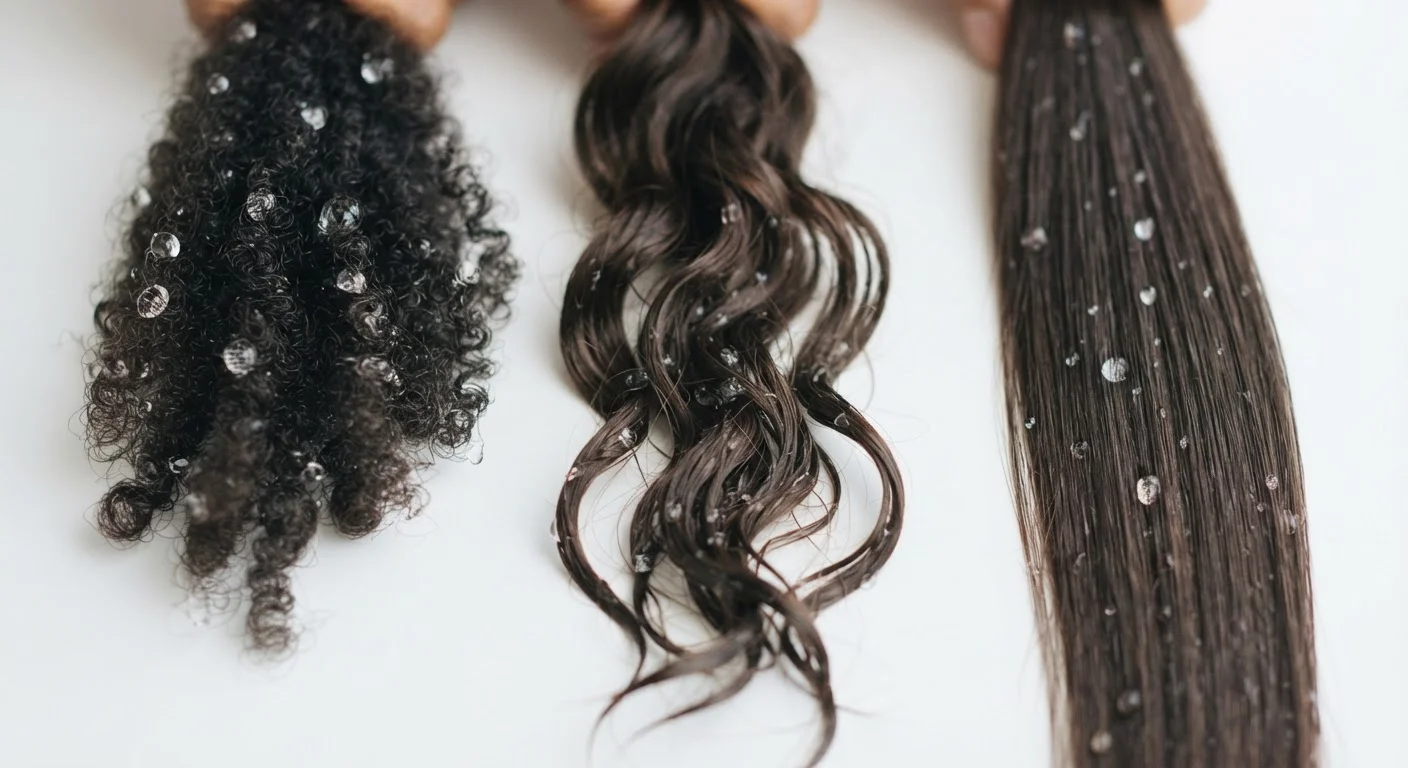
Many beginners assume curly or coily hair always has high porosity, and that straight hair always has low porosity. This is a myth. Porosity and curl pattern are two independent characteristics — a person with straight hair can have high porosity, and someone with tight coils can have low porosity. It is worth assessing them separately.
The Three Porosity Levels Explained
Hair scientists and stylists generally describe porosity on a three-point scale:
- Low porosity: Cuticle scales lie very flat and close together. Water and products bead up and take longer to absorb. Hair can feel dry even after conditioning, and products may build up on the surface rather than penetrating the strand.
- Normal (medium) porosity: The cuticle is somewhat looser, allowing moisture to enter and exit at a balanced rate. This level is often described as the easiest to maintain because hair responds predictably to most products.
- High porosity: Cuticle scales are raised, open, or have gaps. Moisture is absorbed quickly but also lost quickly, leaving hair prone to frizz, dryness, and breakage. This can be genetic or the result of chemical or heat damage.
3
Porosity levels recognized by hair care science
Low, normal, and high porosity are the three categories widely used by trichologists and professional stylists to guide product and treatment recommendations.
~50%
Of hair's outer cuticle can be affected by chemical processing
Research published in hair biology literature indicates that bleaching and coloring processes significantly alter cuticle structure, which directly impacts porosity.
Understanding where your hair falls helps you assess your hair's current condition before building any care routine.
How to Identify Your Porosity Level
There is no lab test required. Two accessible methods can give you a useful starting point:
- The float test: After washing your hair (to remove product buildup), drop a single shed strand into a glass of room-temperature water. Watch for two to four minutes. If it sinks quickly, high porosity is likely. If it floats near the top, low porosity is likely. If it sinks slowly to the middle, normal porosity is probable.
- The slip-and-slide test: Hold a strand between two fingers and slide them from tip toward the root. If you feel bumps along the way, the cuticle may be raised (higher porosity). If it feels very smooth and slippery, the cuticle is likely flat (lower porosity).
Neither test is foolproof — both can be affected by product residue, hard water minerals, or how recently you chemically treated your hair. Use them as a guide, not a verdict.
Get a More Accurate Float Test Result
For the most reliable float test, use a strand of hair that has been washed with a clarifying shampoo and left to air dry — no conditioner or styling products. Product buildup is the most common reason the test gives misleading results. Repeat the test with a few strands from different areas of your head, as porosity can vary slightly across the scalp.
How Porosity Shapes Your Product Choices
Once you know your porosity, you can start making smarter ingredient choices. The ingredients in hair products behave differently depending on how open or closed the cuticle is.
- Low porosity hair does best with lightweight humectants (ingredients that draw in water vapor) and benefits from heat when deep conditioning to coax open those tight cuticle scales. Heavy butters and proteins can sit on the strand unabsorbed.
- Normal porosity hair tends to tolerate a wide range of products and ingredients, though regular maintenance helps keep the cuticle in good shape.
- High porosity hair often benefits from protein treatments to temporarily fill gaps in the cuticle and from sealing oils applied after moisturizing to slow water loss. Richer creams and butters can help lock in hydration.
Pairing porosity knowledge with your curl pattern or hair type gives you the most complete picture for building an effective routine.
This article is for informational and educational purposes only. Individual hair needs vary; if you have concerns about hair loss or scalp health, consult a qualified dermatologist or trichologist.