Why Ingredient Lists Feel So Confusing
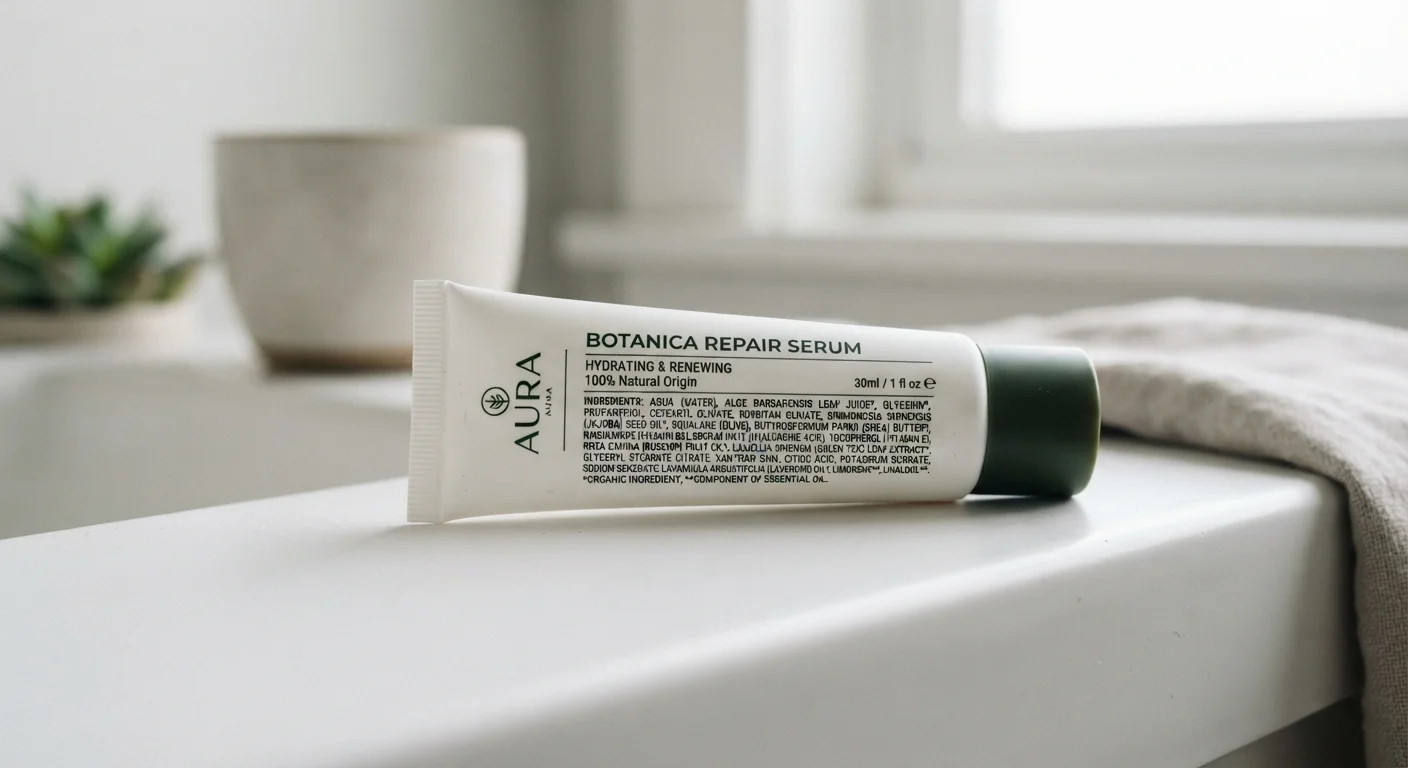
Pick up almost any moisturiser, serum, or cleanser and flip it over. What you'll see is a dense block of unfamiliar Latin words, chemical names, and numbers — a format so intimidating that most people simply ignore it entirely. That's understandable, but it means missing genuinely useful information about what you're putting on your skin.
Skincare ingredient lists follow a single international standard called INCI (International Nomenclature of Cosmetic Ingredients). Every ingredient must appear under its globally recognised INCI name, which is why familiar substances can look alien: Aloe barbadensis leaf juice is just aloe vera, and tocopherol is vitamin E. The naming system exists so regulators and formulators worldwide can identify ingredients consistently — it just happens to look like a foreign language to everyone else.
Once you understand three core rules — ordering, concentration thresholds, and common name patterns — you can read any label with confidence. This guide walks you through each rule step by step. If you'd also like to understand what the individual steps of a skincare routine are actually doing, our plain-language breakdown of each skincare step is a good place to start.
What You'll Need Before You Start
No specialised equipment is required. All you need is a product label to practise on and, optionally, access to an online ingredient database to look up unfamiliar names.
What you will need
Skincare product label
The ingredient list you'll be reading and practising on.
Online INCI ingredient database
Lets you look up unfamiliar ingredient names and their general functions quickly.
Magnifying glass or phone camera zoom
Helps read very small label text without straining your eyes.
How to Read a Skincare Ingredient List
Follow these steps each time you pick up a new product. With a little practice, scanning a label takes less than a minute.
Read the first five ingredients carefully
By law, cosmetic ingredients must be listed in descending order of concentration — the ingredient present in the largest amount comes first. The first five entries typically make up the bulk of the formula (often 80–95% of the total product) and largely determine what the product actually does. Water (aqua) is first in most hydrating formulas; a fatty acid or oil may lead in a balm or cleansing oil.
Find the approximate 1% cut-off point
Regulations permit manufacturers to list ingredients present at 1% or less in any order after the main ingredients. This means the list often has two zones: a clearly ordered top section of primary ingredients, and a more loosely ordered bottom section of low-concentration actives, preservatives, and fragrance components. Preservatives like phenoxyethanol are almost always in this lower zone, which is perfectly normal — it does not indicate a safety issue.
Decode unfamiliar INCI names
When you encounter an ingredient you don't recognise, search its exact INCI name in a free cosmetic ingredient database. Most databases will tell you the ingredient's common name, its general function (e.g. emollient, preservative, antioxidant), and any notes on skin sensitivity. This step is optional for casual label reading but useful when you're investigating a specific product or a new ingredient you've heard about.
Look for your known sensitivities or avoid-list ingredients
If you have a known allergy or sensitivity (for example, to fragrance, specific preservatives, or a plant extract), scan the full list for that ingredient rather than relying on front-of-pack claims like fragrance-free or hypoallergenic. These terms have no universal legal definition and can be misleading. The ingredient list is the authoritative source.
Check the order of any claimed actives
Marketing copy on the front of a product often highlights a single glamorous ingredient — contains retinol!, with vitamin C!. Find that ingredient in the list and note its position. If it appears in the first third of the list, it is likely present at a meaningful concentration. If it appears near the very end, treat front-of-pack claims with healthy scepticism. This is especially worth doing for products you plan to layer, where active concentrations affect how you sequence your routine.
Longer Lists Aren't Worse
A product with 30 ingredients is not inherently harsher or more problematic than one with 8. Many of those extra entries are stabilisers, texture agents, or trace fragrance components at well below 1%. Judge an ingredient list by what's in it, not by how long it is.
Once you're comfortable reading labels, a natural next step is understanding what specific active ingredients — like retinol, niacinamide, or AHAs — actually do. Our plain-English guide to common skincare actives covers the most widely used ones in accessible detail.
Common Patterns Worth Recognising
A few ingredient categories appear in almost every skincare product, and learning to spot their patterns saves a lot of look-up time.
- Emollients and occlusives — words ending in -ate (e.g. isopropyl palmitate) or containing oil, butter, or wax usually help skin feel soft or prevent moisture loss.
- Humectants — glycerin, hyaluronic acid (listed as sodium hyaluronate), and propylene glycol draw water toward the skin's surface.
- Preservatives — phenoxyethanol, ethylhexylglycerin, and the paraben family (e.g. methylparaben) prevent bacterial growth and extend shelf life. Their appearance near the bottom of a list is normal and expected.
- Fragrance — may be labelled parfum, fragrance, or listed as individual aromatic compounds. Those with sensitive skin may want to note its position on the list.
The same rules that govern skincare labels apply to haircare products too. If you're curious, we've put together a guide to hair product ingredients that decodes silicones, sulfates, and humectants in plain language.
Front-of-Pack Claims Can Be Misleading
Terms like "natural," "clean," "non-toxic," and "hypoallergenic" are largely unregulated marketing language and carry no standardised legal meaning in most markets. Always verify what you're looking for directly on the full ingredient list rather than relying on these labels.
This article provides general educational information about cosmetic labelling. It is not medical or dermatological advice. If you have a skin condition, allergies, or concerns about a specific ingredient, consult a qualified dermatologist or healthcare professional.