Why the Confusion Exists
Walk down any skincare aisle and you will find the words "hydrating" and "moisturising" used almost interchangeably on labels. This is a genuine source of confusion — even experienced skincare users get it wrong. The two terms describe entirely different biological processes and different categories of ingredient, so mixing them up can lead to choosing products that do not address what your skin actually needs.
Understanding the distinction does not require a science background. Think of your skin as a sponge inside a sealed bag. Hydration is about filling the sponge with water. Moisturisation is about sealing the bag so the water cannot evaporate out. Both matter, and they work best together — but they are not interchangeable. If you want to understand your skin more broadly, our guide on identifying your skin type is a helpful starting point before building a routine.
What Hydration Actually Means
In skincare, hydration refers to increasing the water content within skin cells. Healthy skin cells need adequate water to carry out basic functions — producing natural oils, renewing themselves, and maintaining a plump, smooth appearance. When water levels inside cells drop, skin can look dull, feel tight, develop fine lines, or have an uneven texture.
The key ingredient category here is humectants. Humectants are molecules that attract water — either drawing it from the deeper layers of the skin upward, or pulling it from humid air around you. Hyaluronic acid is the most well-known example; a single molecule can bind many times its weight in water. Glycerin and aloe vera are other common humectants you will see listed on product labels.
An important point beginners often find surprising: you can have oily skin and still be dehydrated. Oiliness and dehydration are different things. Oil is produced by sebaceous glands and sits on the surface; water content lives inside the cell. Skin that is oil-rich but water-poor is sometimes called "dehydrated oily" skin and is very common.
~64%
Water content of the human body
According to the U.S. Geological Survey, water makes up roughly 60–64% of an adult body — underlining why cellular hydration matters across all tissue, including skin.
Top 3
Most used humectant in skincare
Hyaluronic acid, glycerin, and aloe vera consistently appear among the most commonly cited humectant ingredients in published skincare formulation literature.
What Moisturisation Actually Means
Moisturisation is about maintaining the skin's barrier function — specifically, slowing the rate at which water escapes from the surface of the skin into the air. This process of water loss is called transepidermal water loss (TEWL), a term dermatologists use to describe how efficiently the outermost skin layer holds onto moisture.
Moisturising ingredients fall into two main families:
- Emollients — substances like plant oils, squalane, and ceramides that fill gaps between skin cells, smoothing texture and softening the surface.
- Occlusives — heavier substances like shea butter, petrolatum, and beeswax that form a physical film over the skin to physically block water loss.
A moisturiser applied to already-hydrated skin is far more effective than one applied to dry, water-depleted skin. This is why the order of application matters: hydrating step first, then moisturiser on top to lock everything in.
| Criterion | Hydration | Moisturisation |
|---|---|---|
| Primary goal | Add water to skin cells | Prevent water from escaping |
| Key ingredient type | Humectants (e.g. hyaluronic acid, glycerin) | Emollients and occlusives (e.g. ceramides, shea butter) |
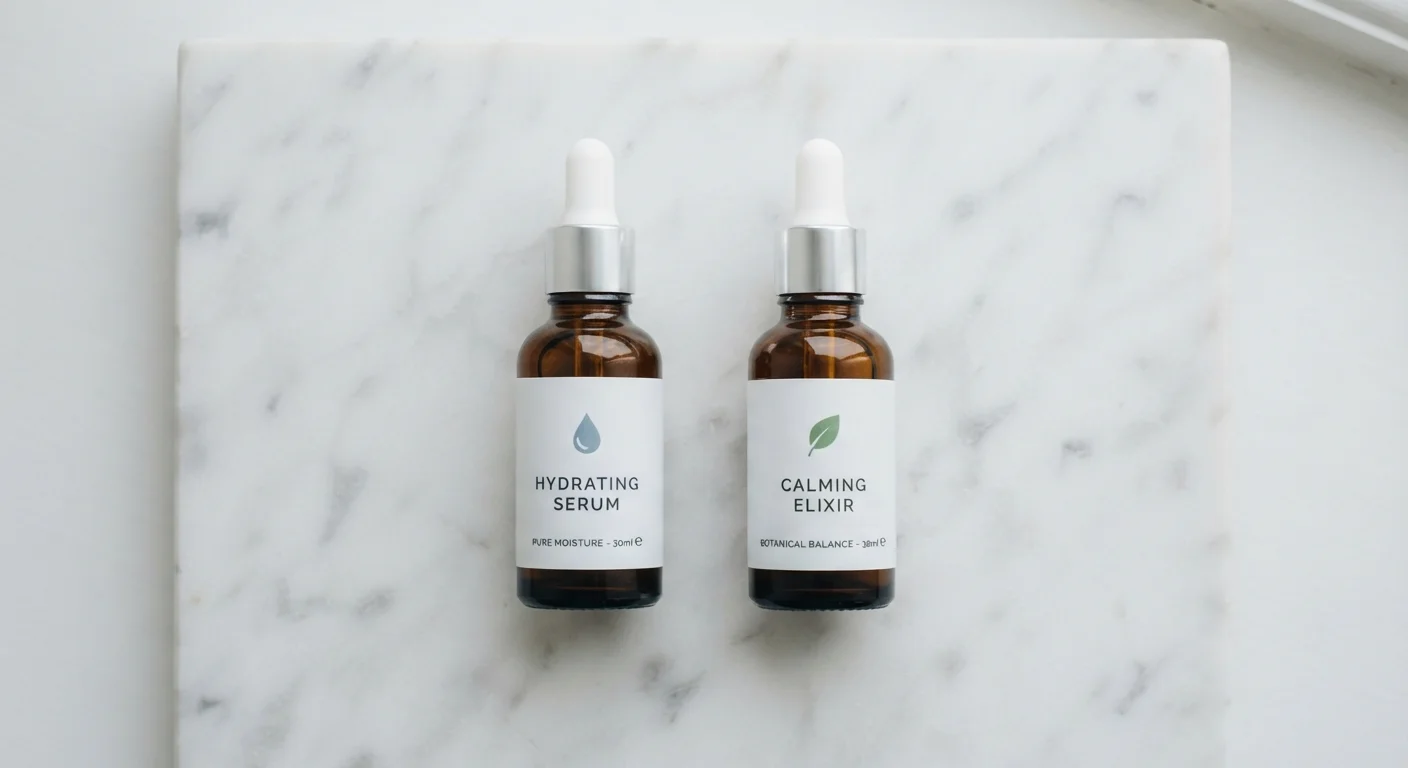
| Product format | Serums, essences, hydrating toners | Creams, lotions, face oils, balms |
| Texture | Typically lightweight and watery | Ranges from light lotion to thick cream |
| Application order | Applied first, on damp skin | Applied second, on top of hydrator |
| Works for oily skin? | Yes — oily skin can be dehydrated | Yes — choose a lightweight formula |
How to Layer Them Correctly
For most people, the practical routine is straightforward. After cleansing, apply a hydrating product (typically a serum or toner containing humectants) to damp skin. Follow with a moisturiser while the skin is still slightly damp — this traps both the water from the hydrating step and any remaining water from cleansing beneath the moisturising layer.
A common beginner mistake is skipping the hydrating step entirely and relying only on a moisturiser. If skin cells are already water-depleted, a moisturiser alone simply seals in less water than the skin needs. Conversely, using only a hydrating serum with no moisturiser on top means that water will evaporate from the surface relatively quickly, providing limited lasting benefit.
If you have very oily skin, a lightweight, non-comedogenic (meaning it does not block pores) moisturiser is usually sufficient to seal in hydration without adding heaviness. If your skin is very dry or your environment is arid, a richer occlusive formula may serve better.
Dehydrated vs. Dry Skin: A Key Distinction
"Dry" is a skin type — meaning your skin naturally produces less oil. "Dehydrated" is a condition — meaning your skin currently lacks sufficient water, regardless of your skin type. Even people with oily or combination skin can experience dehydration. Identifying which applies to you changes which products will actually help. Our article on understanding skin types explains these distinctions in detail.
This article is for general informational purposes only and does not constitute medical or dermatological advice. If you have persistent skin concerns, consult a qualified dermatologist or healthcare professional.