Why Wash Day Needs a Plan
For many people, washing their hair feels like a half-day commitment with unpredictable results. Without a clear sequence, it's easy to skip steps, overwork the hair, or end up with frizz and tangles instead of softness and shine. The good news is that wash day doesn't have to be complicated — it just needs structure.
Hair responds to consistency. Just as a daily skincare routine conditions your skin over time, a repeatable hair care routine teaches you what your hair actually needs. This guide walks you through every step — from prepping dry hair to sealing in moisture after washing — so you can build a routine that genuinely works for your hair type.
What you will need
What You'll Need Before You Start
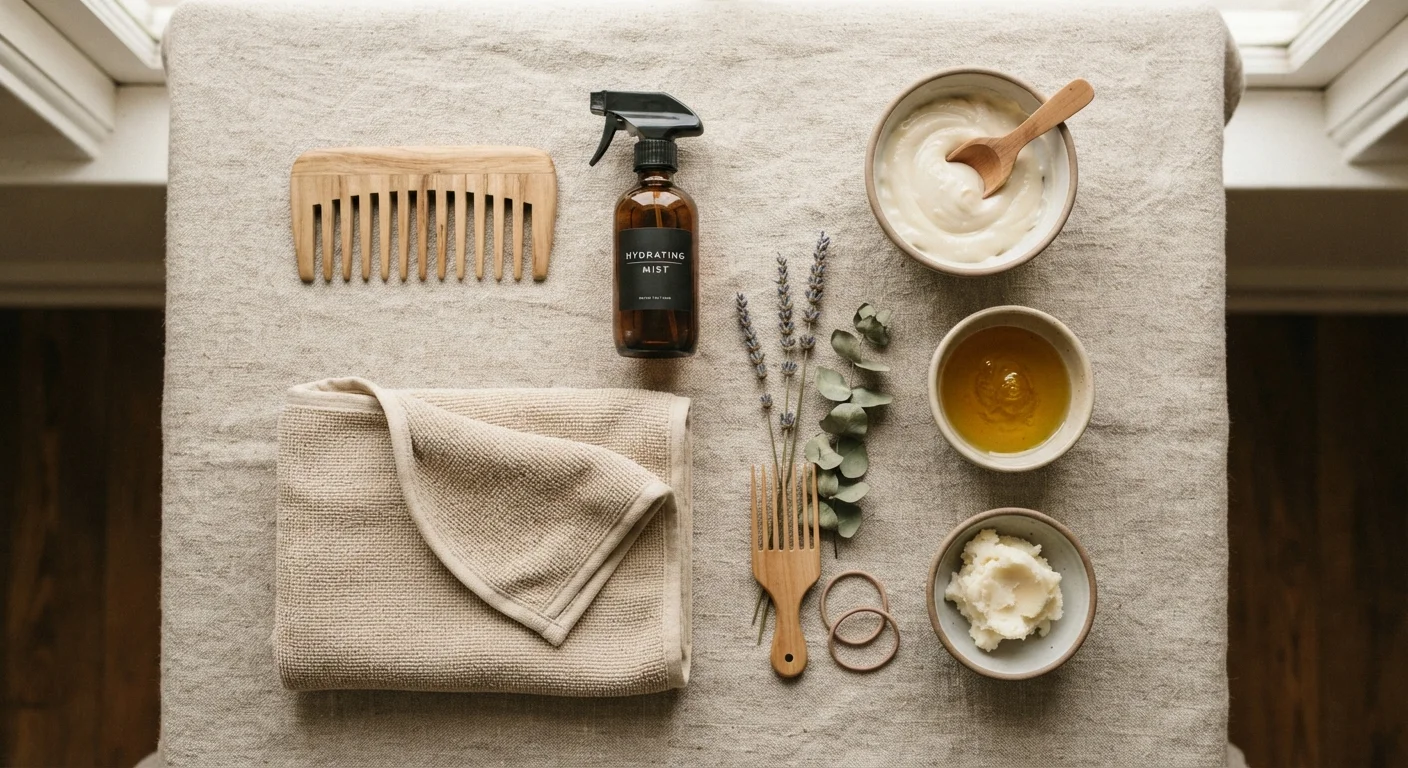
Gathering your tools before you step into the shower removes mid-routine scrambling and helps you move efficiently through each step. Below are the core items for a beginner wash day.
Wide-tooth comb or detangling brush
Used to gently remove knots from dry hair before washing, minimising breakage.
Gentle shampoo
Cleanses the scalp and hair of buildup without stripping natural oils.
Moisturising conditioner
Restores hydration and softness to the hair shaft after shampooing.
Microfiber towel or cotton T-shirt
Absorbs excess water gently without causing friction-related frizz or breakage.
Leave-in conditioner or hair oil
Seals moisture into the hair after washing to extend hydration between sessions.
Spray bottle with water
Helps re-dampen sections while detangling or styling after washing.
Deep conditioning treatment
Provides intensive hydration on a weekly or bi-weekly basis for dry or damaged hair.
You don't need expensive or specialty products to begin. Simple, fragrance-free formulas often work best for sensitive or reactive hair. Once your routine is established, you can layer in more targeted products based on what you observe — similar to the approach outlined in tracking what's working in any routine.
Step-by-Step Wash Day Instructions
Follow these steps in order. Skipping ahead — especially past the detangling and conditioning phases — is the most common reason wash day feels like damage control rather than self-care.
Detangle dry hair before wetting it
Start with completely dry hair. Working through tangles on dry hair gives you more control and causes far less breakage than trying to comb out knots once the hair is wet and fragile. Begin at the ends of your hair and work upward toward the roots in small sections, gently easing through knots rather than forcing the comb.
Rinse thoroughly with lukewarm water
Wet your hair completely with lukewarm water. Hot water opens the hair cuticle aggressively and can strip natural oils, leading to dryness. Lukewarm water rinses out debris and product buildup while being gentler on both scalp and strands. Spend at least 30 seconds ensuring every section of hair is saturated before applying shampoo.
Shampoo your scalp, not just your hair
Apply a small amount of shampoo — about the size of a large coin — directly to your scalp. Using your fingertips (not nails), massage in gentle circular motions to lift buildup and stimulate circulation. Allow the lather to rinse through your lengths as you wash it out. Repeating the shampoo step is rarely necessary unless you use heavy styling products regularly.
Apply conditioner from mid-lengths to ends
After rinsing out shampoo, squeeze excess water from your hair and apply conditioner generously from mid-shaft to the ends. These sections are oldest and most prone to dryness. Avoid applying directly to the scalp, which produces its own natural oils. Use a wide-tooth comb to distribute the conditioner evenly and gently work through any remaining tangles while the product is in.
Rinse with cool water
Rinse the conditioner out thoroughly with cool or lukewarm water. A final cool-water rinse helps close the hair cuticle, which smooths the surface and adds shine. Make sure no conditioner residue remains at the roots, as buildup there can cause the scalp to feel greasy or itchy between wash days.
Dry gently and seal in moisture
Blot — do not rub — your hair with a microfiber towel or cotton T-shirt to remove excess water. Standard terrycloth towels create friction that roughens the cuticle and causes frizz. Once hair is damp but not dripping, apply your leave-in conditioner or a small amount of hair oil, working it through from ends to roots. This final step seals the moisture you've just added into the hair shaft, which is the key to softness that lasts.
Build Your Routine Gradually
You don't need to perfect every step on your first wash day. Start with the core sequence — detangle, shampoo, condition, seal — and observe how your hair responds. Add deep conditioning or other steps once the basics feel natural. Incremental improvements lead to lasting results.
Making Wash Day Sustainable
The most effective wash day routine is one you can actually repeat. For most hair types, washing once or twice per week strikes the right balance between cleanliness and moisture retention. Fine hair may need more frequent washing; thicker or coarser hair may thrive on less.
Keep notes on how your hair responds — texture after drying, how long moisture lasts, whether your scalp feels comfortable. These observations guide smart adjustments over time. As your confidence grows, you can explore protective styles and deeper treatments. For a fuller foundation, building a complete beginner hair care routine covers the broader habits that support long-term hair health.
This article is for general informational purposes only. If you are experiencing scalp conditions, significant hair loss, or other concerns, please consult a qualified healthcare or dermatology professional.