Understanding Your Hair Type
Before you buy a single product, take five minutes to understand what you're actually working with. Hair is generally described in two dimensions: its curl pattern and its strand thickness.
Curl pattern ranges from straight (Type 1) to wavy (Type 2), curly (Type 3), and coily or tightly coiled (Type 4). Within each category, sub-labels like 2a, 2b, and 2c describe how pronounced the wave or curl is. You don't need to memorize these — just notice whether your hair dries straight, forms loose waves, defined curls, or tight coils.
Strand thickness is separate from curl. Fine hair has a smaller diameter per strand and tends to get oily faster. Coarse hair has a wider diameter and can feel drier. Medium hair falls in between and is the most common.
Why does this matter? Wavy and curly hair needs more moisture and gentler handling than straight fine hair. Coily hair benefits from fewer wash days and richer conditioning. Knowing your type prevents you from using the wrong products for your texture.
Hair cuticle
The outermost layer of a hair strand, made up of overlapping scales. When these scales lie flat, hair looks smooth and shiny; when raised, hair appears frizzy and feels rough.
Sebum
The natural oil produced by glands in your scalp. It keeps hair moisturized and protected, but excess sebum can make hair look greasy.
Leave-in conditioner
A lightweight conditioning product applied to washed hair that is not rinsed out. It adds lasting moisture and makes hair easier to detangle.
Heat protectant
A product — usually a spray or cream — applied to hair before using heat styling tools. It creates a protective layer that reduces heat damage to the cuticle.
Hygral fatigue
Gradual weakening of the hair shaft caused by repeated swelling (when wet) and shrinking (when dry). Prolonged wetness without drying increases this stress on hair.
Curl pattern
The natural shape hair forms when it dries without manipulation. It is commonly categorized as straight, wavy, curly, or coily, with sub-types describing the degree of curl.
The Core Three: Wash, Condition, Protect
A complete beginner routine has exactly three non-negotiable steps.
1. Cleanse
Apply shampoo to a wet scalp, massage gently with your fingertips (not nails), and let it rinse through the lengths as you wash it out. You are cleaning the scalp primarily — not scrubbing the ends. Over-shampooing the lengths strips moisture and causes frizz and breakage.
2. Condition
After rinsing out shampoo, apply conditioner from your mid-lengths to your ends — not the scalp. Leave it on for one to three minutes, then rinse with cool water. Cool water helps close the hair cuticle, which reduces frizz and adds shine. If your hair is very dry or curly, a leave-in conditioner applied after washing adds an extra layer of moisture that stays in place all day.
3. Protect
Protection means two things: shielding hair from heat and from physical damage. Apply a heat protectant spray or cream before using any heated tool. When hair is wet, handle it gently — wet hair is significantly more elastic and prone to stretching and snapping. See our guide to detangling without breakage for the right order and tools to use on damp hair.
Cool Water Rinse Makes a Difference
Finishing your conditioning step with a 10-second cool water rinse is a small habit with a noticeable payoff. Cool water encourages the hair cuticle to lie flat, which reflects more light and reduces frizz. It does not need to be ice cold — just cooler than your shower temperature.
Tools Every Beginner Actually Needs
You do not need a cabinet full of gadgets. Start with these three:
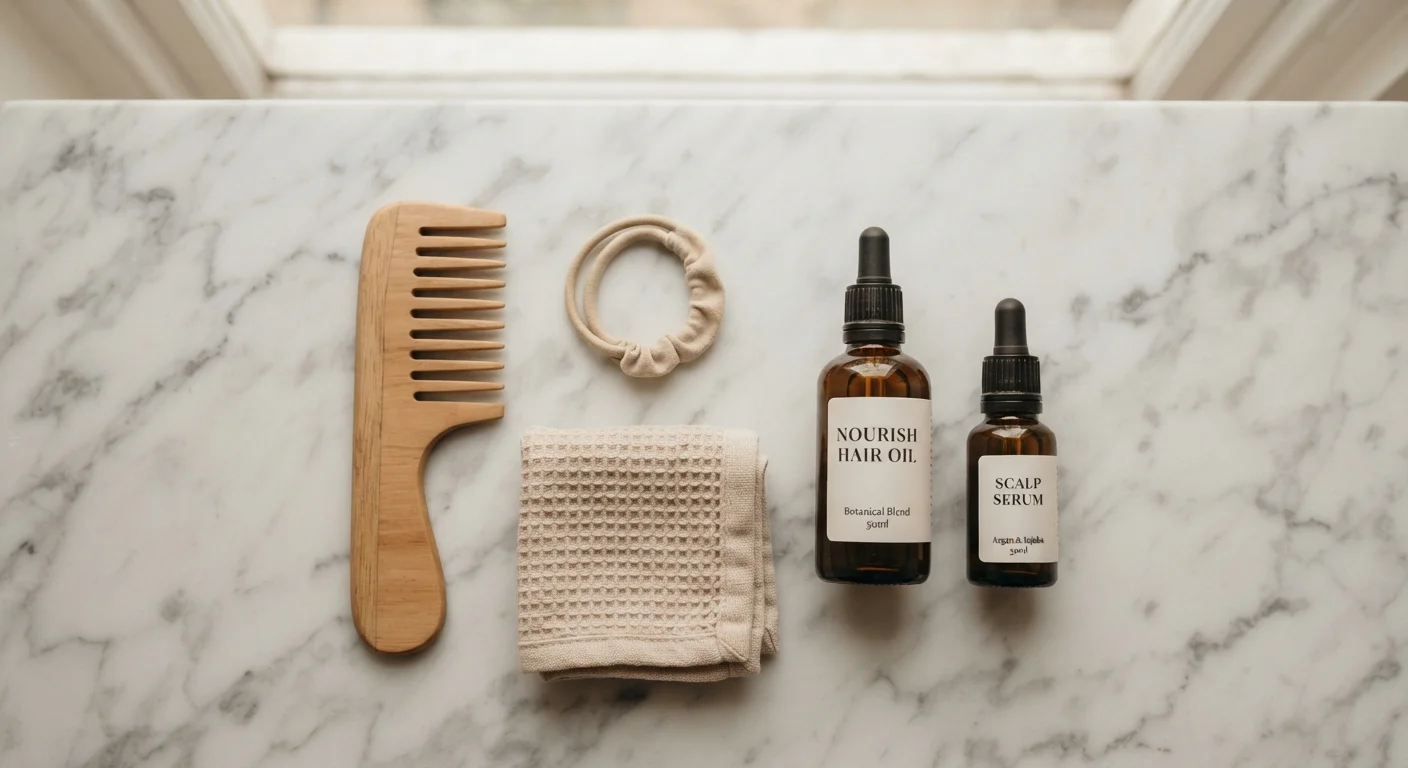
- Wide-tooth comb: The safest tool for detangling wet hair. Start at the ends and work upward toward the roots to minimize breakage.
- Microfiber towel or old cotton T-shirt: Regular terrycloth towels create friction that roughens the hair cuticle and causes frizz. A microfiber towel blots water out gently.
- Hair ties without metal clasps: Metal parts snag and break hair. Look for fabric-covered elastics or spiral hair ties.
If you blow-dry regularly, a diffuser attachment is worth adding — it distributes airflow evenly and reduces frizz, especially for wavy and curly textures. A paddle brush is useful for smooth blowouts on straight or slightly wavy hair, but hold off on buying one until you are comfortable with the basics.
Building Your Weekly Routine
A consistent routine does not need to be daily. Here is a simple framework to adapt to your hair type:
| Hair Type | Wash Frequency | Conditioning Focus |
|---|---|---|
| Fine / Straight | Every 2–3 days | Lightweight rinse-out conditioner |
| Wavy / Medium | 2–3 times per week | Rinse-out + occasional leave-in |
| Curly / Coily | Once per week | Leave-in conditioner after every wash |
On non-wash days, refresh your hair with a light mist of water or a curl refresher spray if needed. Avoid touching or ruffling your hair throughout the day — repeated friction adds up. Sleeping on a silk or satin pillowcase (or using a loose satin bonnet or scarf) also significantly reduces overnight frizz and breakage, especially for curly and coily textures.
If you're building other self-care habits at the same time, the Skincare Basics hub offers a parallel beginner framework for daily skin routines.
Routines Take a Few Weeks to Show Results
Hair does not transform overnight. Most people notice meaningful improvements in texture, shine, and manageability after four to six weeks of consistent care. If you switch products too frequently, it becomes difficult to know what is actually working. Give any new routine at least a month before evaluating it.
Common Beginner Mistakes to Avoid
Most early hair care mistakes come from doing too much, not too little.
- Washing too often: Daily shampooing strips the scalp's natural sebum, which can trigger the scalp to overproduce oil to compensate. Ease off gradually if you currently wash every day.
- Rough towel drying: Vigorously rubbing hair with a regular towel is one of the fastest ways to cause frizz and mechanical breakage. Blot and squeeze — never rub.
- Skipping conditioner: Shampoo opens the hair cuticle slightly; conditioner closes it back. Skipping conditioner leaves hair porous, dull, and more prone to tangling.
- Using too much product: A dime-to-quarter-sized amount of conditioner is usually enough. Excess product causes build-up that weighs hair down and dulls it over time.
- Brushing wet hair aggressively: Wet hair stretches more than dry hair and snaps under tension. Always use a wide-tooth comb on wet hair, starting at the ends.
This article is for general informational purposes only and is not a substitute for professional advice. If you have scalp concerns, significant hair loss, or other conditions affecting your hair and scalp, consult a qualified dermatologist or trichologist.
Avoid Tight Styles on Already Damaged Hair
Tight ponytails, buns, or braids place tension on hair follicles and can worsen breakage if your hair is already dry or damaged. While you are building your routine and restoring moisture, opt for loose styles and avoid elastic bands that pull. Traction on weakened hair over time may contribute to hair loss along the hairline, a condition known as traction alopecia.