Why Routine Consistency Is the Real Active Ingredient
Skincare marketing tends to spotlight individual ingredients — retinol, niacinamide, hyaluronic acid. But the factor that most consistently determines outcomes is simpler: showing up every day. The skin is a living barrier organ that responds to repeated, low-level input over time. A single application of a moisturiser hydrates briefly; applying it twice daily for eight weeks can measurably improve the skin barrier's ability to retain water on its own.
This is why dermatologists emphasise routine over any specific product. The skin's outermost layer, the stratum corneum, renews itself roughly every two to four weeks. Each new cycle of cells is shaped partly by the conditions the skin is repeatedly exposed to — including what you apply to it. Consistent habits essentially train the skin toward a new baseline.
Start Simple, Then Build Gradually
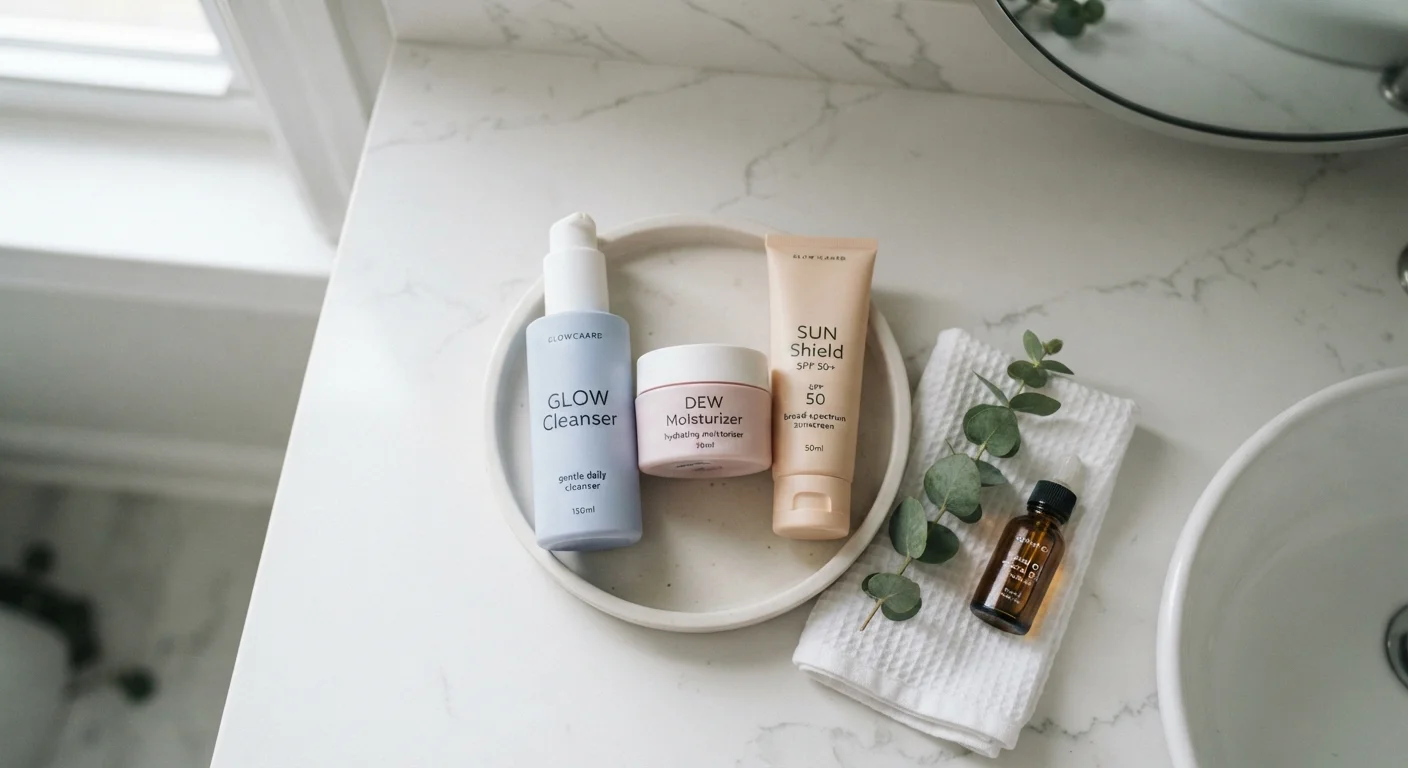
If you're new to skincare, resist the urge to adopt a ten-step routine immediately. Start with three steps — a gentle cleanser, a moisturiser, and a broad-spectrum sunscreen — and use them consistently for four weeks. Once you understand how your skin responds, you can thoughtfully introduce additional products one at a time.
What Each Core Step Actually Achieves
Breaking down the purpose of each step removes the guesswork from building a routine. For a thorough plain-language breakdown, see what each skincare step is really for.
- Cleansing removes sebum (the skin's natural oil), dead skin cells, sweat, pollution particles, and residual sunscreen or makeup. Without it, these accumulate and can clog pores or interfere with product absorption.
- Moisturising helps maintain the skin barrier by replenishing water content and reducing transepidermal water loss (TEWL) — the passive evaporation of moisture through the skin. A compromised barrier is linked to sensitivity, redness, and flakiness.
- Sunscreen blocks or absorbs ultraviolet (UV) radiation, which is responsible for the majority of visible skin aging — including fine lines, uneven pigmentation, and loss of elasticity. It is the most evidence-backed single step available. The science behind daily sunscreen use explains the mechanism in detail.
- Targeted treatments (serums, exfoliants, retinoids) address specific concerns such as hyperpigmentation, acne, or texture. These are optional additions — not every routine requires them, especially for beginners.
~90%
Of visible skin aging attributed to UV exposure
Research published in dermatology literature consistently attributes the majority of photoaging — including wrinkles and pigmentation — to cumulative UV radiation rather than chronological aging.
28 days
Average skin cell turnover cycle in younger adults
This cycle slows with age, which is why visible results from a new routine typically require at least four to six weeks to become apparent.
4–6 weeks
Minimum time to assess a new routine
Dermatologists generally recommend allowing at least one full skin renewal cycle before evaluating whether a new product or routine is working.
How Daily Habits Accumulate Into Long-Term Changes
The cumulative effect of daily skincare is more significant than any single application. UV protection applied every morning adds up to thousands of hours of shielded skin over a decade. Nightly cleansing removes pollutants before they have eight or more hours to interact with skin cells while you sleep. Consistent moisturising gradually improves barrier function rather than just temporarily masking dryness.
It is also worth understanding that skin does not respond uniformly to every product — skin type, genetics, environment, and diet all play a role. General health information like this article provides context, but a dermatologist or licensed skin care professional can offer personalised guidance, especially for persistent concerns like acne or eczema.
Results Vary by Skin Type and Concern
What works well for one person may not produce the same outcome for another. Factors like oiliness, sensitivity, age, climate, and underlying skin conditions all influence how the skin responds to a routine. If you experience persistent irritation, breakouts, or worsening symptoms after starting a new routine, it is worth consulting a dermatologist before continuing.
Because your skin's needs shift between day and night, the timing of your routine matters too. Why AM and PM routines differ explains the biological reasoning behind structuring them separately.
Finally, remember that more steps do not equal better results. Why overloading your skin can cause harm is a useful counterpoint for anyone tempted to add product after product to their shelf.
This article is for general informational and educational purposes only and is not a substitute for professional medical or dermatological advice. Consult a qualified healthcare provider for concerns about your skin health.