Why the Drying Method You Choose Actually Matters
Hair is at its most vulnerable when it is wet. The strand's outer protective layer — the cuticle — lifts slightly when exposed to water, making the inner cortex easier to damage. How you dry your hair directly influences how long the cuticle stays in that open, fragile state and what stresses it encounters along the way.
Many beginners assume that skipping the blow dryer is always the gentler option. Research tells a more nuanced story. A frequently cited study published in the journal Annals of Dermatology found that while high heat causes surface damage, hair left wet for extended periods can experience hygral fatigue — repeated swelling and contracting of the strand as it absorbs and releases water — which weakens hair over time. Understanding both mechanisms helps you make a genuinely informed choice for your hair type.
Before you settle on a routine, it is worth reading about how hair porosity shapes every product and styling choice, because porosity is one of the biggest factors in how your hair responds to moisture and drying.
What Happens When You Air Dry
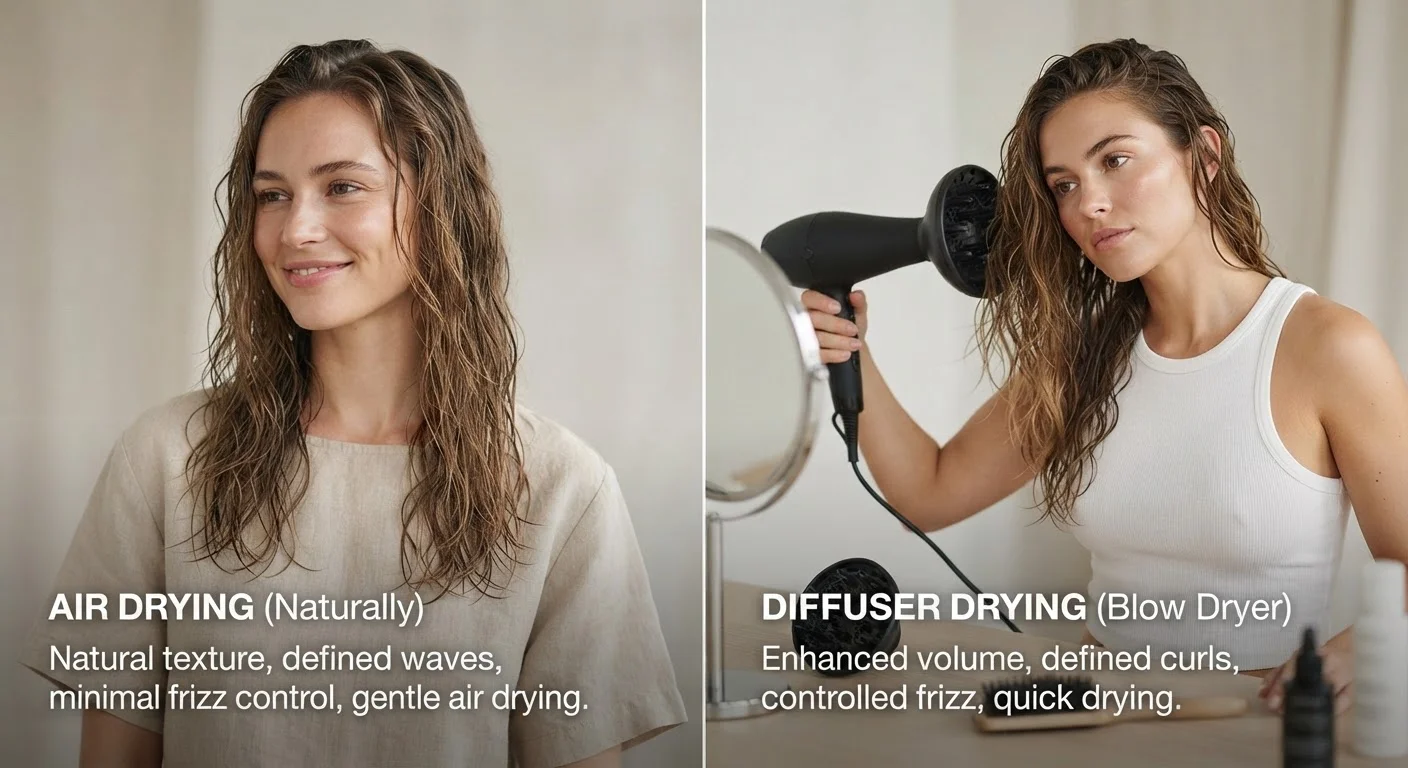
Air drying means letting hair dry without any applied heat source. This eliminates the risk of direct thermal damage to the cuticle and cortex — a genuine benefit, especially for colour-treated, chemically processed, or fine hair that is already prone to breakage.
However, there are trade-offs worth knowing:
- Prolonged swelling: The longer hair stays wet, the longer internal protein structures are under hydration stress. This is particularly relevant for high-porosity hair, which absorbs and releases water quickly and unevenly.
- Frizz: As hair dries without direction, the cuticle can lift and catch ambient humidity, creating frizz — especially in wavy or curly textures.
- Scalp dampness: A wet scalp for extended periods may promote conditions favourable to fungal overgrowth. For more on this, see the article on scalp health myths that could be affecting your hair.
Gentle Towel Technique Reduces Frizz
After washing, resist the urge to rub your hair vigorously with a regular towel. Instead, gently press and squeeze sections with a microfibre towel or a soft cotton T-shirt. This removes excess water more quickly while keeping the cuticle as smooth as possible, giving you a head start whether you air dry or blow dry.
To reduce air-drying time without heat, gently press (never rub) hair with a microfibre towel or a soft cotton T-shirt before letting it dry. Rubbing creates friction that roughens the cuticle and increases frizz.
What Happens When You Blow Dry
Blow drying applies directed heat and airflow to evaporate moisture from the hair shaft. When done correctly, this can actually seal the cuticle flat, reducing frizz and giving hair a smoother appearance than air drying sometimes achieves.
The risk lies in temperature and technique. Excessive heat — particularly above approximately 150°C (300°F) — can degrade the hair's keratin proteins, cause moisture to boil within the strand (creating bubbles visible under microscopy), and progressively weaken the cortex. The key variables are:
- Heat setting: Low or medium settings cause significantly less damage than high heat.
- Distance: Holding the dryer at least 15 cm (6 inches) from the hair distributes heat more evenly.
- Movement: Keeping the dryer moving prevents heat concentration at any single point.
- Attachments: A concentrator nozzle directs airflow along the cuticle; a diffuser disperses heat gently for curly textures.
For a detailed breakdown of how blow dryers and other heat tools work mechanically, the guide on heat styling tools and what each one does to your hair is a useful next step.
| Air Drying | Blow Drying | |
|---|---|---|
| Heat exposure | None | Moderate to high (adjustable) |
| Risk of thermal damage | None | Present if high heat used |
| Risk of hygral fatigue | Higher (longer wet time) | Lower (faster drying) |
| Frizz control | Lower — cuticle may lift freely | Higher — cuticle can be sealed flat |
| Scalp dampness duration | Longer | Shorter |
| Best for | Fine, low-porosity, heat-sensitive hair | Coarse, high-porosity, frizz-prone hair |
Making the Right Choice for Your Hair Type
There is no single answer, but these general principles can help beginners navigate the decision:
~150°C
Temperature threshold linked to keratin degradation
Research on heat damage suggests temperatures above approximately 150°C (300°F) begin to degrade the hair's keratin proteins noticeably.
15 cm+
Recommended minimum dryer distance from hair
Hair care professionals and styling guidelines generally recommend keeping a blow dryer at least 15 cm (6 inches) from the hair surface to distribute heat evenly.
- Fine or thin hair: Often benefits from air drying or light diffused heat, as high heat can cause visible damage quickly.
- Coarse or thick hair: Takes longer to air dry, increasing swelling time; low-heat blow drying may actually be gentler overall.
- Curly or coily textures: A diffuser attachment on low heat helps define curl pattern without disrupting the curl clump.
- High-porosity hair: Absorbs water rapidly and is most vulnerable to hygral fatigue; shorter wet time via low-heat drying can help.
- Low-porosity hair: Resists water absorption; tends to handle air drying well because moisture does not penetrate as deeply.
Once you have a sense of your hair's current condition and porosity, use the pre-routine hair health check to assess where you are starting from before committing to any drying routine.
This article is for general informational purposes only. For concerns about scalp conditions or significant hair loss, consult a qualified dermatologist or trichologist.