Why San Francisco Has So Many 'Mini-Weathers'
Few cities in the world pack as much weather variety into as small a footprint as San Francisco. The city covers roughly 49 square miles, yet it can be simultaneously rainy on one side and sunny on the other. This isn't a fluke — it's a direct result of the city's geography.
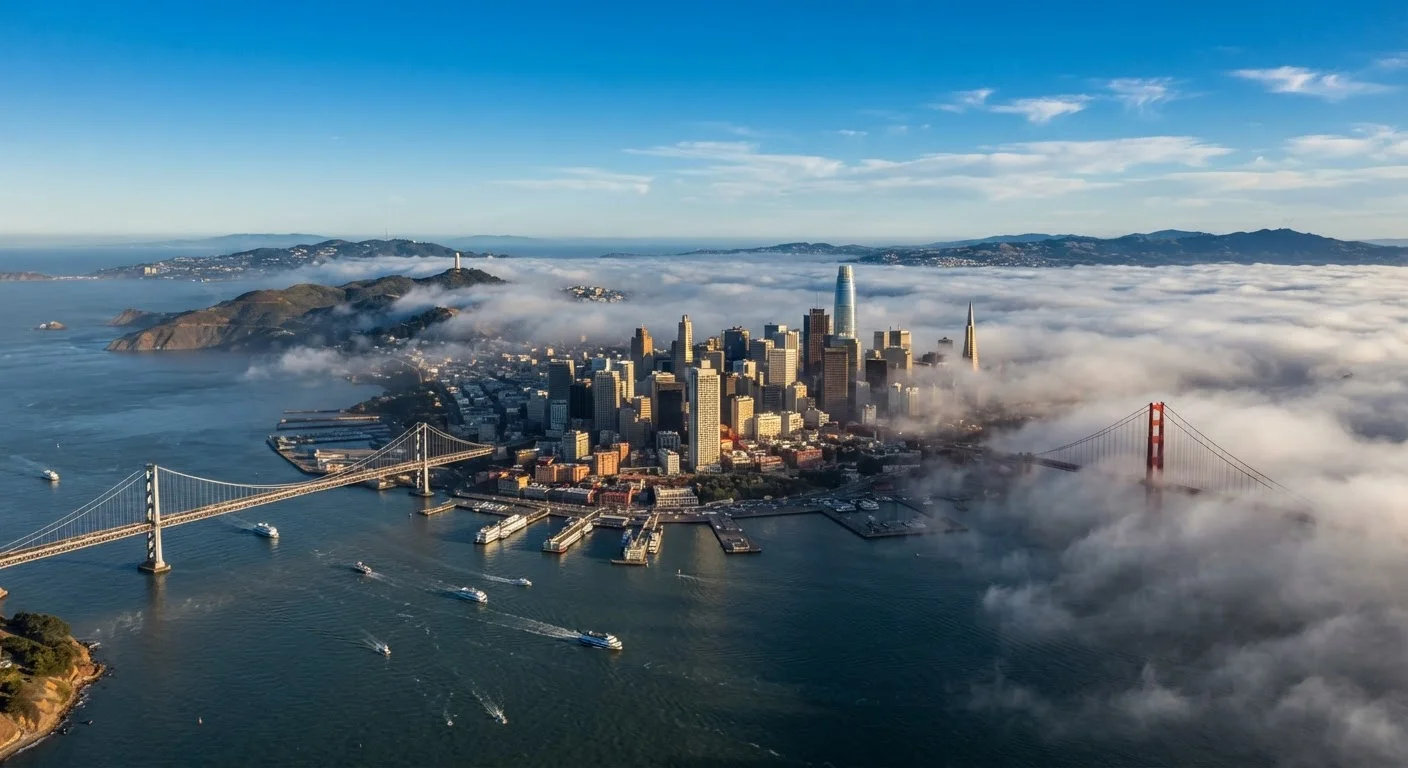
San Francisco sits on a narrow peninsula at the edge of the Pacific Ocean. Cold, moisture-laden ocean air naturally wants to pour inland, and it has a ready-made door: the Golden Gate strait. Once that cool air moves through, it hits the city's steep hills, which block it in some places and funnel it through in others. The result is a patchwork of distinct weather pockets — true microclimates — that can differ by 10°F or more across a single neighborhood boundary.
Meet Karl the Fog
San Francisco's famous fog has been affectionately personified by locals as 'Karl' — a nickname that took on a life of its own online. Karl's movement follows fairly predictable daily rhythms: thickest in the morning, often burning off by midday in sunnier seasons, and rolling back in during late afternoon. Understanding Karl's patterns is one of the most useful pieces of local knowledge a visitor can have.
Fog forms when warm air from the Central Valley rises rapidly, creating low pressure that pulls cold, moist Pacific air inward through the Golden Gate. San Franciscans have affectionately named this fog 'Karl,' and it has its own social media presence. Karl's arrival and departure follow fairly predictable daily patterns, though they shift across seasons.
The Fog Belt vs. the Sunny Pockets
If you picture San Francisco as two halves, the western half — neighborhoods like the Outer Sunset, the Richmond, and Ocean Beach — bears the brunt of fog and cool winds off the Pacific. These areas are beloved by locals for their cozy, lived-in feel, but they can feel perpetually overcast to visitors expecting California warmth.
The eastern and southern neighborhoods tell a different story. The Mission District, Noe Valley, and the Castro sit in a rain shadow behind Twin Peaks, the city's prominent double hill. These neighborhoods catch significantly more sunshine and can feel genuinely warm on days when the western side is completely fogged in.
~100 days
Average foggy days per year in western SF
The western neighborhoods like the Outer Sunset experience fog on roughly 100 or more days annually, significantly more than inland eastern neighborhoods.
~10°F
Typical temperature gap between neighborhoods
On a given summer afternoon, the temperature difference between fog-covered western neighborhoods and sunny eastern pockets can regularly exceed 10°F within the same city.
September–October
Warmest months in San Francisco
Meteorological records consistently show that SF's warmest and sunniest stretch falls in early autumn, not summer — a counterintuitive pattern driven by the marine layer's seasonal retreat.
For visitors, this split has real practical implications. If your hotel sits near Union Square downtown, you'll likely get a middle-ground experience — some fog in the morning, often clearing by afternoon. If you're near the Haight-Ashbury, expect more variability depending on wind direction. Planning outdoor photos at the Golden Gate Bridge? Go mid-morning before fog typically burns off, or aim for late afternoon when clearing is most likely.
Seasonal Patterns Every Visitor Should Know
Here's the counterintuitive truth about San Francisco: summer is the foggiest season, and the fall brings the warmest, clearest weather. June, July, and August are prime fog months, driven by strong temperature contrasts between the cold ocean and the hot Central Valley inland. The marine layer often doesn't lift until noon — or doesn't lift at all.
September and October flip the script. The temperature differential weakens, fog retreats, and afternoon highs can genuinely feel warm. These months are widely regarded as the best time to visit for comfortable, sunny exploration. November through May brings the rainy season, but rain tends to come in short bursts rather than continuous gray weeks, and winter storms can deliver some of the city's clearest, crispest days.
Check Neighborhood Forecasts, Not Just City Forecasts
Generic 'San Francisco' weather forecasts average conditions across the whole city and can be misleading. Use a weather app that lets you pin specific neighborhoods — the Sunset, the Mission, and Downtown can all show different conditions on the same day. This small habit can dramatically improve how you plan each day's activities.
If you're weighing the trade-offs of visiting in different seasons, the concept of reading the off-season applies well here — San Francisco's autumn 'second summer' is both less crowded and genuinely nicer in terms of weather.
How to Plan Around the Microclimates
The single best habit you can develop as a San Francisco visitor is checking a neighborhood-level forecast rather than a generic city forecast. Weather apps that allow you to pin specific locations in the city will reveal the variation that a broad 'San Francisco' forecast hides entirely.
Beyond forecast-checking, building flexibility into your itinerary pays dividends. Schedule indoor activities — museums, galleries, the Ferry Building market — for foggy mornings, and save outdoor attractions like Dolores Park, Twin Peaks, or a walk across the Golden Gate Bridge for when the sun is predicted to break through. This approach also fits naturally with a more relaxed travel pace; if you're curious about balancing structure with spontaneity, slow travel vs. a packed city break offers useful framing for deciding how tightly to schedule your days.
Above all, pack layers without exception. A lightweight down jacket, a wind-resistant outer shell, and a few adaptable mid-layers will serve you far better than a single heavy coat. San Francisco's weather rewards the prepared — and surprises almost everyone else.