What Protein Actually Does in Your Body
Protein is one of the three macronutrients — the major nutrient classes your body needs in meaningful amounts every day. If you want a full picture of how protein fits alongside carbohydrates and fats, see our guide to macronutrients.
At its core, protein is a builder. Your body uses it to grow and repair muscles, produce enzymes and hormones, support immune function, and maintain skin, hair, and nails. Proteins are made of smaller units called amino acids. Of the 20 amino acids the human body uses, nine are called essential — meaning your body cannot manufacture them on its own and must get them from food. This distinction is central to understanding the plant-versus-animal protein debate.
Complete vs. Incomplete Proteins: The Core Difference
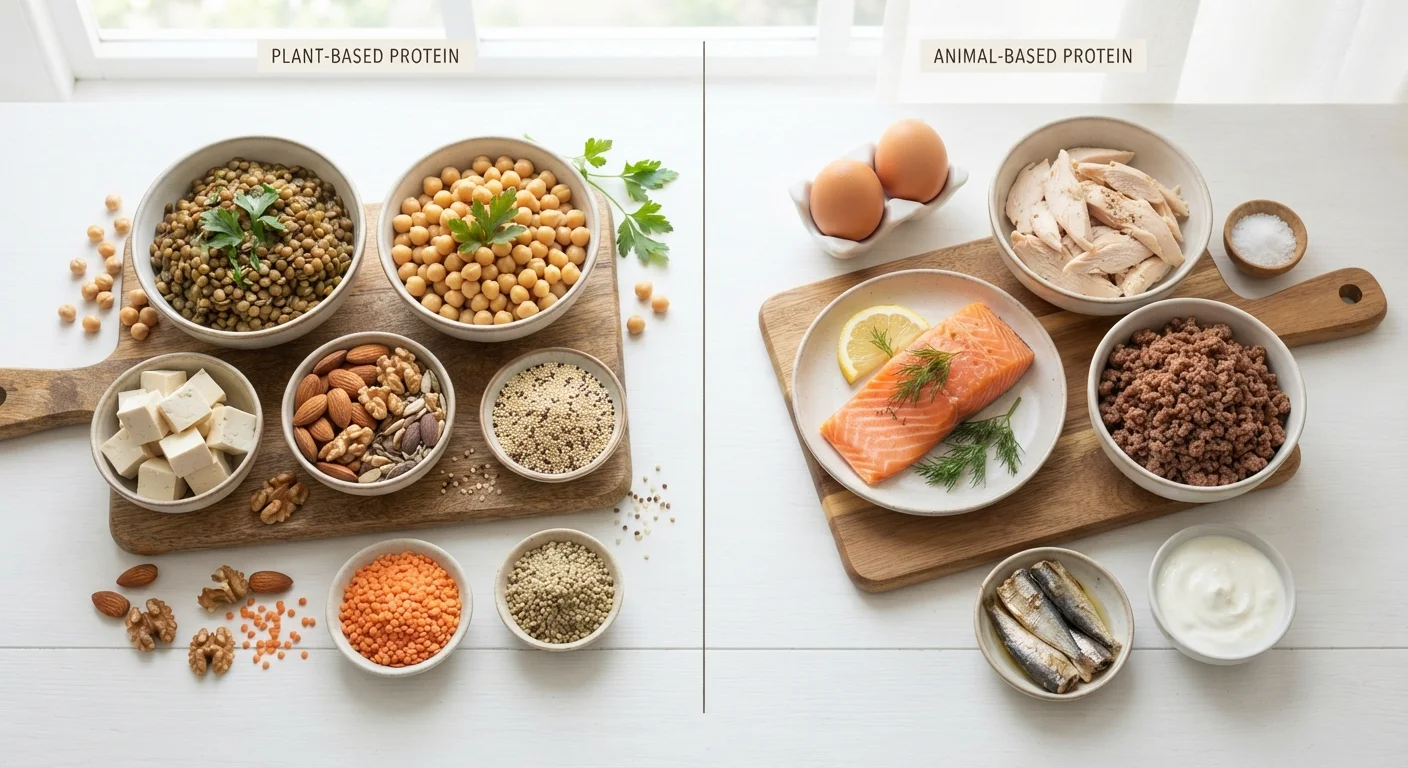
A protein source is described as complete when it contains all nine essential amino acids in adequate proportions. Animal proteins — including meat, poultry, fish, eggs, and dairy — are generally complete proteins. This makes them relatively straightforward sources for meeting amino acid needs.
Most plant proteins — such as those found in beans, lentils, nuts, seeds, and grains — are considered incomplete because they are low in one or more essential amino acids. For example, most legumes are low in methionine, while most grains are low in lysine. However, this does not mean plant eaters are at a disadvantage. Eating a variety of plant foods throughout the day naturally fills in the gaps. Classic pairings like rice and beans have long delivered complete amino acid coverage without any deliberate planning. Soy and quinoa are notable exceptions among plant foods — both are considered complete proteins.
| Plant Proteins | Animal Proteins | |
|---|---|---|
| Amino acid completeness | Usually incomplete (soy & quinoa are exceptions) | Generally complete in one source |
| Digestibility | Moderate; improved by cooking/soaking | High; consistently well absorbed |
| Fiber content | High — a significant benefit | None |
| Vitamin B12 | Essentially absent | Naturally present |
| Iron type | Non-heme (less readily absorbed) | Heme iron (highly absorbable) |
| Saturated fat | Generally low | Varies; can be high in red/processed meat |
| Phytonutrients & antioxidants | Rich source | Minimal |
Digestibility: How Well Your Body Absorbs Each Type
Producing protein is only part of the story — your body also needs to absorb and use what it consumes. Scientists measure this with a score called the PDCAAS (Protein Digestibility-Corrected Amino Acid Score) or the newer DIAAS. Animal proteins consistently score at or near the top of these scales, meaning a high percentage of their amino acids are absorbed and used efficiently.
Plant proteins typically score lower, partly because plant cell walls and compounds like phytates and tannins can limit absorption. Cooking, soaking, fermenting, or sprouting plant foods can meaningfully improve their digestibility. Well-prepared lentils, tofu, and tempeh, for instance, have digestibility scores that approach those of many animal foods.
Simple Ways to Boost Plant Protein Absorption
Soaking dried beans and lentils overnight and then rinsing them before cooking helps reduce phytates that limit mineral absorption. Fermenting soy into tempeh or miso similarly improves digestibility and nutrient availability. Even a squeeze of lemon juice or vitamin C-rich food alongside a plant-protein meal can enhance non-heme iron uptake.
What Else Comes Along for the Ride
Foods are more than single nutrients. When you choose a protein source, you're also choosing everything else that food contains.
- Animal proteins often come with vitamin B12, heme iron (a highly absorbable form), zinc, and omega-3 fatty acids (especially in fatty fish). Depending on the source, they may also come with saturated fat and cholesterol — factors that research links to cardiovascular health when consumed in excess.
- Plant proteins come packaged with dietary fiber, phytonutrients (beneficial plant compounds), folate, magnesium, and antioxidants — none of which are found in meaningful amounts in most animal foods. However, plant-based iron (non-heme iron) and zinc are less readily absorbed, and vitamin B12 is essentially absent from plant foods.
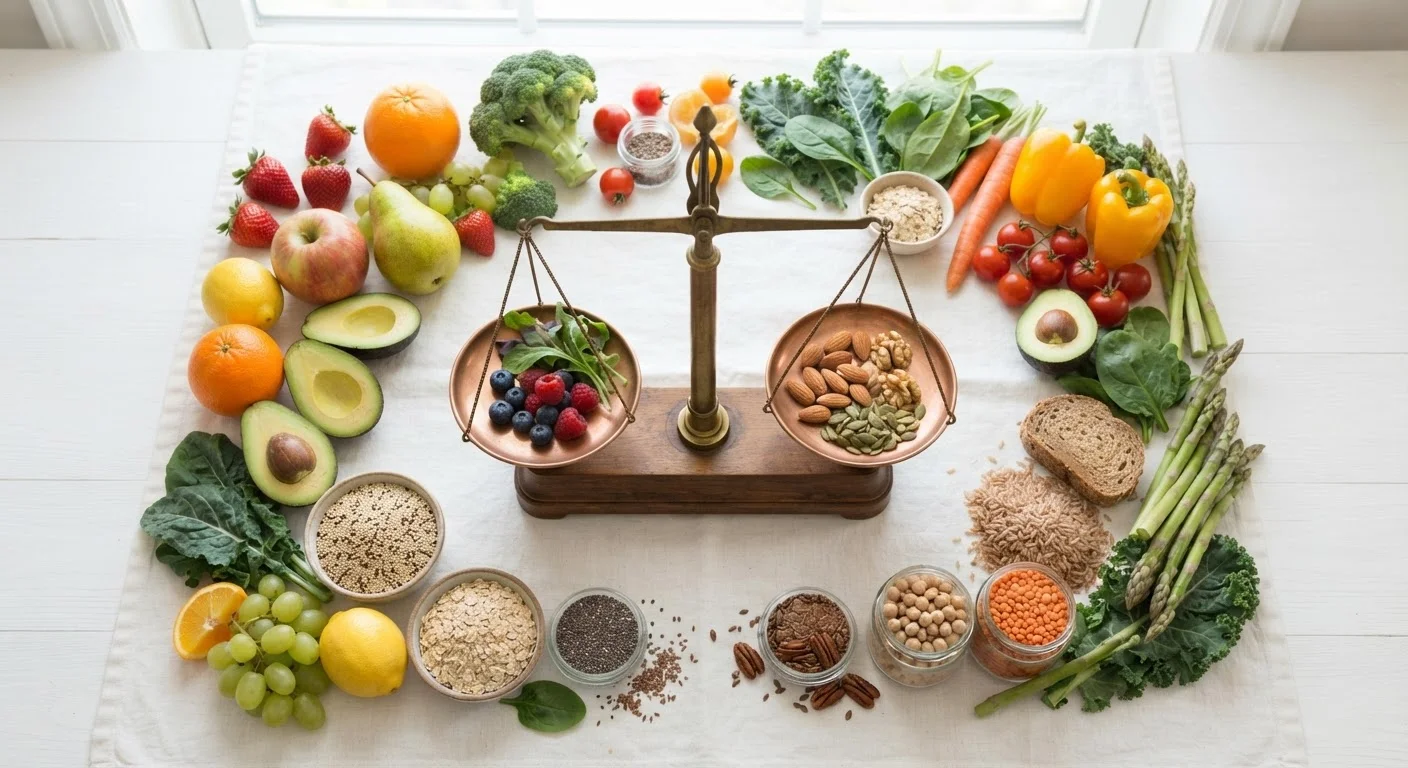
Understanding these trade-offs is part of building what our beginner's guide to balanced eating calls a well-rounded plate.
Putting It Together: Practical Takeaways
For most people, the goal isn't to choose one category over the other — it's to make informed choices that fit your health goals, preferences, and values. Here's what the evidence broadly supports:
- Variety is your best tool. Whether you eat animal foods or not, eating a wide range of protein sources across the week helps cover amino acid and micronutrient bases.
- Plant proteins benefit from pairing. Combining legumes with grains — or any two plant protein sources with complementary amino acid profiles — is a reliable strategy for complete coverage.
- Preparation matters. Cooking, soaking, and fermenting plant proteins improves their digestibility considerably.
- Watch the full nutritional package. Lean toward whole-food protein sources rather than heavily processed options, regardless of whether they're plant- or animal-based. Our guide on whole foods vs. processed foods explains why this distinction matters.
~10%
U.S. adults who are vegetarian or vegan
Gallup surveys consistently estimate roughly 5–10% of American adults follow vegetarian or vegan diets, reflecting growing interest in plant-based eating.
Score of 1.0
Highest possible PDCAAS score
Eggs, casein (dairy), and soy protein all achieve a perfect PDCAAS score of 1.0, illustrating that at least one plant source can match animal proteins on this measure.
If you're evaluating your current intake, our weekly nutrition self-check offers a practical, no-pressure way to reflect on your eating patterns. And when reading food labels to compare protein sources, this walkthrough of nutrition facts labels can help you interpret what the numbers actually mean.
This article is for general informational and educational purposes only and is not a substitute for professional medical or dietary advice. Speak with a registered dietitian or qualified healthcare provider before making significant changes to your diet, especially if you have an existing health condition.