Why Post-Wash Dryness Happens
Washing your hair is supposed to be refreshing — so it can be genuinely confusing when your strands feel rough and brittle the moment they dry. The answer lies in how hair is structured. Each strand is coated in tiny overlapping scales called the cuticle layer. When these scales lie flat, hair looks shiny and feels soft. When they're lifted or damaged, moisture escapes easily and dryness follows.
Several common washing habits disrupt this delicate structure. The good news is that once you identify the specific mistakes at play, adjusting your routine can make a noticeable difference. If you want to understand more about the connection between damage and dryness, see our guide to what hair damage actually looks like.
Washing hair with hot water throughout the entire process.
Why it happens: Hot showers feel relaxing, and most people simply keep the temperature consistent from scalp to rinse without thinking about the effect on hair.
Shampooing too frequently or using far more product than needed.
Why it happens: Many people equate more lather with cleaner hair. In reality, excess shampooing strips the scalp's natural sebum — the oil that travels down the hair shaft and keeps it conditioned.
Skipping conditioner or applying it only to the scalp.
Why it happens: Beginners often fear conditioner will make hair greasy, or they apply it top-down out of habit without knowing that the scalp doesn't actually need it.
Vigorously rubbing hair dry with a regular terry-cloth towel.
Why it happens: Rubbing is the instinctive drying method most people learned without ever being told the cuticle is fragile when wet and especially prone to friction damage.
Using cleansing products that don't match your hair's porosity or texture.
Why it happens: Many people choose shampoo and conditioner based on packaging claims or habit, without knowing that formulas designed for fine hair can be drying for coily textures — and vice versa.
Building Better Habits for Hydrated Hair
Avoiding these mistakes is only half the picture. Building a consistent, moisture-conscious wash routine is what delivers lasting results. Start by matching your cleansing method to your hair type — not every head of hair benefits equally from traditional shampoo. Our comparison of shampoo vs. co-washing breaks down which approach suits different textures and needs.
~80%
Moisture loss occurs during the drying phase
Hair science research consistently shows the period immediately after washing — before styling — is when the majority of moisture escapes from the hair shaft.
2–3 min
Minimum recommended conditioner contact time
Hair care professionals generally advise leaving conditioner on for at least two to three minutes to allow ingredients to penetrate the hair shaft effectively.
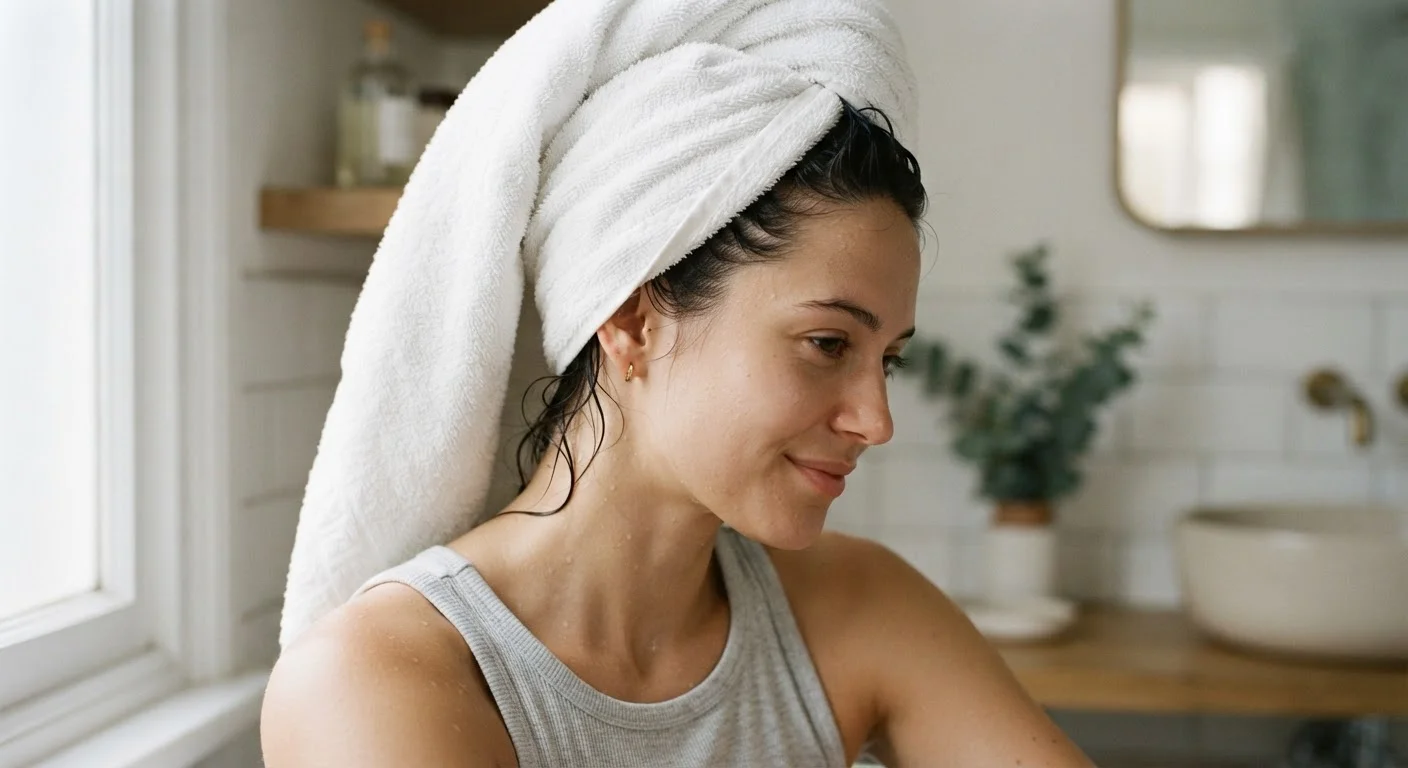
Once you've cleansed, focus on sealing moisture in. Apply conditioner generously from mid-length to ends, let it sit for at least two to three minutes, and rinse with cool water to encourage the cuticle to close. Then, instead of rubbing your hair dry, gently squeeze excess water with a microfiber towel or a soft cotton T-shirt — both create far less friction than a standard terry-cloth towel.
Understanding your hair's porosity — how readily it absorbs and retains moisture — is also worth learning. Low-porosity hair resists water absorption; high-porosity hair absorbs quickly but loses moisture just as fast. Once you know where your hair falls, product choices become much clearer. For a step-by-step plan that ties all of this together, explore our guide on building a wash day routine that actually works.
This article is for general informational purposes only and does not constitute professional medical or dermatological advice. If you are experiencing significant hair loss or scalp concerns, consult a qualified healthcare professional or dermatologist.