Why the Island You Choose Matters
Hawaii isn't one destination — it's eight main islands, each shaped by distinct geology, culture, and atmosphere. Choosing between them can feel overwhelming when every brochure promises paradise. The good news: matching yourself to the right island is mostly about knowing your travel style.
The four most visited islands are Oahu, Maui, Kauai, and Hawaiʻi Island (commonly called the Big Island). Here's a clear-eyed look at what each one genuinely offers, so you can spend less time second-guessing and more time actually enjoying your trip.
| Oahu | Maui | Kauai | Big Island | |
|---|---|---|---|---|
| Best for | First-timers, city lovers | Romance, beaches, balance | Hiking, nature, seclusion | Adventure, geology, scale |
| Crowd level | High | Moderate–high | Low–moderate | Low–moderate |
| Nightlife & dining | Excellent variety | Good selection | Limited but charming | Moderate, varies by area |
| Iconic attraction | Waikiki, Pearl Harbor | Road to Hana, Haleakalā | Nā Pali Coast, Waimea Canyon | Volcanoes National Park |
| Rainy season impact | Moderate | Varies by coast | High on north shore | High on east side |
| Ease for first-timers | Very easy | Easy | Moderate | Moderate |
Oahu: The Island for First-Timers
Oahu is the most populated and most visited of the Hawaiian islands — and for good reason. It's home to Honolulu, the state capital, and the legendary Waikiki Beach. The island effortlessly blends urban convenience with iconic Hawaiian scenery.
History lovers will want to visit Pearl Harbor and the USS Arizona Memorial. Surfers and spectators can head to the North Shore to witness massive waves in winter. And foodies will find everything from casual plate-lunch spots to acclaimed restaurants drawing on Hawaiian, Japanese, and Korean culinary traditions.
Getting Around Oahu Without a Car
Oahu is the only Hawaiian island with a reasonably practical public transit network. The TheBus system covers much of the island and is popular with budget-conscious travelers. However, if you plan to explore beyond Waikiki and Honolulu, renting a car will give you far more freedom — especially for North Shore day trips.
The trade-off? Oahu is the busiest island. If you're dreaming of an uncrowded beach where you can hear only the waves, you may want to look elsewhere.
Maui: The Island for Romantics and Beach Lovers
Maui consistently ranks among travelers' favorite Hawaiian islands, and it earns that affection. The island offers a compelling mix: the scenic Road to Hana winds through rainforest and past waterfalls; the summit of Haleakalā delivers sunrise views above the clouds; and the beaches of Kāʻanapali and Wailea are genuinely gorgeous stretches of golden sand.
Maui strikes a balance that's hard to replicate — it's more peaceful than Oahu but more accessible than Kauai. It's particularly popular with couples and those celebrating milestones. The island's west and south shores tend to be sunnier and drier, while the east side stays lush and green.
Kauai: The Island for Nature Enthusiasts
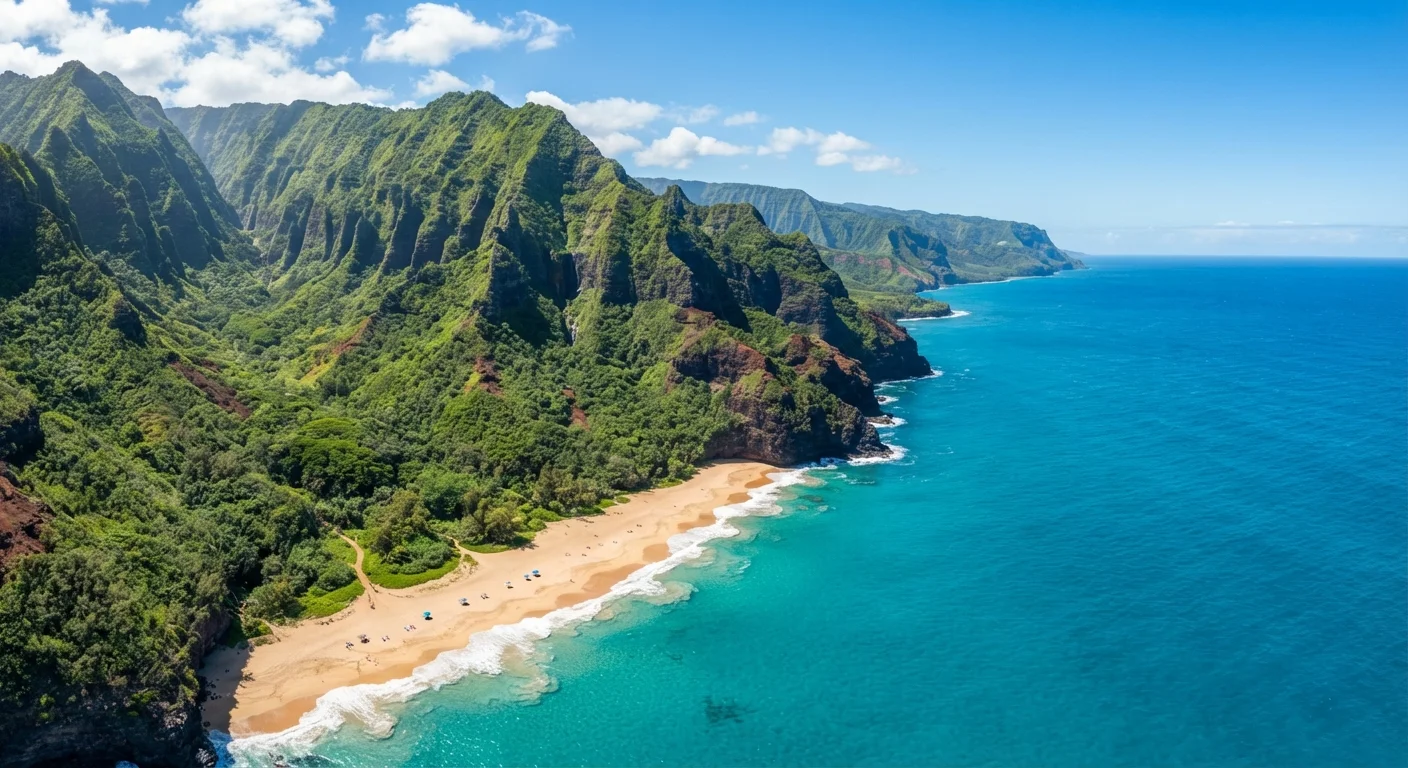
Kauai is the oldest of the main Hawaiian islands geologically, and time has sculpted it into something extraordinary. The Nā Pali Coast — with its cathedral-like green cliffs dropping into the sea — is one of the most dramatic landscapes in the United States. The Waimea Canyon, sometimes called the Grand Canyon of the Pacific, is equally jaw-dropping.
This island rewards those willing to hike, kayak, or take a boat tour to reach its most stunning corners. There are no large resorts or shopping malls here — and that's precisely the appeal. Kauai moves at its own unhurried pace. Just note that the north shore (Princeville and Hanalei) receives significant rainfall, which keeps it spectacularly green but also occasionally soggy.
11 mi
Length of the Nā Pali Coastline
Kauai's Nā Pali Coast stretches approximately 11 miles along the island's northwestern shore, accessible by trail, boat, or helicopter.
5
Distinct climate zones on the Big Island
Hawaiʻi Island spans multiple climate zones — from tropical coast to alpine summit — making it one of the most geographically diverse islands in the Pacific.
The Big Island: The Island for Adventurers
Hawaiʻi Island earns its nickname — it's larger than all the other Hawaiian islands combined. That size translates into extraordinary diversity: you can visit an active volcano in the morning and snorkel with manta rays in the evening. Hawaiʻi Volcanoes National Park lets you witness ongoing lava activity and walk across ancient lava fields — an experience unlike anything else in the US.
The island also hosts some of the world's premier astronomical observatories atop Mauna Kea, making stargazing exceptional on clear nights. Different sides of the island feel almost like different worlds: the Kohala Coast is sunny and resort-dotted, while Hilo on the east is rainy, lush, and home to farmers' markets and local culture. First-timers sometimes find the Big Island's scale and variety a little disorienting — it helps to plan your itinerary by region rather than trying to see everything.