Two Countries, One Iconic Wildlife Corridor
Kenya and Tanzania share more than a border — they share the Serengeti-Mara ecosystem, one of the most wildlife-rich landscapes on Earth. For first-time safari travelers, choosing between the two can feel overwhelming. The good news: both countries deliver breathtaking encounters with the Big Five (lion, leopard, elephant, buffalo, and rhino), stunning scenery, and deeply welcoming cultures. The real differences come down to logistics, landscape, and timing.
Kenya sits to the north, anchored by Nairobi — one of Africa's busiest international hubs. Tanzania stretches south, with Kilimanjaro International Airport and Julius Nyerere International Airport in Dar es Salaam as main entry points. Once you land, the safari experience in each country has its own distinct personality.
| Criterion | Kenya | Tanzania |
|---|---|---|
| Signature park | Masai Mara National Reserve | Serengeti National Park |
| Park size (flagship) | ~580 sq miles (Masai Mara) | ~5,700 sq miles (Serengeti) |
| International flights | More options via Nairobi | Fewer direct routes |
| Getting to key parks | Road or short domestic flight | Usually requires domestic flight |
| Great Migration access | July–October river crossings | Year-round in Serengeti |
| Crowd levels | Busier at top parks | Remote options readily available |
| Beach extension | Mombasa or Diani Beach | Zanzibar Island |
| Mountain experience | Mount Kenya trekking | Kilimanjaro climbing |
Wildlife and Parks: What Each Country Offers
Kenya's crown jewel is the Masai Mara National Reserve, famous for dramatic lion sightings and the northern arc of the Great Migration. Other highlights include Amboseli National Park, where elephants wander with Mount Kilimanjaro as a backdrop, and Samburu National Reserve, home to species rarely found further south — the reticulated giraffe, Grevy's zebra, and Somali ostrich.
Tanzania counters with sheer scale. The Serengeti National Park covers roughly 5,700 square miles, dwarfing the Masai Mara. The Ngorongoro Crater is a UNESCO World Heritage Site and one of the densest concentrations of wildlife anywhere on the planet — all contained within a collapsed volcanic caldera. For truly off-the-beaten-path adventures, Ruaha National Park and the Selous Game Reserve (now Nyerere National Park) offer remote, walker-friendly safari options with very few visitors.
1.5M+
Wildebeest in the Great Migration
According to the Serengeti National Park, over 1.5 million wildebeest participate in the annual migration loop between Tanzania and Kenya.
~5,700
Square miles in the Serengeti
Tanzania's Serengeti National Park spans approximately 5,700 square miles, making it one of the largest wildlife preserves in Africa.
100+
Mammal species in Ngorongoro Crater
The Ngorongoro Conservation Area Authority notes that the crater supports over 100 mammal species within its roughly 100-square-mile floor.
Tanzania also holds a meaningful advantage for rhino seekers: Ngorongoro hosts a viable black rhino population in an enclosed environment that makes sightings more likely than in Kenya's open reserves.
Seasons, the Great Migration, and When to Go
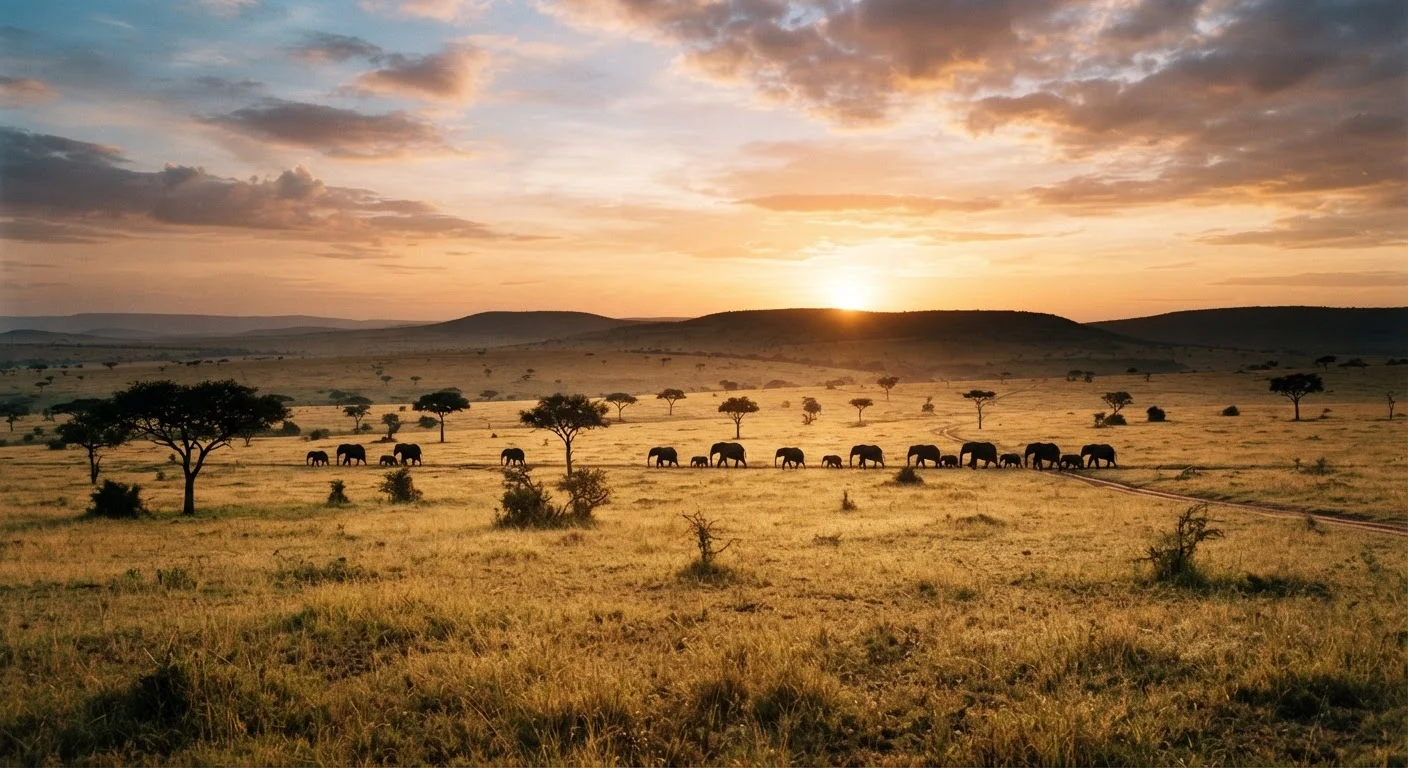
The Great Migration — the annual movement of roughly 1.5 million wildebeest and hundreds of thousands of zebras — moves between Tanzania and Kenya in a broad clockwise loop. Generally speaking:
- January–March: Herds calve in Tanzania's southern Serengeti — excellent for predator action.
- June–July: Herds move north through the central and western Serengeti toward Kenya.
- July–October: The famous Mara River crossings occur — viewable from both the Kenyan and Tanzanian sides.
- November–December: Herds drift back south into Tanzania.
Both countries have a dry season (roughly June–October) and a wet season (roughly November–May, with a short dry spell in January–February). Dry season brings easier wildlife viewing as animals congregate near water sources, but also higher prices and larger crowds at popular parks.
Migration Timing Is Never Exact
The Great Migration follows rainfall patterns, not a fixed calendar. The herd movements described above are general guidelines based on typical years, but nature doesn't keep a schedule. Consulting a reputable safari operator or checking with official park authorities closer to your travel date will give you the most current picture of where the herds are likely to be.
Practical Considerations: Getting There and Getting Around
Kenya's Nairobi is served by more international airlines and tends to offer more direct routing from North America and Europe. Once in Kenya, many parks are reachable by road, making self-drive safaris a real (if ambitious) option — though guided tours remain the most common and recommended approach for beginners.
Tanzania's most celebrated parks are spread across a large country. Reaching the Serengeti or Ruaha typically involves a domestic flight from Kilimanjaro or Dar es Salaam — an added expense, but it saves hours of overland travel. Zanzibar is a short flight from Dar es Salaam and provides a natural beach finale to any safari itinerary.
Both countries require visas for most US citizens; an East Africa Tourist Visa covers Kenya, Uganda, and Rwanda together, which can be useful if you plan to explore the region more broadly. Always verify current visa and health requirements through official government sources before you book, as these can change.
This article provides general travel information for educational purposes. Visa rules, vaccination requirements, entry conditions, and travel advisories change regularly — always check with your country's official government travel authority and the destination country's embassy before traveling.