Why Budget and Nutrition Aren't at Odds
A widespread assumption holds that eating healthily costs more. In reality, many of the most nutrient-dense foods — beans, lentils, oats, eggs, canned fish, and seasonal vegetables — are among the least expensive items in any grocery store. The challenge is less about money and more about knowing which foods deliver the best nutritional value per dollar spent.
Research consistently shows that dietary patterns high in whole, minimally processed foods are associated with better health outcomes, and those foods are often quite affordable. What tends to inflate grocery bills is a reliance on convenience foods, snacks, and highly processed items — not fresh produce or pantry staples. If you're new to thinking about this, our beginner's guide to balanced eating is a helpful starting point.
This article is for general informational purposes and is not a substitute for personalised nutrition advice. A registered dietitian can help tailor guidance to your individual needs.
Core Practices for Eating Well Without Overspending
The following evidence-informed practices form a practical framework anyone can apply, regardless of cooking experience or budget size.
Build your meals around affordable protein-rich staples.
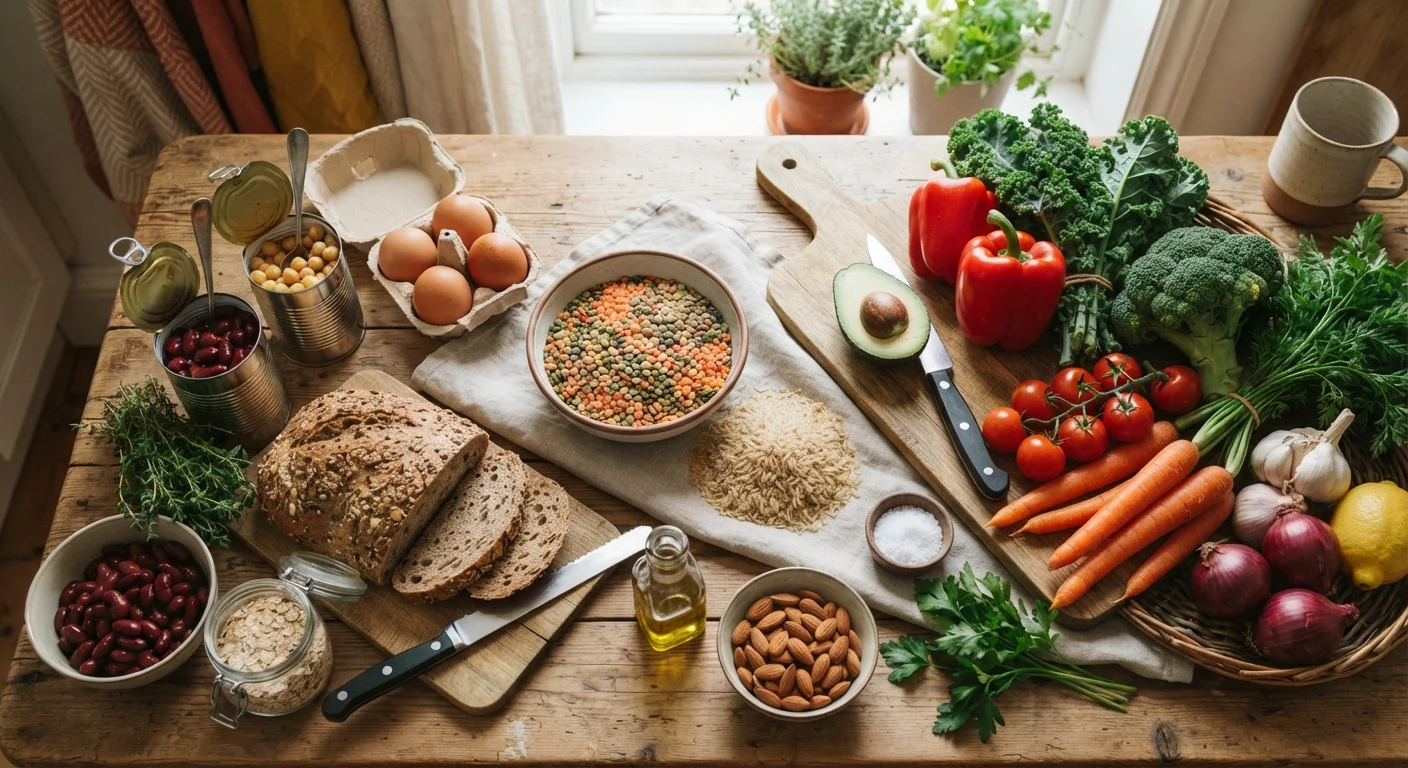
Protein supports muscle maintenance, satiety, and many other body functions. Dried or canned beans, lentils, chickpeas, eggs, canned tuna, and tofu all provide substantial protein at very low cost per serving — often a fraction of the price of meat. Rotating these into regular meals stretches your budget without sacrificing nutritional quality.
Embrace frozen and canned vegetables and fruit.
Frozen produce is picked at peak ripeness and frozen quickly, which preserves most vitamins and minerals. Nutritionally, it is broadly comparable to fresh — and often superior to fresh produce that has travelled long distances. Canned vegetables (especially low-sodium varieties) and canned fruit in juice are similarly cost-effective and nutritious.
Plan meals before you shop, then shop with a list.
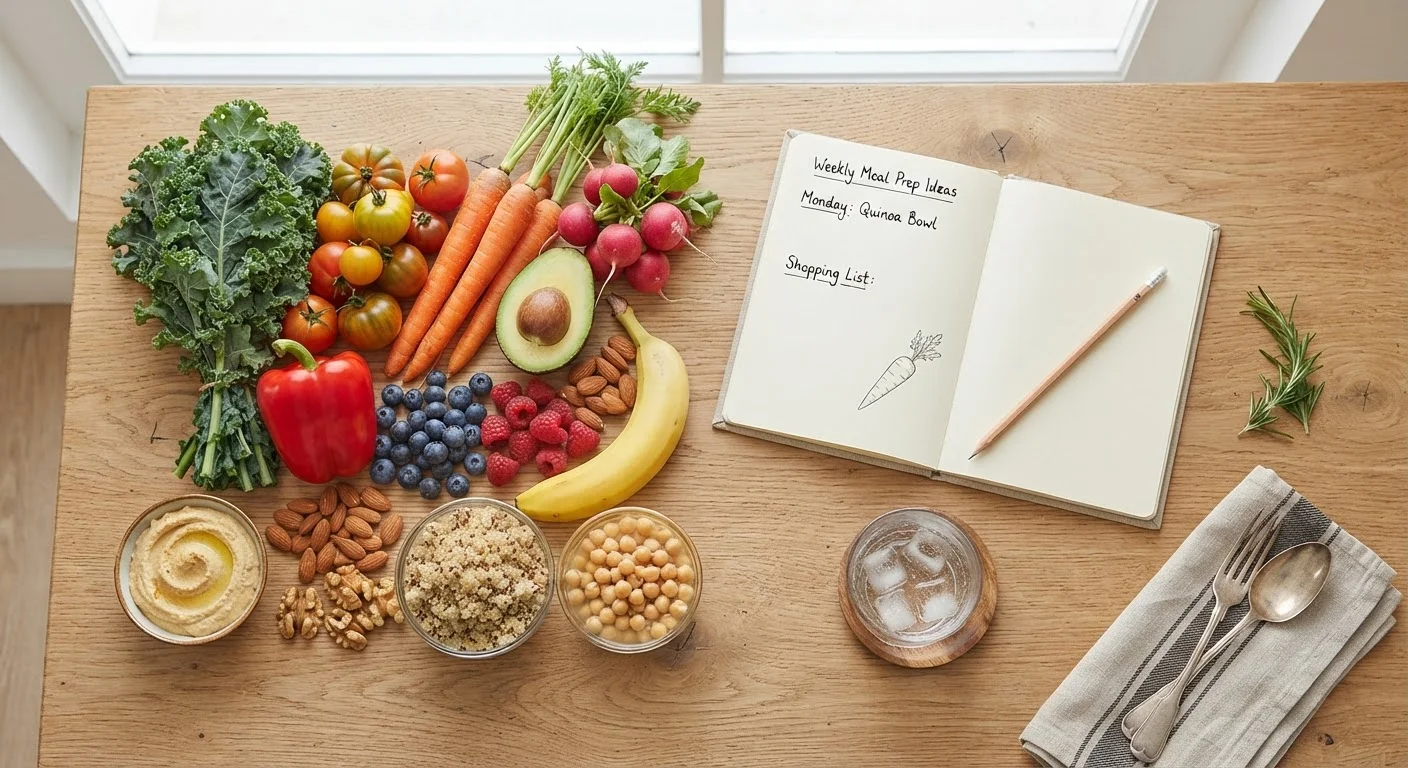
A simple weekly meal plan — even a loose one — reduces impulse purchases, minimises food waste, and helps you buy only what you'll actually use. Food waste is a significant hidden cost in most household budgets. Shopping with a list keeps you focused and reduces the likelihood of buying duplicates or items that go unused.
Cook at home more often, even in simple ways.
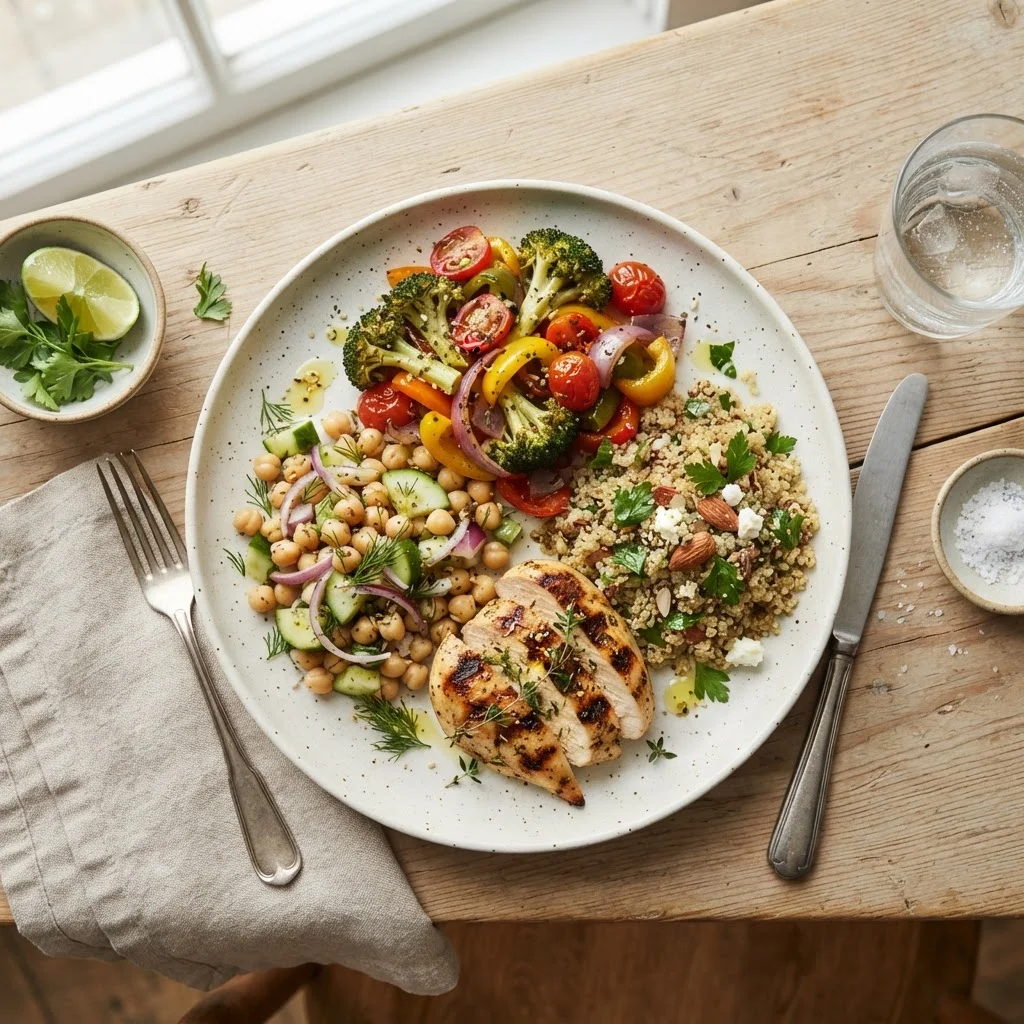
Home-cooked meals are almost always less expensive per serving than restaurant food, takeout, or pre-made convenience options — and they give you direct control over ingredients. You don't need advanced cooking skills; simple techniques like batch-cooking grains, roasting vegetables, or assembling quick grain bowls make home cooking practical and sustainable. Visit our Cooking Basics hub for foundational techniques if you're just starting out.
Prioritise whole grains over refined grain products.
Whole grains like oats, brown rice, barley, and whole-wheat bread retain more fibre, vitamins, and minerals than their refined counterparts. They also tend to be more filling, which can reduce overall food intake throughout the day. Many whole-grain staples are among the most affordable foods available.
Start With These Quick Wins
If you're not sure where to begin, these immediate actions can make a noticeable difference without requiring a complete overhaul of how you eat or shop. Small, consistent changes add up more reliably than dramatic short-term efforts.
For a deeper look at how to track your food habits and identify gaps, try our weekly nutrition self-check. And if food spending is part of a broader budget concern, the Budgeting Basics hub offers practical frameworks for managing household expenses.
Common Pitfalls and How to Avoid Them
Even well-intentioned shoppers run into a few recurring traps. Being aware of them makes them much easier to sidestep.
A Note on Dietary Needs and Restrictions
Individual nutritional needs vary based on age, activity level, health conditions, pregnancy, and other factors. The principles here are intended as general guidance for healthy adults. If you have a specific health condition, follow a restricted diet, or have concerns about meeting your nutritional needs on a limited budget, a registered dietitian can provide personalised support — many community health centres offer free or low-cost dietitian consultations.
Shopping without a list is one of the most reliable ways to overspend and overbuy — leading to food that spoils before it's used. A loose weekly plan, even just a rough idea of dinners for the week, dramatically reduces waste. Dismissing frozen and canned foods as inferior is another common mistake: freezing preserves most nutrients effectively, and canned legumes and vegetables are legitimate nutritional equivalents to fresh at a fraction of the cost.
It's also worth questioning received wisdom about which foods are "necessary" for good health. Many expensive products marketed as superfoods or wellness essentials are not supported by strong evidence. Our article on common nutrition myths breaks down which popular beliefs hold up and which don't.
“The most nutritious diets in the world are also some of the simplest — built on legumes, grains, vegetables, and modest amounts of animal products. These foods have always been accessible to ordinary people.”
— Walter Willett, Professor of Epidemiology and Nutrition, Harvard T.H. Chan School of Public Health
Finally, skipping meals to save money can backfire nutritionally and financially — it tends to drive hungrier, less deliberate food choices later. See why in our piece on why skipping meals often backfires.
This article is for general informational and educational purposes only and does not constitute medical or nutritional advice. Please consult a qualified healthcare professional or registered dietitian for guidance specific to your health needs.