
Why a Stretching Routine Is Worth Building
Stretching is one of the most accessible movement habits available — it requires no membership, minimal equipment, and almost no space. Regular stretching is associated with improved flexibility, reduced muscle tension, and better posture over time. It can also serve as a low-intensity transition between sedentary periods and more vigorous activity.
The most common reason people abandon stretching is unrealistic expectations. They either try to do too much at once or wait for a block of free time that never materializes. The goal here is a routine you'll actually repeat — short, predictable, and attached to your existing day. If you're also working on broader movement goals, see our week-by-week beginner exercise plan for a complementary framework.
Stretching Should Never Cause Sharp Pain
A gentle pulling sensation is normal, but sharp, stabbing, or joint pain means you should stop immediately. Pushing through pain can cause muscle tears or worsen existing injuries. If you have a chronic condition, recent injury, or surgery, consult a healthcare professional before starting a new stretching routine.
What You'll Need Before You Start
You don't need to invest in anything to begin. The prerequisites below are the bare minimum for a safe session.
What you will need
Yoga mat or folded blanket
Provides cushioning for floor-based stretches and defines your dedicated stretching space.
Strap, belt, or towel
Helps extend your reach during hamstring or shoulder stretches if flexibility is currently limited.
Timer or phone
Allows you to hold each stretch for the recommended duration without guessing.
Once you have a consistent habit established, you might find it useful to track what feels better over time. Our guide on keeping track of what's actually working in your routine covers observation strategies that apply equally well to physical wellness habits.
How to Build and Follow Your Routine
Follow the steps below in order the first time. Once the sequence feels familiar, the entire session should take 10–15 minutes.
Warm Up for 2–3 Minutes
Before any static stretching, raise your muscle temperature slightly. March in place, do slow arm circles, or take a short walk around the block. You don't need to break a sweat — you just need tissues that are pliable and ready to lengthen safely.
Choose 4–6 Stretches That Cover Your Key Areas
A balanced routine touches the most commonly tight areas: neck and shoulders, chest, hip flexors, hamstrings, calves, and lower back. You don't need to hit every muscle group every session. A simple starting set might look like this:
- Neck side tilt — ear toward shoulder, held gently
- Doorway chest opener — forearms on a door frame, lean forward
- Standing hip flexor lunge — one knee on the floor, hips pressed forward
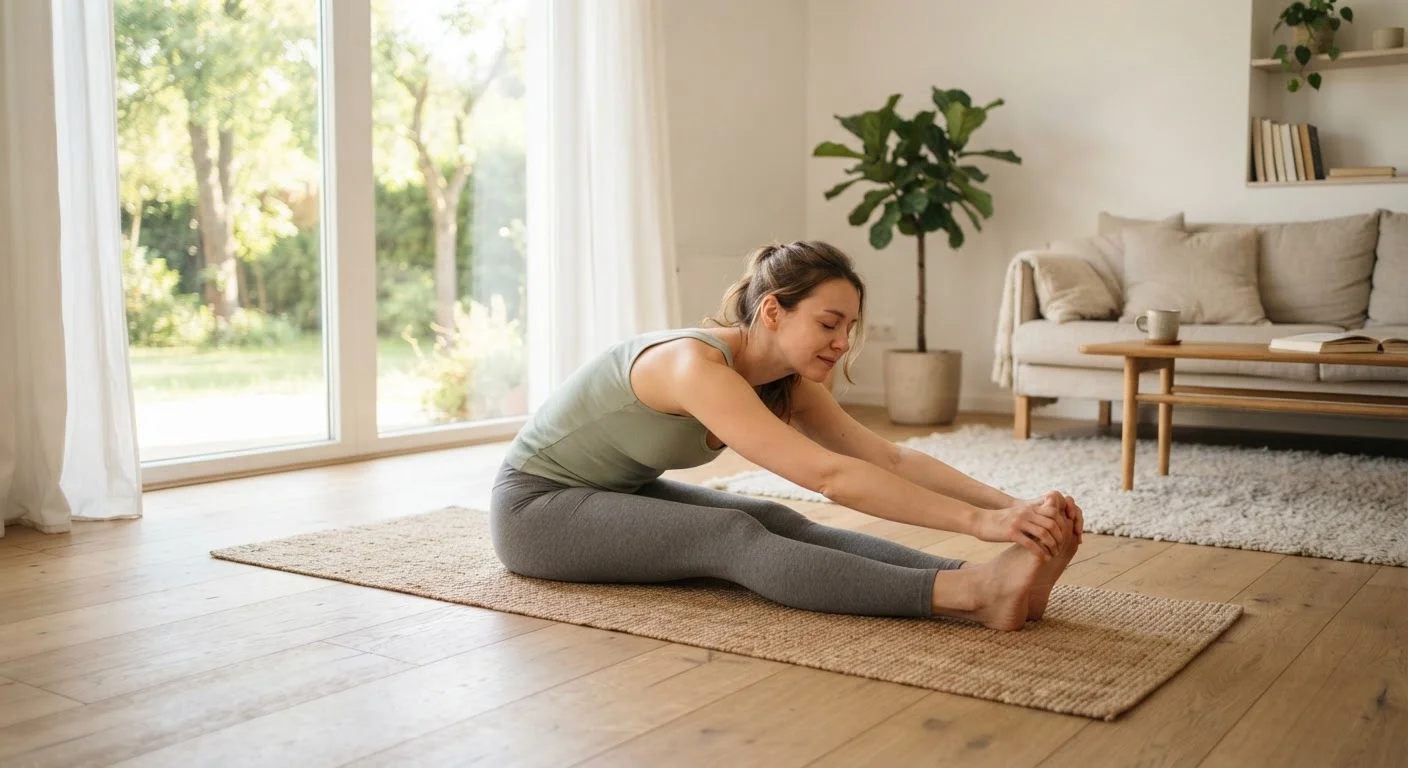
- Seated hamstring stretch — legs extended, reach toward feet
- Calf stretch — heel pressed to floor against a wall
- Supine spinal twist — lying on back, knees dropped to one side
Start with this list and adjust based on where you personally carry tension.
Hold Each Stretch for 20–30 Seconds
Set a timer so you're not guessing. Move into the stretch slowly until you feel mild tension — not pain — and hold that position while breathing steadily. Avoid bouncing (ballistic stretching), which can trigger a protective reflex that works against lengthening. Exhale as you ease into the stretch; this naturally encourages the muscle to relax.
Repeat on Both Sides
Most stretches target one side of the body at a time. Complete the full hold on one side before switching. Skipping the second side creates muscle imbalances over time, which can contribute to poor posture and uneven tension patterns.
Schedule It and Stack the Habit
Decide on a specific time and anchor your routine to something you already do reliably. Write it into your calendar for the first two weeks as a concrete appointment. Consistency in timing is more important than perfecting the stretches themselves — the body adapts to repeated signals.
For complementary guidance on goal-setting that supports long-term follow-through, see setting a fitness goal you'll actually keep.
Anchor Your Stretch to a Daily Habit
Research on habit formation consistently shows that attaching a new behavior to an existing one dramatically improves follow-through. Try stretching right after brushing your teeth, while coffee brews, or at the end of a work-from-home lunch break. The trigger does the remembering for you.
If staying consistent with any routine feels difficult, the strategies in exercising consistently when motivation fades apply directly here — motivation fluctuates, but habit structure doesn't have to.
Troubleshooting Common Roadblocks
"I keep forgetting to do it."
This is almost always a cue problem, not a willpower problem. Pick a non-negotiable anchor event in your day — waking up, finishing lunch, shutting down your computer — and do your stretches immediately after it, every time.
"I'm not getting more flexible."
Flexibility gains are slow and cumulative. Most people notice meaningful improvement after four to eight consistent weeks, not days. Holding stretches for the full 20–30 seconds and breathing steadily matters more than pushing harder.
"I get bored with the same sequence."
Rotate between two or three simple sequences — for example, a lower-body focus on some days and an upper-body focus on others. Variety reduces boredom without adding complexity. Also consider pairing stretching with a podcast or music you enjoy.
This article is for general informational and educational purposes only and is not a substitute for professional medical advice, diagnosis, or treatment. Always consult a qualified healthcare professional before beginning any new exercise or stretching program, especially if you have an injury, chronic condition, or other health concern.