Why Skincare Matters (and Why It Feels So Complicated)
Walk into any beauty aisle and you'll face dozens of serums, toners, essences, and exfoliants — each promising transformation. For a first-timer, this is genuinely overwhelming. The good news: healthy skin doesn't require a 12-step routine. It requires understanding a few core principles, then applying them consistently.
Skincare matters because skin is your body's largest organ. It regulates temperature, shields you from environmental damage, and acts as a barrier against bacteria and pollutants. A thoughtful routine supports those natural functions — it doesn't need to replace them. The complexity you see in beauty marketing is largely optional; the fundamentals are simple.
Skincare Is Not One-Size-Fits-All
What works for one person's skin may not work for yours, even if you share the same skin type. Factors like climate, water hardness, diet, hormones, and medication all influence how your skin behaves. Treat recommendations as starting points, not prescriptions, and adjust based on how your own skin responds.
This article is for general informational purposes only and is not a substitute for professional dermatological advice. If you have a skin condition or persistent concerns, consult a qualified dermatologist or healthcare provider.
Understanding Your Skin: Type and Barrier
Before choosing any product, it helps to understand two things: your skin type and your skin barrier.
Skin barrier
The outermost protective layer of your skin that locks in moisture and keeps out irritants. Disrupting it causes dryness and sensitivity.
SPF
Sun Protection Factor — a rating that tells you how well a sunscreen shields your skin from UV rays that cause damage and premature aging.
Humectant
An ingredient that draws water toward the skin from the environment or deeper skin layers, helping keep skin hydrated.
Active ingredient
A potent ingredient designed to produce a specific skin change, such as reducing dark spots or increasing cell turnover. Requires careful introduction.
Broad-spectrum
A label on sunscreen meaning it protects against both UVA rays (aging) and UVB rays (burning), not just one type.
Ceramides
Natural lipid molecules found in the skin barrier that help keep it strong and prevent moisture loss. Common in moisturizers.
Your skin type describes how your skin naturally behaves day to day. Skin types include dry (feels tight, may flake), oily (looks shiny, prone to enlarged pores), combination (oily in the T-zone, drier on the cheeks), and sensitive (reacts easily to products or environmental triggers). A simple test: cleanse your face, wait an hour without applying anything, then observe how it feels. That observation tells you more than any quiz.
Your skin barrier — technically called the stratum corneum — is the outermost layer of skin. Think of it as a brick wall: skin cells are the bricks, and natural lipids (fats) are the mortar holding them together. A healthy barrier locks moisture in and keeps irritants out. Over-cleansing, harsh scrubs, or very hot water can disrupt this barrier, making skin feel dry, reactive, or inflamed. A beginner routine prioritizes keeping this barrier intact.
The Core Four: Your Beginner Routine
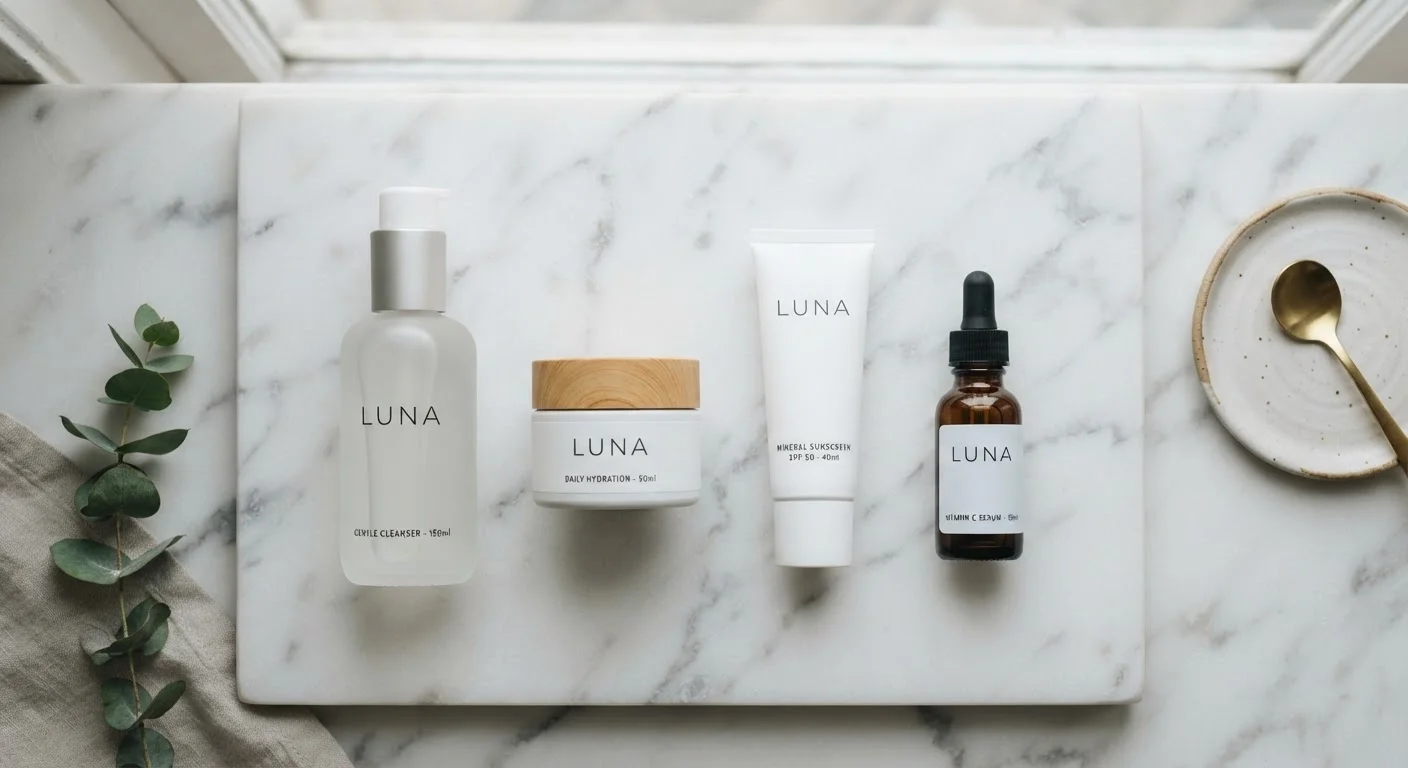
A complete beginner's routine has four steps. Learn what each one does, and the logic of every product you'll ever encounter starts to click.
- Cleanser — Removes dirt, excess oil, sunscreen, and makeup without stripping moisture. Use a gentle, non-foaming or low-lather formula if your skin feels tight after washing.
- Toner — A water-based step applied after cleansing that can hydrate, balance pH, or deliver light active ingredients. Many beginners skip this initially; it's optional but helpful.
- Moisturizer — Replenishes hydration and seals the skin barrier. Even oily skin needs moisture — skipping it can trigger more oil production.
- SPF (Sunscreen) — The single most evidence-supported preventive skincare step. A broad-spectrum SPF 30 or higher applied every morning protects against UV-related skin damage. It belongs at the end of your morning routine.
For a deeper look at what each of these steps actually does, see our plain-language breakdown of the core four steps. And when you're ready to add a serum or treatment product, product layering order explains exactly how to stack them correctly.
Build Your Routine Before You Shop
Decide which four steps you want to cover before browsing products. Knowing that you need a gentle cleanser, a lightweight moisturizer, and an SPF gives you a shopping list rather than an open-ended exploration. This prevents impulse buys that sit unused and simplifies your decision-making significantly.
Ingredients 101: What to Know First
Skincare ingredient lists can look like chemistry homework. A few categories are worth knowing from the start.
- Humectants — Attract water to the skin. Hyaluronic acid and glycerin are common examples you'll find in moisturizers and serums.
- Emollients — Smooth and soften skin by filling gaps in the barrier. Squalane and ceramides fall here.
- Occlusives — Form a light seal over the skin to slow moisture loss. Shea butter and petrolatum are examples.
- Actives — Ingredients with a targeted function, such as vitamin C (brightening), niacinamide (pore appearance, tone), or retinol (cell turnover). Actives are more powerful and require more care when introducing.
You don't need actives to start. Build your basic routine first, then explore. Our plain-English guide to common skincare ingredients covers the most popular ones in beginner-friendly language. When you're ready to make sense of a full ingredient list, decoding a skincare ingredient list walks you through the rules.
Starting Slowly and Building Confidence
The most common beginner mistake is adding too many products at once. If your skin reacts, you won't know which product caused it. The smarter approach:
- Start with just a cleanser, moisturizer, and SPF for two to four weeks.
- Add one new product at a time, waiting at least one to two weeks between introductions.
- Patch test new products: apply a small amount to the inside of your wrist or behind your ear for a day or two before using it on your face.
- Reassess every few weeks — skin changes with seasons, hormones, and age.
Skincare is a long-term habit, not a quick fix. Consistency with a simple routine will always outperform an elaborate one you abandon after two weeks. If you're also building other wellness habits alongside this, our nutrition basics hub is a useful companion — what you eat genuinely affects your skin's health from the inside.
This article is for general informational purposes only and does not constitute medical or dermatological advice. Always consult a qualified healthcare professional for concerns about your skin.