Why Fitness Myths Are So Hard to Shake
Fitness advice travels fast — through social media, well-meaning friends, and decades of gym folklore. Some of it is genuinely useful. A lot of it is not. For beginners in particular, these myths can be discouraging before a single workout begins, pushing people toward routines that are too extreme, too confusing, or simply based on bad science.
This article works through the most persistent misconceptions, explains what research actually supports, and replaces intimidating half-truths with clear, actionable understanding. If you want to build a routine that lasts, a good place to start is setting a realistic fitness goal grounded in evidence rather than pressure.
Myth
No pain, no gain — if a workout does not hurt, it is not working.
Fact
Productive exercise involves effort and mild muscular fatigue, not sharp pain. Pain is the body's warning signal, not a measure of effectiveness.
The phrase became popular in the 1980s and has lingered ever since. In practice, research distinguishes between the burn of working muscles — which is normal — and pain that signals strain or injury, which is not. Pushing through genuine pain can lead to injury that sidelines you for weeks. Beginners should aim for perceived exertion that feels challenging but manageable, not agonising. Learn more about the difference in our guide to what muscle soreness actually means.
Myth
You can reduce fat in a specific area by exercising that body part — known as spot reduction.
Fact
The body draws on fat stores systemically, not from the area being worked. Targeted exercises build muscle in that region but do not selectively burn local fat.
Doing hundreds of crunches will strengthen your abdominal muscles, but it will not preferentially remove fat from your midsection. Fat loss occurs across the whole body in response to overall energy expenditure, and genetics influence where you lose it first. A balanced programme combining cardiovascular activity and strength training — explored in our strength training myths article — is more effective than isolating one area.
Myth
Strength training will make women bulky and masculine-looking.
Fact
Women have significantly lower levels of testosterone than men, making dramatic muscle bulk very unlikely without specific, sustained training and dietary conditions.
This myth discourages many women from resistance work that would genuinely benefit them. Strength training improves bone density, metabolic rate, posture, and functional movement. The aesthetic result for most women is a leaner, more defined appearance — not bulk. Building large muscle mass requires years of deliberate effort and specific nutrition. For a broader look at resistance training options, see free weights vs. resistance machines for beginners.
Myth
Rest days are lazy — you should exercise every day to see results faster.
Fact
Muscle adaptation, repair, and growth happen during rest, not during the workout itself. Skipping recovery increases injury risk and can impair performance.
Exercise creates microscopic stress in muscle fibres. The body rebuilds them stronger during rest — a process called supercompensation. Without adequate recovery, this process cannot complete, and performance may actually decline. Most exercise guidelines recommend at least one to two rest or active-recovery days per week for beginners. Overtraining is one of the key reasons new exercisers burn out early — a pattern examined in detail in why beginners burn out fast.
Myth
You need a gym membership to get fit.
Fact
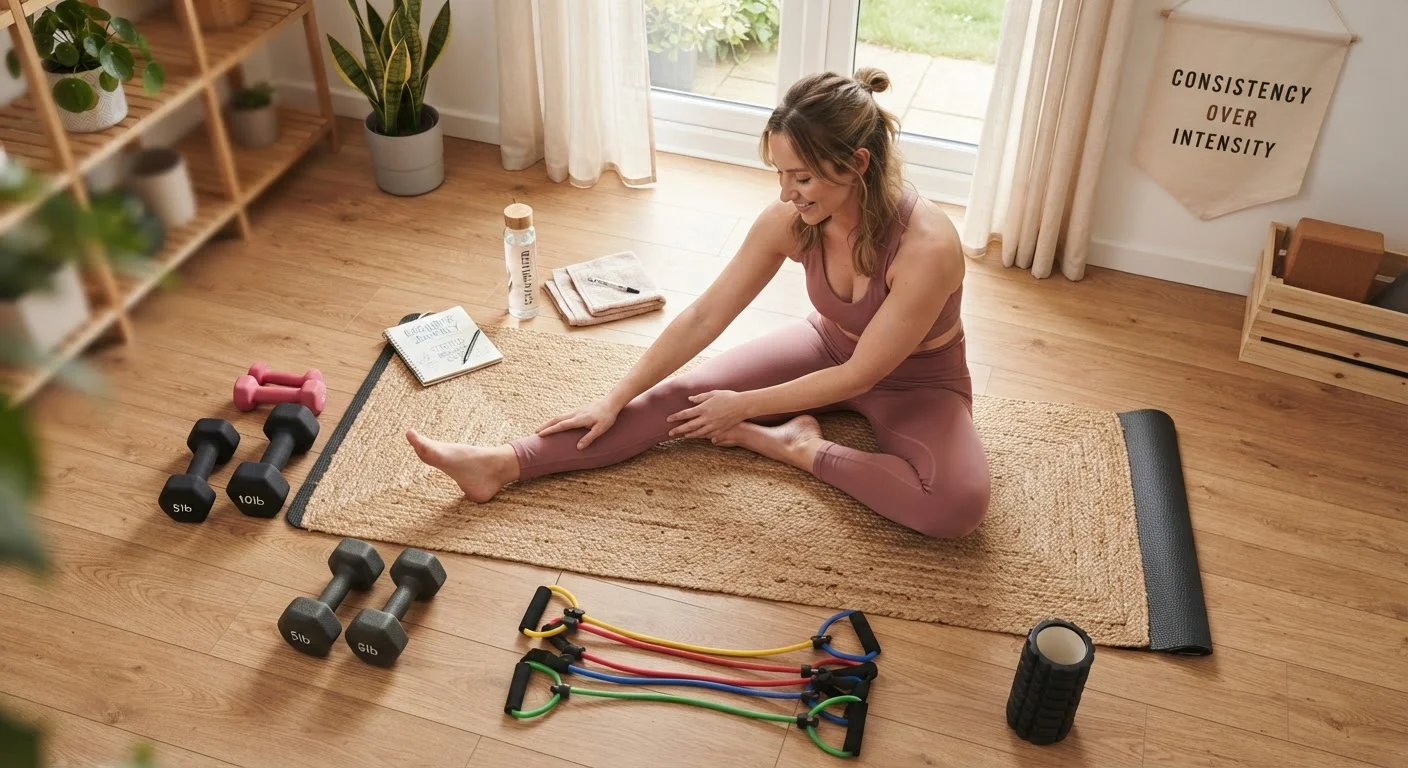
Effective fitness routines can be built entirely at home or outdoors using bodyweight, resistance bands, or minimal equipment.
Gyms offer variety and equipment, but they are not a prerequisite for results. Walking, bodyweight circuits, yoga, and resistance band training all carry well-documented health benefits. The most important variable is consistency, not location. If the cost or logistics of a gym are a barrier, a home-based routine is a legitimate and effective alternative. See our practical comparison of home and gym workouts for a balanced breakdown.
What the Evidence Actually Tells Us
Once the myths are out of the way, a simpler picture emerges: sustainable fitness is built on consistency, adequate recovery, and a routine you can realistically maintain. Understanding the three pillars of fitness — cardio, strength, and flexibility helps beginners see why balance matters more than extremes.
~150 min
Weekly moderate activity recommended for adults
The World Health Organization recommends at least 150 minutes of moderate-intensity aerobic activity per week for general health in adults.
2x/week
Minimum strength sessions for health benefits
Major health guidelines, including those from the U.S. Department of Health and Human Services, recommend muscle-strengthening activities on at least two days per week.
It is also worth knowing that environment matters less than effort and habit. Whether you prefer a gym or your living room, both can deliver real results — our home workouts vs. gym workouts comparison lays out the trade-offs clearly. And if you are worried about soreness slowing you down, our guide to muscle soreness after exercise explains what is normal and what deserves attention.
Starting Too Intensely Backfires
One of the most common beginner mistakes is ramping up too quickly — long sessions, daily workouts, or extreme programmes from day one. This significantly raises the risk of overuse injury and burnout. A gradual, progressive approach is safer and leads to better long-term results. If you experience sharp joint pain, dizziness, or chest discomfort during exercise, stop and consult a healthcare professional.
This article is for general informational and educational purposes only. It is not a substitute for personalised advice from a qualified fitness professional or healthcare provider. Consult a professional before starting any new exercise programme, especially if you have an existing health condition.