Why a Pre-Workout Checklist Matters
Starting a fitness routine is one of the most positive steps you can take for your long-term wellbeing — but jumping in without any preparation is one of the most common reasons beginners get sidelined early. Sore knees from the wrong shoes, dizziness from skipping a snack, or discouragement from setting an unrealistic goal: all of these are entirely preventable.
This checklist is designed for complete beginners — people who may not own gym gear, who aren't sure where to start, and who want to do things right the first time. Work through each item before your very first session. You can also revisit it any time you switch to a new type of activity.
For what comes right after the preparation phase, our guide to warming up and cooling down properly explains exactly how to ease your body into and out of movement safely.
When to See a Doctor First
If you experience chest pain, shortness of breath at rest, dizziness, or unexplained swelling in your legs, speak to a healthcare provider before beginning any exercise program. These symptoms may need medical evaluation. This checklist is general guidance, not a medical assessment — your provider is the right person to clear you for activity.
Tools and Gear You'll Need
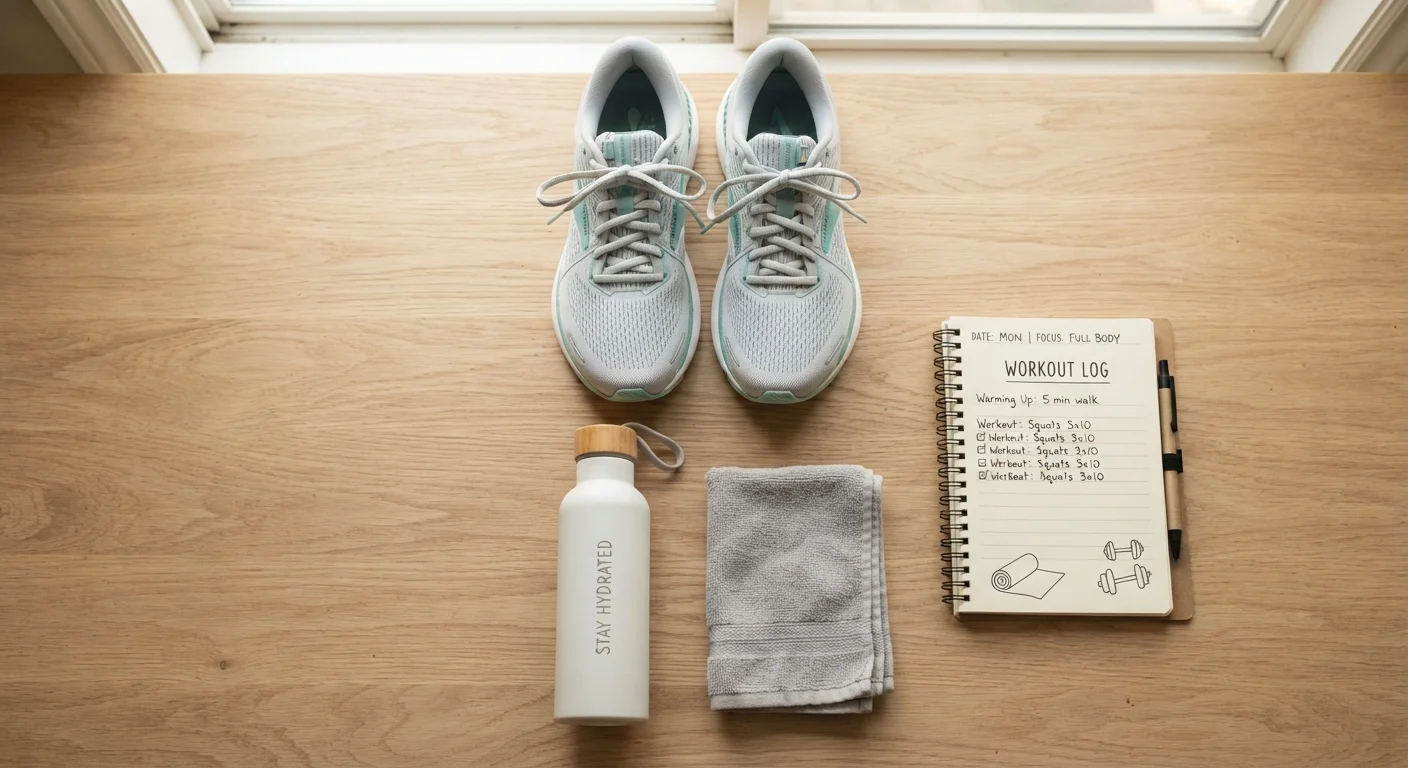
You don't need expensive equipment to start exercising. The essentials are minimal, but a few items genuinely affect your safety and comfort. Use the list below to check what you already have and what you might need before day one.
Supportive athletic footwear
Provides cushioning and stability appropriate to your chosen activity, reducing strain on ankles, knees, and hips.
Reusable water bottle
Keeps hydration accessible throughout your workout without requiring breaks to find a tap.
Comfortable, breathable workout clothes
Allows unrestricted movement and reduces the discomfort of sweat accumulation during exercise.
Exercise mat
Provides cushioning and grip for floor-based movements such as stretching, core exercises, or yoga.
Notebook or tracking app
Records your sessions and progress, helping you identify patterns and stay motivated over time.
Small towel
Manages perspiration and keeps hands and surfaces dry during your workout.
Your Full Readiness Checklist
Work through the groups below at your own pace. Items marked must are non-negotiable for a safe start. Items marked should are strongly recommended, and nice to have items will simply improve your experience.
Health & Safety Preparation
Gear & Environment
Fuelling & Hydration
Goals & Mindset
Warm-Up & Cool-Down Readiness
Once you've ticked off the essentials, you're in a great position to build something sustainable. Our guide on avoiding beginner burnout covers the patterns that derail most new exercisers — worth reading before your second week.
If walking is your chosen starting point, the practical guide to starting a walking habit maps out exactly how to build from scratch. And for a broader look at movement and how the body works, explore the Body & Movement hub.
Don't Ignore Pain During Exercise
Mild muscle fatigue is normal when starting out, but sharp, sudden, or joint-specific pain is not. If you feel pain that is localised, severe, or accompanied by swelling, stop the activity immediately and rest. Continuing through genuine pain — as opposed to ordinary effort — risks turning a minor issue into a longer-term injury. When in doubt, check with a healthcare professional before your next session.
This article is for general informational and educational purposes only and is not a substitute for professional medical advice. Consult a qualified healthcare provider before beginning any new exercise program, particularly if you have a health condition, injury, or are taking medication.