
Why the Confusion Exists
The words mindfulness and meditation appear together so often that most people assume they mean the same thing. They don't — but they are closely related, which is exactly why the mix-up is so common. If you're new to mental wellness practices, a plain-language introduction to mental wellness is a helpful starting point before diving into the distinction here.
In short: mindfulness is a quality of attention, while meditation is a deliberate practice. One is a state of mind you can bring to almost any moment; the other is a structured activity you sit down to do. Understanding how they differ — and how they overlap — helps you choose the approach that actually fits your life.
What Mindfulness Actually Means
Mindfulness means paying attention to what is happening right now — in your thoughts, your body, and your surroundings — without judging it or trying to change it. That's it. No special posture, no timer, no app required.
The concept has roots in Buddhist contemplative traditions but has been studied extensively in Western clinical settings since the late 1970s, particularly through the work of researchers exploring stress reduction programs. In everyday use, mindfulness looks like noticing the warmth of a mug in your hands, observing an anxious thought without acting on it, or really listening during a conversation instead of planning your response.
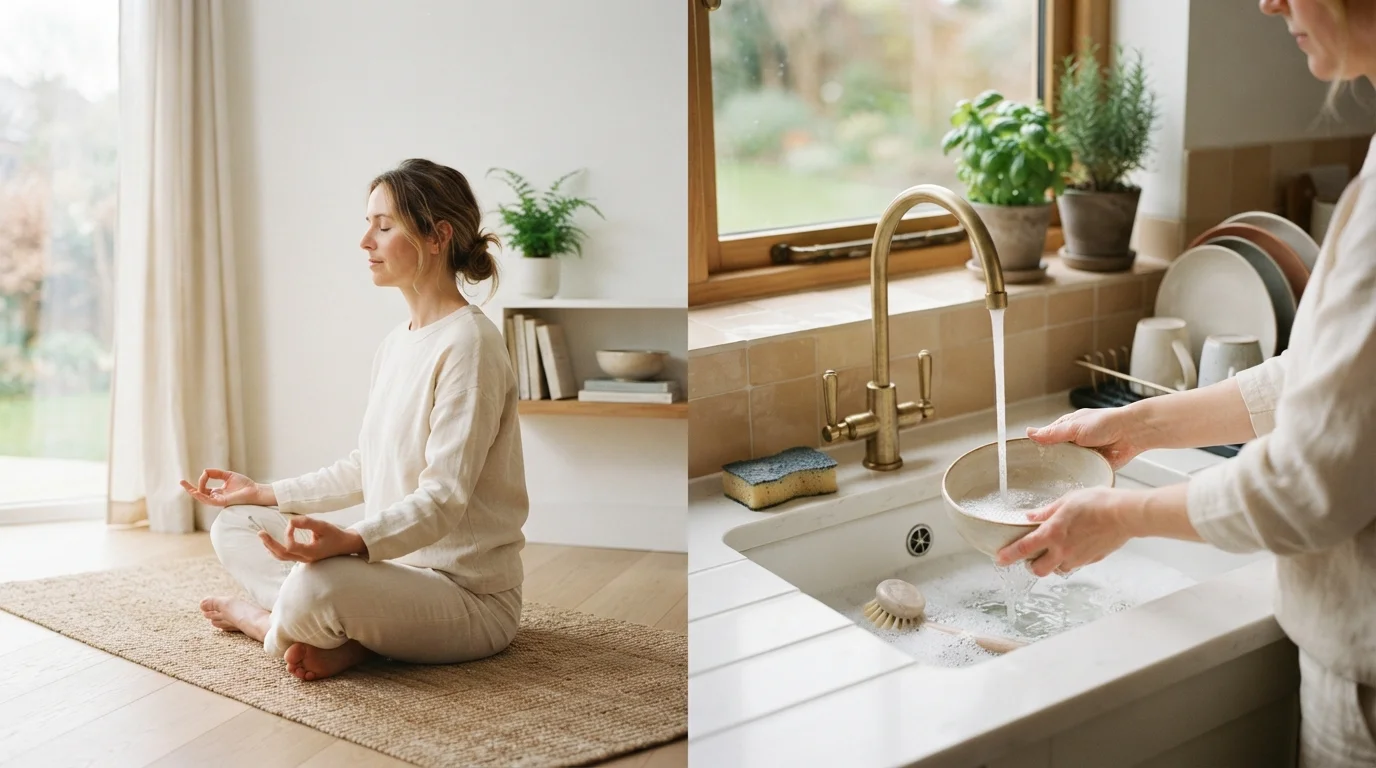
Because mindfulness is a quality rather than an activity, it's something you can bring to almost anything: eating, commuting, exercising, or even doing chores. This is sometimes called informal mindfulness practice.
Informal vs. Formal Practice
Psychologists often distinguish between formal and informal mindfulness practice. Formal practice means setting aside time specifically to train your attention — this overlaps with meditation. Informal practice means intentionally bringing that same quality of attention to ordinary daily activities. Both count, and research suggests that combining the two tends to be more effective than relying on just one.
What Meditation Actually Means
Meditation is an umbrella term for a wide range of formal mental exercises performed deliberately, usually for a set period of time. You might focus on your breath, repeat a phrase silently, visualise an image, or systematically scan your body for tension. The common thread is intentional, sustained mental effort directed at a chosen object or process.
There are many types of meditation, and they don't all train mindfulness. Loving-kindness meditation, for example, cultivates compassion. Transcendental meditation uses silent mantras to reach a restful state. Mindfulness meditation — probably the most widely discussed type in the US — specifically trains present-moment, non-judgmental awareness. So while mindfulness meditation is a real thing, it's one variety of a much larger category.
| Criterion | Mindfulness | Meditation |
|---|---|---|
| What it is | A quality of present-moment attention | A structured mental exercise or practice |
| Requires dedicated time? | No — woven into daily activities | Yes — a set session is typical |
| Requires stillness? | No — can be practiced while moving | Often, though movement-based forms exist |
| Includes many techniques? | No — it's a single mental quality | Yes — dozens of distinct approaches |
| Can one train the other? | Mindfulness can grow through meditation | Meditation can cultivate mindfulness |
| Best entry point for beginners? | Noticing breath or senses during daily tasks | A short, guided breathing session |
How They Work Together
The most practical way to think about the relationship: meditation can build your mindfulness muscle. When you regularly set aside even ten minutes to observe your thoughts without reacting, that skill tends to carry over into the rest of your day. You become a bit quicker to notice when you've gone on autopilot, a bit better at pausing before an emotional reaction.
That said, many people begin with informal mindfulness — noticing their breath during a stressful moment or paying closer attention during a meal — and only later move to formal meditation. Either entry point is valid. For a broader look at how these practices compare to other approaches, see common stress-relief practices and what each one involves.
~14%
US adults who have meditated
According to a National Health Interview Survey conducted by the CDC, around 14% of US adults reported meditating in the past 12 months, reflecting growing mainstream interest.
8 weeks
Typical MBSR programme length
Mindfulness-Based Stress Reduction (MBSR), the most studied mindfulness programme, typically runs for eight weeks and combines both formal meditation and informal mindfulness practice.
It's also worth noting that neither mindfulness nor meditation is a treatment for mental health conditions. If you're managing something like persistent anxiety — and want to understand the line between everyday worry and clinical anxiety — The Difference Between Anxiety and Everyday Worry is a useful read. For structured professional support, see how therapy, counselling, and coaching differ.
This article is for general informational purposes only and does not constitute medical or mental health advice. If you have concerns about your mental health, please speak with a qualified healthcare professional.