
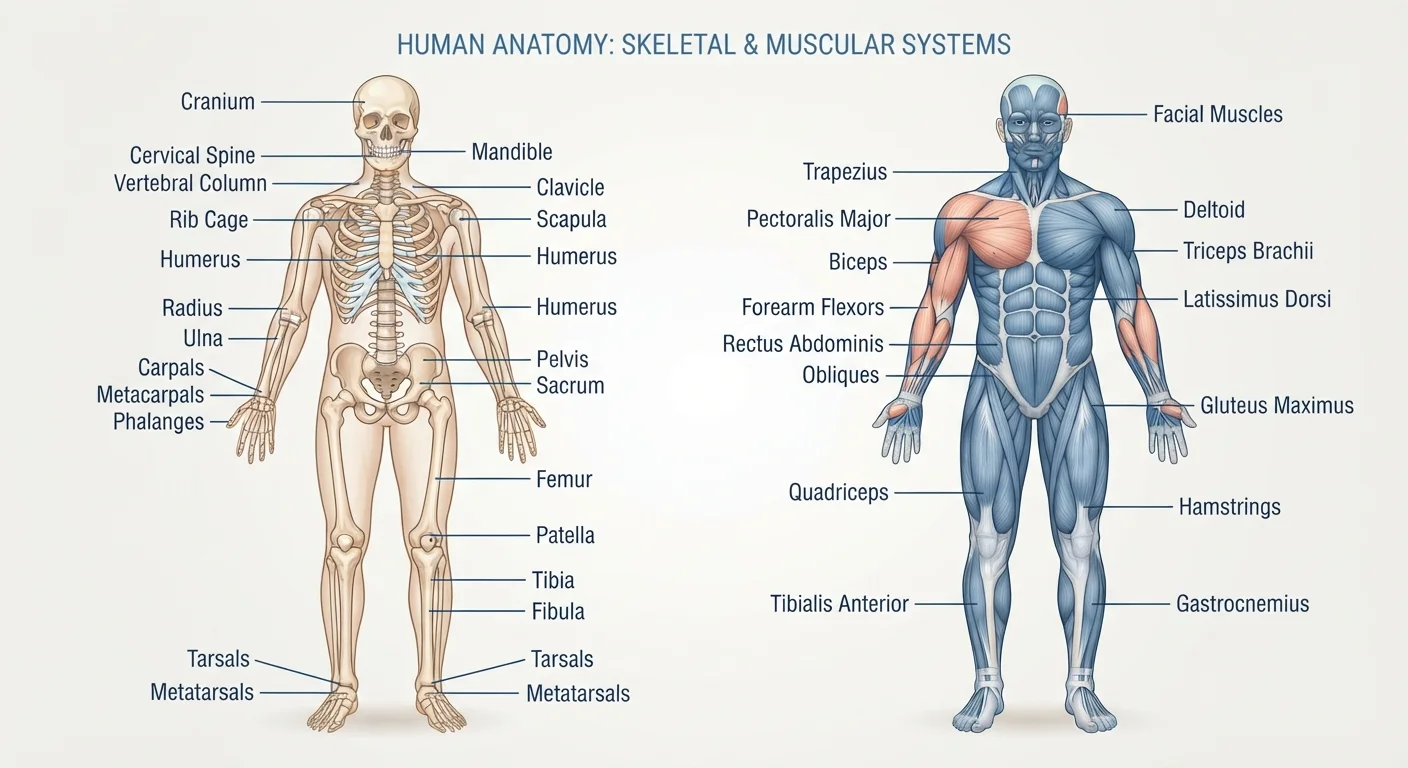
The Building Blocks: Bones
Your skeleton is far more than a passive frame. The adult human body contains 206 bones, and they are living tissue — constantly being broken down and rebuilt in a process called bone remodeling. Bones serve three core jobs: structural support, protection of vital organs (your skull shields your brain; your ribcage guards your heart and lungs), and the production of blood cells inside the soft interior tissue known as bone marrow.
Bones also store minerals, particularly calcium and phosphorus, releasing them into the bloodstream when the body needs them. This is why long-term calcium and vitamin D intake matters — without enough of these nutrients, bone density can decline over time.
Bone Is Living Tissue, Not Inert Material
Many people picture bones as dry, static structures. In reality, bone tissue is constantly being broken down by cells called osteoclasts and rebuilt by cells called osteoblasts. This remodeling cycle means that lifestyle factors — including physical activity, nutrition, and hormonal health — influence bone strength throughout your entire life, not just during childhood.
Muscles: Your Body's Engine
Skeletal muscles — the ones you consciously control — attach to bones and create movement by contracting, or shortening. They never push; they only pull. To move a joint in two directions, muscles work in opposing pairs. The bicep bends your elbow; the tricep straightens it. One contracts while the other relaxes.
The human body has over 600 skeletal muscles. They range from large ones like the gluteus maximus (in your buttocks) to tiny muscles that control your eye movements. Beyond movement, muscles generate body heat, maintain posture, and support internal functions like breathing and swallowing.
600+
Skeletal muscles in the human body
According to standard anatomical references, the human body contains more than 600 named skeletal muscles.
206
Bones in the adult human body
This count is well established in human anatomy; infants begin with significantly more bones that fuse over time.
~30%
Of body weight made up by skeletal muscle
Skeletal muscle typically accounts for roughly 30–40% of total body weight in healthy adults, according to general physiology references.
The Connectors: Tendons, Ligaments, and Cartilage
Muscles and bones don't work in isolation — they're linked by dense bands of connective tissue.
- Tendons attach muscle to bone. When a muscle contracts, the tendon transmits that force to move the bone. The Achilles tendon, connecting your calf muscle to your heel, is the largest tendon in the body.
- Ligaments connect bone to bone at joints, acting like strong tape that prevents joints from moving too far out of alignment. A sprained ankle is typically a stretched or torn ligament.
- Cartilage is smooth, rubbery tissue that covers the ends of bones at joints. It acts as a shock absorber and reduces friction so bones glide smoothly past each other. Cartilage has limited blood supply, which is why it heals slowly after injury.
Together, these structures make joints like your knee, hip, and shoulder both mobile and stable — a difficult engineering balance that your body handles automatically.
Movement, Rest, and Everyday Care
The musculoskeletal system responds to how you use it. Regular movement encourages stronger bones and muscles; prolonged inactivity leads to gradual weakening of both. This is why even light daily activity — walking, stretching, or climbing stairs — contributes meaningfully to long-term musculoskeletal health.
Rest matters equally. Muscles repair and grow during recovery periods, not during the workout itself. Sleep is when the body performs much of its tissue maintenance. Pushing through pain or skipping recovery time can lead to overuse injuries like tendinitis or stress fractures.
Understanding how your musculoskeletal system works is a solid first step toward treating it well. For a deeper look at what happens inside the body when you exercise, see what exercise actually does to your body.
Simple Habits That Support Your Musculoskeletal System
Aim for regular weight-bearing activity such as walking, which supports bone density. Take short movement breaks if you sit for extended periods. Prioritize sleep, since muscle repair happens largely overnight. And if you experience persistent joint pain, stiffness, or swelling, speak with a healthcare provider rather than pushing through it.
This article is for general informational and educational purposes only and is not a substitute for professional medical advice. Consult a qualified healthcare provider for any concerns about your musculoskeletal health.