
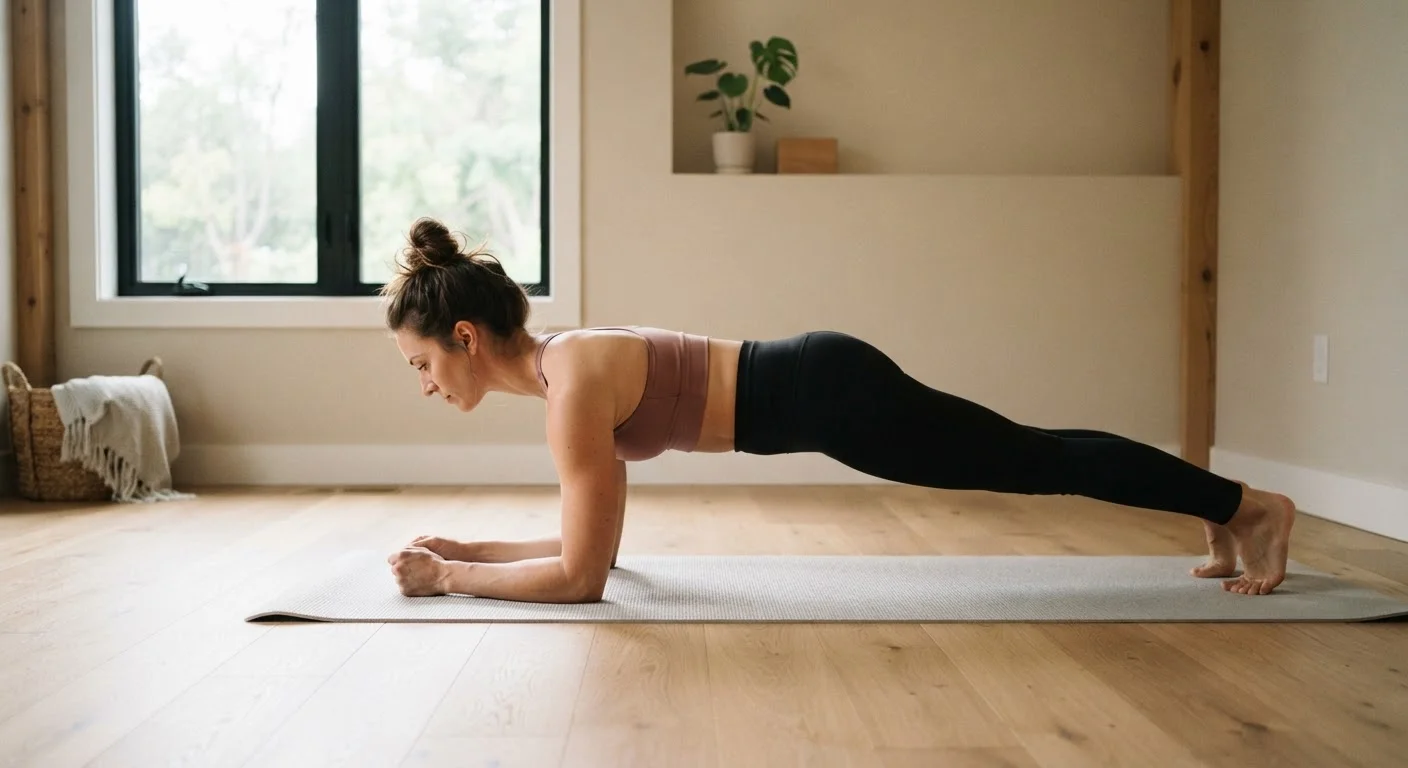
The Core Is a System, Not a Single Muscle
When people hear 'core,' they almost always picture the front of the stomach — the muscle that produces a six-pack when body fat is low enough to reveal it. But that muscle, the rectus abdominis, is just one player in a much larger team.
The core is better understood as a cylindrical system of muscles that wraps around your entire trunk. This includes:
- Transverse abdominis — the deepest abdominal layer, which acts like a natural corset around your spine
- Obliques (internal and external) — the muscles along the sides of your torso, involved in rotation and lateral bending
- Erector spinae and multifidus — muscles running along the back of the spine that keep you upright
- Diaphragm — the breathing muscle at the top of the canister
- Pelvic floor muscles — at the base, supporting organs and contributing to pressure management
- Glutes and hip flexors — commonly included because of how closely they influence pelvic position and trunk stability
All of these muscles must communicate and cooperate. That coordination — not raw force — is the true definition of core strength.
The Core Is Always 'On'
Unlike bicep curls, you don't consciously activate your core for most tasks — it fires automatically in anticipation of movement. This reflexive activation is called 'feed-forward' control, and it's one reason why functional, movement-based training tends to be more effective for core development than isolated exercises alone.
What Core Strength Actually Does for You
Core muscles have one primary job: to keep your spine and pelvis stable so that your arms and legs can move efficiently and safely. Think of your trunk as the foundation of a building. If the foundation shifts unpredictably, everything built on top of it becomes less reliable.
This is why core strength underpins so many different activities:
- Walking and running — your core resists the side-to-side sway of your pelvis with each step
- Lifting — bracing the core protects the lumbar spine from compressive and shear forces
- Sitting at a desk — postural muscles in the core work continuously to keep you upright
- Reaching overhead or across — the core anchors your trunk so your shoulder can move freely
Research published in exercise physiology literature consistently links core stability to reduced injury risk and improved movement quality across a wide range of physical activities. To understand more about what movement does to the body more broadly, see what exercise actually does to your body.
80%
Adults experiencing low back pain at some point
Low back pain is among the most prevalent musculoskeletal complaints globally, frequently cited in public health and epidemiology literature.
29+
Muscles commonly classified as part of the core
Depending on the anatomical model used, researchers identify between 29 and 35 muscles that contribute to core function and spinal stability.
Why 'Just Do Crunches' Is Incomplete Advice
Crunches train the rectus abdominis through flexion — curling the spine forward. That is a legitimate movement, but it leaves most of the core system untrained. A beginner who only does crunches may develop one layer of abdominal strength while neglecting the deep stabilizers, the back muscles, and the pelvic floor entirely.
Exercises that more comprehensively train the core include:
- Plank variations — challenge the anti-extension function of the core (resisting the spine from arching)
- Dead bug — trains the deep stabilizers while the limbs move, mimicking real-life demands
- Glute bridge — strengthens the posterior chain including the glutes and lower back
- Bird dog — builds coordination between opposite arm and leg while maintaining a neutral spine
- Pallof press — a resistance exercise that trains anti-rotation, one of the core's most important real-world functions
None of these require specialist equipment. Common misconceptions about strength training covers this in more depth, including the myth that effective training requires a gym membership.
Start With Posture and Breathing
Before progressing to challenging exercises, practice 'finding neutral spine' — a position where your lower back has a gentle natural curve, neither flattened nor excessively arched. Pair this with diaphragmatic breathing (breathing into your belly, not just your chest). Both habits activate the deep core system and create a safer foundation for any exercise that follows.
Core Strength and Everyday Life
You do not need to be athletic to benefit from a well-trained core. In fact, sedentary lifestyles often weaken the deep core stabilizers because sitting for long periods reduces the variety of demands placed on these muscles.
Lower back pain — one of the most commonly reported physical complaints among adults — is frequently associated with poor coordination of core muscles. This does not mean a weak core causes back pain in every case; the relationship is complex. But improving core stability is one approach that exercise professionals and physiotherapists often incorporate into rehabilitation programs.
Core strength is also closely connected to concepts like stability and balance — topics explored further in flexibility, mobility, and stability. For a broader view of how core work fits into a complete fitness routine, the three pillars of fitness is a helpful starting point.
This article is for general informational and educational purposes only. It is not a substitute for professional medical or fitness advice. If you experience pain during exercise or have a health condition, please consult a qualified healthcare professional before beginning any new training program.